

Abstract
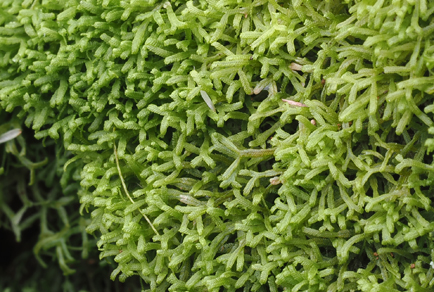
Following a bryological investigation of Shiwandashan National Nature Reserve in Guangxi, China, Acromastigum herzogii is reported as a new national record, accompanied by a detailed morphological description. Furthermore, two additional species of Lepidoziaceae, Kurzia borneensis and Zoopsis liukiuensis, are documented. The taxonomically poorly understood species K. borneensis is considered here as a distinct and well-circumscribed taxon, new to mainland China. The genus Zoopsis is recorded for the first time from Guangxi.
Downloads
Download data is not yet available.
References
- Austin, C.F. (1876) Notes on hepaticology. Botanical Bulletin, Hanover 1 (7): 31–32.https://doi.org/10.1086/botabull.1.7.2995151
- Bakalin, V.A., Choi, S.S. & Seung, J.P. (2023) Liverwort diversity in Cambodia: new records show there is still much to learn. Diversity 15: 214.https://doi.org/10.3390/d15020241
- Bakalin, V.A. & Klimova, K.G. (2024) A revision of Lepidoziaceae (Hepaticae) in the Russian Far East II. Lepidozia and Kurzia. Novosti sistematiki nizshikh rastenii 58 (2): B51–B69.https://doi.org/10.31111/nsnr/2024.58.2.b51
- Bakalin, V.A., Klimova, K.G., Nguyen, V.S., Bakalin, D.A. & Choi, S.S. (2021) Liverwort oil body diversity in Pacific Asia. Arctoa 30: 219–346.https://doi.org/10.15298/arctoa.30.22
- Bakalin, V.A., Klimova, K.G., Nguyen, V.S., Nguyen, H.M., Bakalin, D.A. & Choi, S.S. (2023) Liverwort and Hornwort Flora of Hoàng Liên National Park National Park and the Adjacent Areas (North Vietnam, Indochina). Plants 12: 1841.https://doi.org/10.3390/plants12091841
- Brown, E.A. & Renner, M.A.M. (2014) The genus Acromastigum in Australia. Telopea: Journal of Plant Systematics 17: 251–293.https://doi.org/10.7751/telopea20147708
- Evans, A.W. (1900) A new genus of Hepaticae from the Hawaiian Islands. Bulletin of the Torrey Botanical Club 27 (3): 97–104.https://doi.org/10.2307/2478313
- Evans, A.W. (1904) Notes on New England Hepaticae–II (cont.). Rhodora 6 (69): 185–190.
- Evans, A.W. (1934) A revision of the genus Acromastigum. Annales Bryologici Supplement 3: 1–178.https://doi.org/10.1007/978-94-015-3499-4
- Gao, C. (2003) Flora Bryophytarum Sinicorum Vol. 9. Science Press, Beijing, 51–54 pp. [In Chinese]
- Goebel, K.I. (1893) Archegoniatenstudien. 3–4. Flora 77 (2): 82–108.
- Gottsche, C.M., Lindenberg, J.B.W. & Nees, C.G. (1845) Synopsis hepaticarum, fasc. 2. Meissner, Hamburg, 145–304 pp.https://doi.org/10.5962/bhl.title.15221
- Gottsche, C.M., Lindenberg, J.B.W. & Nees, C.G. (1846) Synopsis hepaticarum, fasc. 4. Meissner, Hamburg, 465–624 pp.https://doi.org/10.5962/bhl.title.15221
- Grolle, R. (1963) Über Kurzia v. Martens. Revue Bryologique et Lichénologique 32 (3/4): 166–180.
- Grolle, R. (1964) Über neue bemerkenswerte Acromastigum-Arten. Österreichische Botanische Zeitschrift 111 (2–3): 240–256.https://doi.org/10.1007/BF01373767
- Grolle, R. (1973) Miscellanea hepaticologica 131–140. Herzogia 3: 75–82.https://doi.org/10.1127/herzogia/3/1973/75
- Grolle, R. (1978) Lebermoose aus Neuguinea. 16. Acromastigum. The Journal of the Hattori Botanical Laboratory 44: 1–15.
- Grolle, R. & Piippo, S. (1984) Bryophyte flora of the Huon Peninsula, Papua New Guinea. V. Lepidoziaceae subfam. Zoopsoideae and Cephaloziaceae subfam. Schiffnerioideae (Hepaticae). Annales Botanici Fennici 21: 299–307.
- Hattori, S. (1947) Contributio ad floram hepaticarum yakusimensem. II. The Journal of the Hattori Botanical Laboratory 2: 1–26.https://doi.org/10.18968/jhbl.2.0_1
- Hattori, S. & Mizutani, M. (1958) A revision of the Japanese species of the family Lepidoziaceae. The Journal of the Hattori Botanical Laboratory 19: 76–118.
- He, Q. & Jia, Y. (2017) Assessing the threat status of China’s bryophytes. Biodiversity Science 25: 774–780. [In Chinese]https://doi.org/10.17520/biods.2016205
- He, Q., Wei, Y.-M. & Zhu, R.-L. (2012) Vitalianthus guangxianus R.L.Zhu, Q.He & Y.M.Wei (Lejeuneaceae), sp. nov. from Guangxi, China. Journal of Bryology 34 (1): 32–36.https://doi.org/10.1179/1743282011Y.0000000038
- He, T.-P., Tan, W.-F., Wen, Y.-G., Zhao, Z.-H., Wen, X.-F., Huang, Z.-H. & Men, Y.-Y. (2007) Diversity of rare and endangered plants in Shiwandashan Mountain National Natural Reserve. Journal of Guangxi Agricultural Biological Sciences 26: 125–131. [In Chinese]
- Herzog, T. (1950) Hepaticae Borneenses (Oxford University Expedition to Sarawak, 1932). Transactions of the British Bryological Society 1 (4): 275–326.https://doi.org/10.1179/006813850804878680
- Horikawa, Y. (1931) Studies on the Hepaticae of Japan. V. Journal of Science of the Hiroshima University, Series B, Division 2 (Botany) 1: 55–76.
- Iwatsuki, Z., Furuki, T., Kanda, H., Hasegawa, J. & Higuchi, M. (2008) New red list of bryophytes of Japan, 2007 (Threatened Bryophytes in Japan). Bryological Research 9 (8): 259–267.https://doi.org/10.24474/bryologicalresearch.9.8_259
- Jhuang, C.-S. & Huang, S.-F. (2019) Kurzia borneensis Mizut. (Lepidoziaceae) in Taiwan. National Taiwan Museum Bulletin 71 (4): 1–10.https://doi.org/10.6532/JNTM.201812_71(4).01
- Jia, Y. & He, Q. (2024) A catalogue of Asian liverworts and hornworts. EDP Sciences, France, 415 pp.https://doi.org/10.1051/978-2-7598-3439-6
- Lee, G.E., Gradstein, S.R., Pesiu, E. & Norhazrina, N. (2022) An updated checklist of liverworts and hornworts of Malaysia. PhytoKeys 199: 29–111.https://doi.org/10.3897/phytokeys.199.76693
- Lehmann, J.G.C. (1834) Novarum et minus cognitarum stirpium pugillus sextus. Meissner, Hamburg, 72 pp.https://doi.org/10.5962/bhl.title.45011
- Ma, W.-Z. & Yu, Z.-Y. (2020) Field Guide to Bryophytes of Jinping Fenshuiling, Yunnan. Yunnan Publishing Group & Yunnan Fine Arts Publishing House, Kunming, 283 pp.
- Mizutani, M. (1974) Lepidoziaceae, subfamily Lepidozioideae from Sabah (North Borneo). The Journal of the Hattori Botanical Laboratory 38: 371–385.https://doi.org/10.18968/jhbl.38.0_371
- Mizutani, M. (1976) Lepidoziaceae, subfamily Lepidozioideae from the Philippines. The Journal of the Hattori Botanical Laboratory 40: 447–451.https://doi.org/10.18968/jhbl.40.0_447
- Mizutani, M. & Chang, K.C. (1986) A preliminary study of Chinese Lepidoziaceae flora. The Journal of the Hattori Botanical Laboratory 60: 419–437.https://doi.org/10.18968/jhbl.60.0_419
- Müller, K. (1899) Eine neue Lepidozia-Art. Hedwigia 38 (4): 196–200.https://doi.org/10.30965/25890530-038-01-02-90000010
- Piippo, S. (1990) Annotated catalogue of Chinese Hepaticae and Anthocerotae. The Journal of the Hattori Botanical Laboratory 68: 1–192.https://doi.org/10.18968/jhbl.68.0_1
- Pócs, T., Sass-Gyarmati, A., Naikatini, A., Tuiwawa, M., Braggins, J., Pócs, S. & von Konrat, M. (2011) New liverwort (Marchantiophyta) records for the Fiji Islands. Telopea 13 (3): 455–494.https://doi.org/10.7751/telopea20116031
- Pócs, T., Tram, N.K.T., He, Q., Katagiri, T. & Luong, T.T. (2019) New records for the liverwort and hornwort flora of Vietnam, 1. Acta Botanica Hungarica 61: 397–413.https://doi.org/10.1556/034.61.2019.3-4.9
- Qin, H.-N. & Liu, Y. (2010) A checklist of vascular plants of Guangxi. Science Press, Beijing, 625 pp [In Chinese]
- Quan, D.-L., Yang, B., Ma, W.-Z., Song, L. & Shen, T. (2021) Bryophyte diversity and its threat status in Xishuangbanna. Biodiversity Science 29: 545–553.https://doi.org/10.17520/biods.2020216
- Reimers, H. (1933) Revision der Lebermoosgattung Micropterygium. Hedwigia 73 (3/4): 133–204.
- Renner, M.A.M. & Wilson, T.C. (2018) Two new species of Acromastigum (Lepidoziaceae: Jungermanniopsida) from Queensland, Australia. Telopea: Journal of Plant Systematics 21: 45–55.https://doi.org/10.7751/telopea11775
- Sande Lacoste, C.M. (1855) Speciebus novis hepaticarum javanicarum herbarii Junghuhniani. Nederlandsch Kruidkundig Archief. Verslagen en Mededelingen der Nederlandsche Botanische Vereeniging 3: 521–522.
- Schiffner, V. (1893) Hepaticae. In: Engler, A. & Prantl, K. (Eds.) Die Natürlichen Pflanzenfamilien, Teil. I, Abt. 3. Engelmann, Leipzig, pp. 1–144.
- Schuster, R.M. (1997) On a new, microphyllous New Caledonian Acromastigum (Lepidoziaceae). Nova Hedwigia 64: 613–620.https://doi.org/10.1127/nova.hedwigia/64/1997/613
- Schuster, R.M. (1999) Studies on Hepaticae, LXV. Lepidoziaceae subf. Zoopsidoideae (2): Zoopsis. Nova Hedwigia 68 (1–2): 1–63.https://doi.org/10.1127/nova.hedwigia/68/1999/1
- Senayai, A., Suwanmala, O., Lomlim, W. & Chantanaorrapint, S. (2021) The genus Soella (Lejeuneaceae, Marchantiophyta) new to Thailand. Thai Forest Bulletin (botany) 49 (1): 102–105.https://doi.org/10.20531/tfb.2021.49.1.12
- Sharma, D. & Srivastava, S.C. (1993) Indian Lepidoziineae: a Taxonomic revision. Bryophytorum Bibliotheca 47: 1–353.
- Shu, L., Xiang, Y.-L., Cheng, X.-F., Wei, Y.-M., Wang, J., Zhang, L.-N., Li, W., Yin, X.-B., Zhang, W.-P., Zhao, C.-X., Peng, T., Do, T.V., Lu, T.N. & Zhu, R.-L. (2016) New liverwort and hornwort records for Vietnam. Cryptogamie, Bryologie 38 (4): 411–445.https://doi.org/10.7872/cryb/v38.iss4.2017.411
- Söderström, L., Hagborg, A., Von Konrat, M., Bartholomew-Began, S., Bell, D., Briscoe, L., Brown, E., Cargill, D.C., Cooper, E.D., Costa, D.P., Crandall-Stotler, B.J., Dauphin, G., Engel, J.J., Feldberg, K., Glenny, D., Gradstein, S.R., He, X., Heinrichs, J., Hentschel, J., Ilkiu-Borges, A.L., Katagiri, T., Konstantinova, N.A., Larraín, J., Long, D.G., Nebel, M., Pócs, T., Puche, F., Reiner-Drehwald, M.E., Renner, M.A.M., Sass-Gyarmatii, A., Schäfer-Verwimp, A., Segarra Moragues, J.G., Stotler, R.E., Sukkharak, P., Thiers, B.M., Uribe, J., Váña, J., Villarreal, J.C., Wigginton, M., Zhang, L. & Zhu, R.-L. (2016) World checklist of hornworts and liverworts. PhytoKeys 59: 1–828.https://doi.org/10.3897/phytokeys.59.6261
- Stephani, F. (1893) Hepaticarum species novae III. Hedwigia 32 (4): 204–214.
- Stephani, F. (1897) Hepaticae japonicae. Bulletin de l’Herbier Boissier 5 (2): 76–108.
- Stephani, F. (1909) Species hepaticarum 3. George & Cie, Genève & Bale, 517–693 pp.https://doi.org/10.5962/bhl.title.95494
- Stephani, F. (1924) Species hepaticarum 6. George & Cie, Genève & Bale, 433–622 pp.https://doi.org/10.5962/bhl.title.95494
- Tan, W.-F. (2014) Guangxi Nature Reserve. China Environmental Press, Beijing, 243 pp. [In Chinese]
- Thouvenot, L. (2018) Acromastigum lamyi sp. nov. (Lepidoziaceae, Marchantiophyta), a new liverwort species from New Caledonia. Cryptogamie, Bryologie 39 (2): 233–239.https://doi.org/10.7872/cryb/v39.iss2.2018.233
- Wang, J., Zhu, R.-L. & Gradstein, S.R. (2016) Taxonomic revision of Lejeuneaceae subfamily Ptychanthoideae (Marchantiophyta) in China. Bryophytorum Bibliotheca 65: 4–141.
- Wu, C.L. & Yamada, K. (2000) Two species of the genus Kurzia new to Taiwan. Biological Research 7 (11): 349.https://doi.org/10.24474/bryologicalresearch.7.11_349_1
- Yang, J.-D. (2011) Liverworts and Hornworts of Taiwan II. Taiwan Endemic Species Research Institute, Nantou, 50 pp.
- Yamaguchi, T. (1984) Drepanolejeunea obtusifolia sp. nov. and Euosmolejeunea fuscobrunnea Horik. from the Yaeyama Islands, Japan. Journal of Japanese Botany 59 (11): 332–336.https://doi.org/10.51033/jjapbot.59_11_7675
- Ye, W. & Zhu, R.-L. (2018) Gaolejeunea, a new genus from China and new member of subtribe Echinolejeuneinae (Lejeuneaceae, Marchantiophyta). The Bryologist 121 (1): 41–48.https://doi.org/10.1639/0007-2745-121.1.041
- Zhu, R.-L., Shu, L., He, Q. & Wei, Y.-M. (2018) Soella (Marchantiophyta: Lejeuneaceae), a new genus from China and Japan. The Bryologist 121 (3): 324–339.https://doi.org/10.1639/0007-2745-121.3.324
- Zhu, R.-L., So, M.-L. & Grolle, R. (2000) Cheilolejeunea gaoi (Hepaticae, Lejeuneaceae), a new species from Guangxi, China. The Bryologist 103 (3): 499–502.https://doi.org/10.1639/0007-2745(2000)103[0499:CGHLAN]2.0.CO;2
- Zhu, R.-L., Wei, Y.-M. & He, Q. (2011) Caudalejeunea tridentata, a remarkable new species of Lejeuneaceae (Marchantiophyta) from China. The Bryologist 114 (3): 469–473.https://doi.org/10.1639/0007-2745-114.3.469