

Abstract
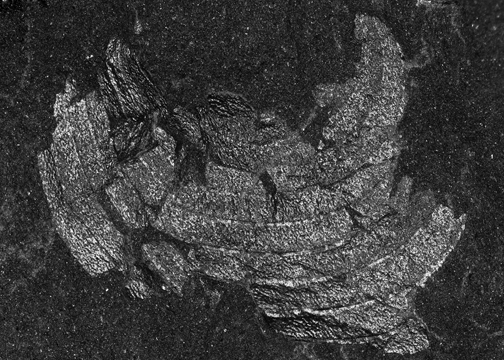
The Duoni Formation represents a key Early Cretaceous shallow marine to coastal deposit along the Bangong-Nujiang suture zone of the Tibetan Plateau. Previous studies have primarily focused on its marine fauna, whereas research on terrestrial fossils has been largely limited to plants in eastern Tibet. In recent fieldwork near Lingka Village in Baxoi County, eastern Tibet, we collected abundant fossil material from the middle part of the Duoni Formation, including terrestrial organisms such as insects, ostracods, non-marine bivalves, and clam shrimps. This paper presents the first description of insect and clam shrimp fossils from the Duoni Formation, contributing to a more comprehensive understanding of Early Cretaceous terrestrial ecosystems in eastern Tibet. While the uppermost Duoni Formation has been dated to around the Aptian–Albian boundary, the fossil evidence suggests that the base of the formation may extend to the Barremian or earlier.
References
- Bureau of Geology and Mineral Resources of Xizang Autonomous Region. (1993) Regional geology of Xizang (Tibet) Autonomous Region [in Chinese]. Beijing, Geological Publishing House, 450 pp.
- ChinaLex, (2024) Puchanghe Formation. China Lexicon of Geology. Available at: https://chinalex.geolex.org/formations/Puchanghe%20Fm (accessed 18 December 2025).
- Huang, D.Y., Fang, Y.N., Li, J.G. & Li, X. (2021) Lithostratigraphic subdivision and correlation of the Jurassic in China. Journal of Stratigraphy, 45 (3), 364–374. https://doi.org/10.19839/j.cnki.dcxzz.2021.0029.
- Kang, Z.Q., Xu, J.F., Wang, B.D., Dong, Y.H., Wang, S.Q. & Chen J.L. (2009) Geochemistry of the Cretaceous volcanic rocks of Duoni Formation in northern Lhasa Block: Discussion of tectonic setting. Earth Science, 34, 89–104. [In Chinese]
- Kapp, P., DeCelles, P.G., Gehrels, G.E., Heizler, M. & Ding, L. (2007) Geological records of the Lhasa-Qiangtang and Indo-Asian collisions in the Nima area of central Tibet. Geological Society of America Bulletin, 119, 917–933. https://doi.org/10.1130/B26033.1
- Li, P. (1955) A preliminary understanding of geology in eastern Tibet. Science Bulletin, 7, 62–65. [In Chinese]
- Li, P.J. (1982) Preliminary study of early Cretaceous plant fossils from the Duoni Formation in eastern Tibet. Stratigraphy and Paleontology of the Eastern Tibetan Plateau and Western Sichuan, Part III, 71–105.
- Liao, H.Y., Shen, Y.B. & Huang, D.Y. (2019) Serrated microstructures on carapaces of Eosestheria (Branchiopoda: Diplostraca) in the Early Cretaceous Jehol Biota and discussion on the taxonomic value of these structures. Cretaceous Research, 95, 310–317. https://doi.org/10.1016/j.cretres.2018.11.023
- Lin, M.Q. & Li, J.G. (2019) Late Jurassic–Early Cretaceous palynofloras in the Lhasa Block, central Xizang, China and their bearing on palaeoenvironments. Palaeogeography, Palaeoclimatology, Palaeoecology, 515, 95–106. https://doi.org/10.1016/j.palaeo.2018.05.038
- Liu, X.Y., Yang, X.J. & Zhou, Z.Y. (2007) The Late Mesozoic plants from Eastern Tibet (Xizang). Geological Publishing House, Beijing, 123 pp.
- Ma, A.L., Hu, X.M., Garzanti, E., Boudagher-Fadel, M., Xue, W.W., Han, Z. & Wang, P. (2023) Paleogeographic and tectonic evolution of Mesozoic Qiangtang basins (Tibet). Tectonophysics, 862, 229957. https://doi.org/10.1016/j.tecto.2023.229957
- Sun, G., Hu, X. & Sinclair, H.D. (2017) Early Cretaceous palaeogeographic evolution of the Coqen basin in the Lhasa Terrane, southern Tibetan plateau. Palaeogeography, Palaeoclimatology, Palaeoecology, 485, 101–118. https://doi.org/10.1016/j.palaeo.2017.06.006
- Tan, T., Li, J.G. & Wu, Y.X. (2023) Early Cretaceous palynoassemblage of the Lagongtang Formation, Nagjog District, Lhorong County, eastern Xizang and its significance. Acta Micropalaeontologica Sinica, 40, 131–143.
- Taylor, M., Yin, A., Ryerson, F.J., Kapp, P. & Ding, L. (2003) Conjugate strike‐slip faulting along the Bangong‐Nujiang suture zone accommodates coeval east‐west extension and north‐south shortening in the interior of the Tibetan Plateau. Tectonics, 22, 1044. https://doi.org/10.1029/2002TC001383
- Wu, Y. (1985) The early Cretaceous Coal-bearing strata and flora in Xizang. Contribution to the geology of the Qinghai-Xizang (Tibet) Plateau.
- Xi, D.P., Sun, L.X., Qin, Z.H., Li, G.B., Li, G. & Wan, X.Q. (2021) Lithostratigraphic subdivision and correlation of the Cretaceous in China. Journal of Stratigraphy, 45 (3), 375–401. https://doi.org/10.19839/j.cnki.dcxzz.2021.0030.
- Xi, D.P., Wan, X.Q., Li, G.B. & Li, G. (2019) Cretaceous integrative stratigraphy and timescale of China. Science China Earth Sciences, 62, 256–286. https://doi.org/10.1007/s11430-017-9262-y
- Xia, D.X. & Liu, S.K. (1997) Stratigraphy (Lithostratigraphy) of the Xizang (Tibet) Autonomous Region. China University of Geosciences Press, Wuhan, 302 pp. [In Chinese]
- Yang, S.Q. & Chen, J.H. (1983) The Age of the Duoni Formation from the Bivalve Fossils. Journal of Stratigraphy, 7, 285–288.
- Yin, Z., Ding, L., Li, J.X., He, Z.K., Wang, H.Q., Wang, C., Wang, L.C., Zhao, C.Y., Deng, G.L., Yue, Y.H., Xie, J. & Cai, F.L. (2024) The Cretaceous suturing process of the eastern Bangong-Nujiang Ocean, Basu area. Palaeogeography, Palaeoclimatology, Palaeoecology, 642. https://doi.org/10.1016/j.palaeo.2024.112154
- Zhang, Y., Gao, H.L., Huang, R.B., Su, Y.T., Fu, Y.Z., Cai, C.Y. & Huang, D.Y. (2024) New zircon U-Pb age of the top Duoni Formation, Basu County: constraints on the collision between Qiangtang and Lhasa blocks in Eastern Tibet. Mesozoic, 1 (3), 264–275. https://doi.org/10.11646/mesozoic.1.3.6
- Zhang, Z.P., Luo, X.G., Liu, B.C., Wu, X.M. & Dai, R. (2019) Stratigraphic characteristics, formation age and sedimentary environment of the Duoni formation in Wuma Township, Gaize county, Tibet. Mineral Exploration, 10, 1316–1326.
- Zheng, C.Z., Qu, Y.G., Zhang, S.Q., Liu, G.Z. & Feng, D.C. (2003) On the Lithostratigraphy and Sedimentary Environment of the Lower Cretaceous Duoni Formation in the Xungmai and Qusongbo Areas, Northern Xizang. Geological Review, 49, 638–645.
- Zhu, Z.C., Zhai, Q.G., Hu, P.Y., Chung, S.L., Tang, Y., Wang, H.T., Wu, H., Wang, W., Huang, Z.Q. & Lee, H.Y (2019) Closure of the Bangong-Nujiang Tethyan Ocean in the central Tibet: Results from the provenance of the Duoni Formation. Journal of Sedimentary Research, 89, 1039–1054. https://doi.org/10.2110/jsr.2019.55