

Abstract
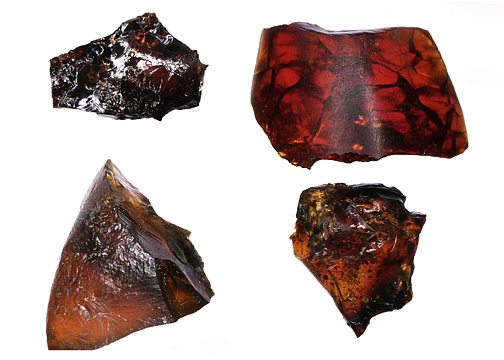
Amber holds significant historical importance in China, symbolizing not only the glory of ancient Chinese art and culture but also reflecting the development of cross-regional trade in antiquity. Evidence shows that Burmese and Baltic amber became widely popular during the Han dynasty (202 BCE–220 CE) and could be imported through various routes (Liu et al., 2023a, b; Zhao et al., 2023; Li et al., 2025). During this period, the Euro-Asia Steppe Trade Road was predominantly used for the import of Baltic amber, while the Maritime Silk Route might also facilitate the amber trade (Li et al., 2025). Additionally, the Southwestern Silk Route is regarded as a crucial pathway for amber trade in ancient Southern China. This overland route stretched from Central China through the mountainous regions of Sichuan, Guizhou, and Yunnan, extending to Myanmar and other Southeast Asian countries (Elias, 2024). The ancient Ailao Regional States, serving as a key node along the Southwestern Silk Road, encompassed southwestern Yunnan (China), northern Myanmar, Thailand, Laos, and eastern Assam (India) (Sun, 2016). Notably, the territory of Ailao Regional States included the Burmese amber deposits in the northern Myanmar, which was also recorded in the Han historical records as the amber origin (Fan, 1965). In addition, several amber artifacts from the same period have been discovered in the Dian Kingdom, which is primarily located in Yunnan and borders the Ailao Regional States (Zhao, 2016). While there is considerable evidence suggesting that the Southwestern Silk Route played a significant role in the amber trade, there is a lack of empirical evidence detailing its specific functions in the transportation of amber.
References
- Anderson, K.B., Winans, R.E. & Botto, R.E. (1992) The nature and fate of natural resins in the geosphere—II. Identification, classification and nomenclature of resinites. Organic Geochemistry, 18, 829–841. https://doi.org/10.1016/0146-6380(92)90051-X
- Elias, H. (2024) The Southwest Silk Road: artistic exchange and transmission in early China. Bulletin of the School of Oriental and African Studies, 87, 319–344. https://doi.org/10.1017/S0041977X24000120
- Fan, Y. (1965). Houhanshu. Zhonghua Book Company, Beijing, pp. 2849, 2919. [In Chinese]
- Garrido-Cordero, J., Odriozola, C., Sousa, A., Romero-García, G., Sánchez-Gómez, D., Blanes, J.M., Lázarich, M., Zambrana-Vega, M.D. & Gonçalves, J. (2024) Amber provenance as a Chrono-Cultural Proxy: Insights from FTIR analysis in the Iberian Peninsula. Journal of Archaeological Science: Reports, 57, 104647. https://doi.org/10.1016/j.jasrep.2024.104647
- Kuhn, E.E.H., Choi, M., Wuellner, E., Brody, L.R. & Frahm, E. (2023) Establishing the Baltic origins of archaeological amber beads from Dura-Europos (Syria) using non-destructive DRIFTS. Journal of Archaeological Science: Reports, 49, 103938. https://doi.org/10.1016/j.jasrep.2023.103938
- Labandeira, C.C. (2014) Amber. The Paleontological Society Papers, 20, 163–216. https://doi.org/10.1017/S1089332600002850
- Li, X.P., Wang, Y.M., Shi, G.H., Lu, R. & Li, Y. (2023) Evaluation of natural ageing responses on Burmese amber durability by FTIR spectroscopy with PLSR and ANN models. Spectrochimica Acta Part A: Molecular and Biomolecular Spectroscopy, 285, 121936. https://doi.org/10.1016/j.saa.2022.121936
- Li, X.P., Long, L.D., Wang, Y.X., Liu, Q., Chen, B. & Li, Q.H. (2025) FTIR spectra combined with machine learning to reveal the amber trade during the Han dynasty (202 BCE–220 CE). Journal of Archaeological Science, 180, 106268. https://doi.org/10.1016/j.jas.2025.106268
- Liu, Q., Liu, S., LÜ, L.B., Li, X.P., Li, Q.H. & Liao, C.J. (2023a) Scientific analysis of ancient amber artifacts along the Maritime Silk Road. Palaeoentomology, 6 (5), 451–454. https://doi.org/10.11646/palaeoentomology.6.5.3
- Liu, Q., Zhang, Y.H.., Li, X.P., Qin, X. & Li, Q.H. (2023b) Some amber artifacts excavated from tombs of the Han Dynasty in Hunan Province. Journal of Gems and Gemmology, 25, 146–157. https://doi.org/10.15964/j.cnki.027jgg.2023.04.013
- Luo, E.H. (2000) Chinese “Southwestern Silk Road” in the Han and Jin Dynasties. Journal of Sichuan University (Philosophy and Social Sciences Edition), 1, 84–105. [In Chinese]
- Na, X.X. (2020) The research of the gemmological characteristics and colour grading of Burmese amber. Kunming University of Science and Technology, Kunming, 34–40. [In Chinese]
- Poulin, J. & Helwig, K. (2015) Inside amber: New insights into the macromolecular structure of Class Ib resinite. Organic Geochemistry, 86, 94–106. https://doi.org/10.1016/j.orggeochem.2015.05.009
- Shi, Z.T., Xin, C.X. & Wang, Y.M. (2023) Spectral characteristics of unique species of Burmese amber. Minerals, 13, 151. https://doi.org/10.3390/min13020151
- Sun, J. (2016) The spatio-temporal patterns and geographical imagination of ethnic groups in the Southwest of China, among Qin and Han Dynasties. China Social Sciences Press, Beijing, 530 pp. [In Chinese]
- The Archaeological Team of Guizhou Provincial Museum (1979) The tombs of the Han Dynasty in Xingyi and Xingren, Guizhou Province. Cult Relics, 5, 20–33. [In Chinese]
- Zhao, D. (2016). Exotic beads and pendants in Ancient China: From Western Zhou to Easter Jin Dynasty. Science Press, Beijing, pp. 103–107. [In Chinese]
- Zhao, T., Peng, M.H., Yang, M.X., Lu, R., Wang, Y.M. & Li, Y. (2023) Effects of weathering on FTIR spectra and origin traceability of archaeological amber: The case of the Han Tomb of Haihun Marquis, China. Journal of Archaeological Science, 153, 105753. https://doi.org/10.1016/j.jas.2023.105753
- Zumbühl, S., Brändle, A., Hochuli, A., Scherrer, N.C. & Caseri, W. (2017) Derivatization technique to identify specifically carbonyl groups by infrared spectroscopy: Characterization of photooxidative ageing products in terpenes and terpeneous resins. Analytical Chemistry, 89, 1742–1748. https://doi.org/10.1021/acs.analchem.6b04008