

Abstract
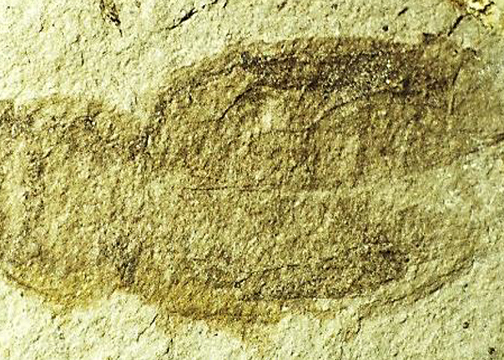
The wide range of fossil insect sites in Poland is of significant importance in understanding the evolution of the inland European faunas. Poland has been the site of many such discoveries, including the Early Jurassic Odrowąż, where specimens have been found with complete bodies and wings, the Late Jurassic Owadów-Brzezinki, and the Triassic Pałęgi clay-pit, which contains fossilised insects. This paper presents a short review of insect fossil sites in Polish sediments, with location maps. The table provides detailed information about these sites, taking into account the taxonomic affiliation of the specimens and their age.
References
- Andreyeva-Grigorovich, A.S., Oszczypko, N., Savitskaya, N.A., Ślączka, A. & Trofimovich, N.A. (2003) Correlation of Late Badenian salts of the Wieliczka, Bochnia and Kalush areas (Polish and Ukrainian Carpathian Foredeep). Annales Societatis Geologorum Poloniae, 73, 67–89.
- Aristov, D.S., Żyła, D. & Wegierek, P. (2013) Chauliodites niedzwiedzkii sp. n. (Grylloblattida: Chaulioditidae) from Triassic sediments of Poland. Zootaxa, 3721 (3), 281–285. https://doi.org/10.11646/zootaxa.3721.3.4
- Arndt, E., Beutel, R.G. & Will, K. (2016) 7.10 Carabidae Latreille, 1802. In: Beutel, R.G. & Kristensen, N.P. (Eds), Handbook of zoology. Arthropods: Insecta. Coleoptera, beetles. Volume 1: Morphology and systematics (Archostemata, Adephaga, Myxophaga, Polyphaga partim). 2nd edition. De Gruyter, Berlin/Boston, pp. 162–190.
- Assmann, A. (1870a) Paleontologie. Beiträge zur Insekten-Fauna der Vorwelt Einleitung. 1. Beitrag. Die fossilen Insekten des tertiären (miocenen) Thonlagers von Schossnitz bei Kanth in Schlesien. 2. Beitrag. Fossile Insekten aus der tertiären (oligocenen) Braunkohle von Naumburg am Bober. Zeitschrift für Entomologie, N.F., 1, 1–62. https://doi.org/10.5962/bhl.title.143655
- Assmann, A. (1870b) Palaeontologie. Beiträge zur Insekten-Fauna der Vorwelt. Zeitschrift für Entomologie (Separat), Breslau, 1–62. https://doi.org/10.5962/bhl.title.143655
- Azar, D. (2024) Robust resolved phylogeny of hexapods’ four classes. Proceedings of the National Academy of Sciences of the United States of America, 121 (44), e2418732121. https://doi.org/10.1073/pnas.2418732121
- Bacon, F. (1638) The historie of life and death With observations naturall and experimentall for the prolonging of life. Written by the Right Honorable Francis Lord Verulam, Viscount S. Alban. I. Okes, for Humphrey Mosley, at the Princes Armes in Pauls Church-Yard, London, 323 pp.
- Baranowska-Zarzycka, Z. (1988) Main features of the Pliocene fruit-seed flora from Ruszów near Żary (West Poland). Acta Palaeobotanica, 28 (1-2), 23–27.
- Barbacka, M., Wcisło-Luraniec, E. & Ziaja, J. (2005) Systematyka, przystosowanie do środowiska i tafonomia dolnojurajskiej flory z Odrowąża. Tomy Jurajskie (Volumina Jurassica), 3, 128–129. [In Polish]
- Bar-On, Y.M., Phillips, R. & Milo, R. (2018) The biomass distribution on Earth. Proceedings of the National Academy of Sciences of the United States of America, 115 (25), 6506–6511. https://doi.org/10.1073/pnas.1711842115
- Bechly, G. (1996) Morphologische Untersuchungen am Flügelgeäder der rezenten Libellen und deren Stammgruppenvertreter (Insecta; Pterygota; Odonata) unter besonderer Berücksichtigung der phylogenetischen Systematik und des Grundplanes der Odonata. Petalura, Special Volume 2, 402 pp.
- Bechly, G. & Kin, A. (2013) First record of the fossil dragonfly family Eumorbaeschnidae from the Upper Jurassic of Poland. Acta Palaeontologica Polonica, 58 (1), 121–124. https://doi.org/10.4202/app.2011.0194
- Bechly, G., Nel, A., Martínez-Delclòs, X., Jarzembowski, E.A., Coram, R., Martill, D., Fleck, G., Escuillié, F., Wisshak, M.M. & Maisch, M. (2001) A revision and phylogenetic study of Mesozoic Aeshnoptera, with description of several new families, genera and species (Insecta: Odonata: Anisoptera). Neue Paläontologische Abhandlungen, 4, 1–219.
- Beck, C.W., Kaminská, L. & Marková, K. (2009) Amber—raw material from Palaeolithic sites. Sprawozdania Archeologiczne, 61, 147–174.
- Bellamy, C.L. (2003) Nomenclatural and taxonomic changes, new distribution and biological records for jewel beetles (Coleoptera: Buprestidae). Insecta Mundi, 16, 57–63.
- Benson, R.B.J., Butler, R., Close, R.A., Saupe, E. & Rabosky, D.L. (2021) Biodiversity across space and time in the fossil record. Current biology, 31 (19), R1225–R1236. https://doi.org/10.1016/j.cub.2021.07.071
- Bertrand, E. (1763) Dictionnaire unniversel des fossiles propres et des fossiles accidentels, contenant une description des terres, des sables, des sols, des soufres, des bitumes, des pierres simples & composées, communes & précieuses, transparentes & opaques, amorphes & figurées, des minéraux, des métaux, des pétrifactions du règne animal &. du règne végétal & c., avec des recherches sur la formation de ces fossiles, sur leur origine, leur usage & c. Louis Cambeau, Avignon, xxxii + 606 pp. https://doi.org/10.5962/bhl.title.145196
- Béthoux, O. & Nel, A. (2002) Venation pattern and revision of Orthoptera sensu nov. and sister groups. Phylogeny of Palaeozoic and Mesozoic Orthoptera sensu nov. Zootaxa, 96 (1), 1–88. https://doi.org/10.11646/zootaxa.96.1.1
- Béthoux, O. & Nel, A. (2005) Some Palaeozoic Protorthoptera are ancestral orthopteroids: major wing braces as clues to a new split among the Protorthoptera (Insecta). Journal of Systematic Palaeontology, 2 (4), 285–309. https://doi.org/10.1017/S1477201904001488
- Bilan, W. (1975) The Rhaetic profile in Krasiejów near Opole. Zeszyty Akademii Górniczo-Hutniczej, Geologia, 1, 13–19. [In Polish with English summary]
- Błażejowski, B., Gieszcz, P. & Tyborowski, D. (2016) New finds of well preserved Tithonian fossils from the Owadów-Brzezinki quarry (central Poland)—an overview and perspectives. Volumina Jurassica, 14, 123–132.
- Błażejowski, B., Pszczółkowski, A., Grabowski, J., Wierzbowski, H., Deconinck, J.-F., Olempska, E., Teodorski, A. & Nawrocki, J. (2023a) Integrated stratigraphy and clay mineralogy of the Owadów-Brzezinki section (Lower–Upper Tithonian transition, central Poland): implications for correlations between the Boreal and the Tethyan domains and palaeoclimate. Journal of the Geological Society, 180 (2), jgs2022–073. https://doi.org/10.1144/jgs2022-073
- Błażejowski, B., Weryński, Ł., Wierzbowski, A., Michalska, M., Hryniewicz, K., Uchman, A., Kugler, S., Bącal, P. & Hołda-Michalska, A. (2023b) Summary of a decade of research at the Owadów-Brzezinki Lagerstätte (Tithonian, central Poland): A review and perspectives for the future. Volumina Jurassica, 21, 83–98. https://doi.org/10.7306/VJ.21.5
- Bocheński, Z.M., Tomek, T., Wertz, K., Happ, J., Bujoczek, M. & Świdnicka, E. (2018) Articulated avian remains from the early Oligocene of Poland adds to our understanding of Passerine evolution. Palaeontologia Electronica, 21.2.32A, 1–12. https://doi.org/10.26879/843
- Bocheński, Z.M., Tomek, T. & Świdnicka, E. (2016) A tiny short-legged bird from the early Oligocene of Poland. Geologica Carpathica, 67 (5), 463 – 469. https://doi.org/10.1515/geoca-2016-0029
- Bocheński, Z.M., Tomek, T., Wertz, K. & Świdnicka, E. (2013) The third nearly complete passerine bird from the early Oligocene of Europe. Journal of Ornithology, 154, 923–931. https://doi.org/10.1007/s10336-013-0958-z
- Borowiec, L. (1984) Zoogeographical study on Donaciinae of the world (Coleoptera, Chrysomelidae). Polskie pismo entomologiczne, 53, 433–518.
- Boudinot, B.E., Borowiec, M.L. & Prebus, M.M. (2022) Phylogeny, evolution, and classification of the ant genus Lasius, the tribe Lasiini and the subfamily Formicinae (Hymenoptera: Formicidae). Systematic Entomology, 47 (1), 113–151. https://doi.org/10.1111/syen.12522
- Brauckmann, C. & Brauckmann, B. (1992) Zur stratigraphischen Datierung der ältesten Fluginsekten (Pterygota; Namurium, Ober-Karbon). Dortmunder Beiträge zur Landeskunde, 26, 59–68.
- Brauckmann, C., Brauckmann, B. & Gröning, E. (1996) The stratigraphical position of the oldest known Pterygota (Insecta. Carboniferous, Namurian). Annales de la Société géologique de Belgique, Hommage à Maurice Streel, 117 (1), 47–56.
- Burdukiewicz, J.K. (2009) Further research on amber in Palaeolithic archaeology. In: Bardukiewicz, J.K., Cyrek, K., Dyczek, P. & Szymczak, K. (Eds), Understanding the past. Papers offered to Stefan K. Kozłowski. Center for Research on the Antiquity of Southeasetn Europe, University of Warsaw, Warsaw, pp. 69–74.
- Bzowska, G. & Racka, M. (2006) Kajper Krasiejowa okiem geochemika i mineraloga. Gospodarka Surowcami Mineralnymi, 22 (special issue 3), 355–358. [In Polish with English abstract]
- Carpenter, F.M. (1992) Treatise on invertebrate paleontology. Part R, Arthropoda 4, Volume 3: Superclass Hexapoda. Geological Society of America, Boulder, xxi + 277 pp.
- Ceccolini, F., Ross, A.J. & Cianferoni, F. (2023) Case 3860: Stygnidae Handlirsch, 1906 (Arthropoda, Insecta, order incertae sedis): proposed emendation of spelling to Stygneidae to remove homonymy with Stygnidae Simon, 1879 (Arthropoda, Arachnida, Opiliones). Bulletin of Zoological Nomenclature, 80, 42–45. https://doi.org/10.3157/021.129.0401
- Clairville, J.P. de (1806) Entomologie helvétique ou catalogue des insectes de la Suisse rangés d’après une nouvelle méthode. Helvetische Entomologie, oder, Verzeichniss der schweizerischen Insekten nach einer neuen Methode geordnet: mit Beschreibungen und Abbildungen. Orell, Füssli et Compagnie, Zürich. Vol. 2, i–xliii+1–247+pls. 1–32. https://doi.org/10.5962/bhl.title.15822
- Clark, H. (1864) Notes on the genus Hydaticus (Leach), with descriptions of new species. Transactions of the Royal Entomological Society of London, (3) 2, 209–222 + pl. xiv. https://doi.org/10.1111/j.1365-2311.1864.tb00102.x
- Condamine, F., Clapham, M. & Kergoat, G. (2016) Global patterns of insect diversification: towards a reconciliation of fossil and molecular evidence? Scientific reports, 6, 19208. https://doi.org/10.1038/srep19208
- Crampton, G.C. (1928) The grouping of the insect orders and their lines of descent. The Entomologist, 61, 82–85.
- Daley, A.C., Antcliffe, J.B., Drage, H.B. & Pates, S. (2018) Early fossil record of Euarthropoda and the Cambrian Explosion. Proceedings of the National Academy of Sciences of the United States of America, 115 (21), 5323–5331. https://doi.org/10.1073/pnas.1719962115
- Davis, R.B., Baldauf, S.L. & Mayhew, P.J. (2010) Many hexapod groups originated earlier and withstood extinction events better than previously realized: inferences from supertrees. Proceedings of the Royal Society B: Biological Sciences, 277, 1597–1606. https://doi.org/10.1098/rspb.2009.2299
- Desneux, J. (1904) Isoptera, fam. Termitidae. Genera Insectorum, 25, 1–52, 2 pls.
- Dopita, M., Aust, M., Brieda, J., Černý, I., Dvořák, P., Fialová, V., Foldyna, J., Grnela, A., Grygar, R., Hoch, I., Honěk, J., Kaštanovský, V., Konečný, P., Kožušníková, A., Krejčí, B., Kumpera, O., Martinec, P., Merenda, M., Müller, K., Novotná, E., Ptáček, J., Purkyňová, E., Řehoř, F., Strakoš, Z., Tomis, L., Tomšík, J., Valterová, P., Vašíček, Z., Vencl, J. & Židková., S. (1997) Geologie české části hornoslezské pánve. Ministerstvo životního prostředí ČR, Praha, 280 pp. [In Czech]
- Du, S.Y., Tihelka, E., Yu, D.Y., Chen, W.J., Bu, Y., Cai, C.Y., Engel, M.S., Luan, Y.X. & Zhang, F. (2024) Revisiting the four Hexapoda classes: Protura as the sister group to all other hexapods. Proceedings of the National Academy of Sciences of the United States of America, 121 (39), e2408775121. https://doi.org/10.1073/pnas.2408775121
- Du, S.Y., Tihelka, E., Yu, D.Y., Chen, W.J., Bu, Y., Cai, C.Y., Engel, M.S., Luan, Y.X. & Zhang, F. (2025) Reply to Machida et al.: Although embryology cannot establish the “Protura-sister”, phylogenomics can. Proceedings of the National Academy of Sciences of the United States of America, 122 (5), e2425775122. https://doi.org/10.1073/pnas.2425775122
- Dvořák, T., Krzemiński, W. & Prokop, J. (2022) New stem-dictyopteran insects from the Pennsylvanian deposits at Mazon Creek and Sosnowiec (Insecta: Polyneoptera). Historical Biology, 35 (12), 2334–2339. https://doi.org/10.1080/08912963.2022.2140423
- Dvořák, T., Pecharová, M., Krzemiński, W. & Prokop, J. (2019) New archaeorthopteran insects from the Carboniferous of Poland: Insights into tangled taxonomy. Acta Palaeontologica Polonica, 64 (4), 787–796. https://doi.org/10.4202/app.00614.2019
- Dziadzio, P.S. & Matyasik, I. (2021) Sedimentological and geochemical characterisation of the Lower Oligocene Menilite shales from the Magura, Dukla, and Silesian nappes, Polish Outer Carpathians—A new concept. Marine and Petroleum Geology, 132, 105247. https://doi.org/10.1016/j.marpetgeo.2021.105247
- Dziadzio, P.S., Matyasik, I., Garecka, M. & Szydło, A. (2016) Lower Oligocene Menilite Beds, Polish Outer Carpathians: supposed deep-sea flysch locally reinterpreted as shelfal, based on new sedimentological, micropalaeontological and organic-geochemical data. Instytut Nafty i Gazu—Państwowy Instytut Badawczy, Kraków, 120 pp. https://doi.org/10.18668/PN2016.213
- Dzik, J. (2003) A beaked herbivorous archosaur with dinosaur affinities from the early Late Triassic of Poland. Journal of Vertebrate Paleontology, 23 (3), 556–574. https://doi.org/10.1671/a1097
- Erichson, F.W. (1847) Insecta. In: Reports on zoology for 1843, 1844. The Ray Society, London, pp. 116–194. https://doi.org/10.5962/bhl.title.1753
- Fabricius, J.C. (1775) Systema entomologiae, sistens insectorum classes, ordines, genera, species, adiectis synonymis, locis, descriptionibus, observationibus. Libraria Kortii, Flensburgi et Lipsiae, xvi + 832 pp. https://doi.org/10.5962/bhl.title.36510
- Fabricius, J.C. (1792) Entomologia systematica emendata et auta. Secundum classes, ordines, genera, species adjectis synonymis, locis, descriptionibus. Tomo I, Pars I. Impensis Christ. Gottl. Proft, Hafniae, xx + 330 pp. https://doi.org/10.5962/bhl.title.125869
- Fabricius, J.C. (1793) Entomologia systematica emendata et aucta. Secundum classes, ordines, genera, species, adjectis synonimis, locis, observationibus, descriptionibus. Tomus II. Impensis Christ. Gottl. Proft, Hafniae, viii + 519 pp. https://doi.org/10.5962/bhl.title.125869
- Feldmann, R.M., Schweitzer, C.E. & Błażejowski, B. (2015) A new species of lobster (Glyphoidea: Mecochiridae) from the Late Jurassic (Late Tithonian) Lagerstätte from central Poland. Neues Jahrbuch für Geologie und Paläontologie—Abhandlungen, 275 (1), 107–114. https://doi.org/10.1127/njgpa/2015/0457
- Fischer, G., Azorsa, F. & Fisher, B. (2014) The ant genus Carebara Westwood (Hymenoptera, Formicidae): synonymisation of Pheidologeton Mayr under Carebara, establishment and revision of the C. polita species group. ZooKeys, 438, 57–112. https://doi.org/10.3897/zookeys.438.7922
- Forel, A. (1878) Études myrmécologiques en 1878 (première partie) avec l’anatomie du gésier des fourmis. Bulletin de la Société Vaudoise des Sciences Naturelles, 15, 337–392.
- Gabzdyl, W. & Gorol, M. (2008) Geologia i bogactwa mineralne Górnego Śląska i obszarów przyległych. Wydawnictwo Politechniki Śląskiej, Gliwice, 175 pp. [In Polish]
- Gabzdyl, W. & Hanak, B. (2005) Surowce mineralne Górnośląskiego Zagłębia Węglowego i obszarów przyległych. Przegląd Geologiczny, 53 (9), 726–733. [In Polish]
- Gaines, R.R. & Droser, M.L. (2025) Fossil Lagerstätten and the enigma of an actualistic fossil preservation. Paleobiology, 51 (1), 29–43. https://doi.org/10.1017/pab.2024.38
- Galewski, K. & Głazek, J. (1973) An unusual occurrence of the Dytiscidae (Coleoptera) in the siliceous, flowstone of the Upper Miocene cave at Przeworno, Lower Silesia, Poland. Acta Geologica Polonica, 23, 445–461.
- Gall, J.C. & Grauvogel-Stamm, L. (2005) The early Middle Triassic ‘Grès à Voltzia’ Formation of eastern France: a model of environmental refugium. Comptes Rendus Palevol, 4, 637–652. https://doi.org/10.1016/j.crpv.2005.04.007
- Garlicki, A. (2008) Salt Mines at Bochnia and Wieliczka. Przegląd Geologiczny, 56 (8/1), 663–669.
- Giribet, G. & Edgecombe, G.D. (2012) Reevaluating the arthropod tree of life. Annual review of entomology, 57, 167–186. https://doi.org/10.1146/annurev-ento-120710-100659
- Głazek, J., Oberc, J. & Sulimski, A. (1971) Miocene vertebrate faunas from Przeworno, Lower Silesia, and their geological setting. Acta Geologica Polonica, 21, 473−516.
- Głazek, J., Oberc, J. & Sulimski, A. (1972) Discovery of the Miocene vertebrate faunas at Przeworno, Lower Silesia. Przegląd Geologiczny, 20 (2), 65–70.
- Głazek, J. (1975) Wypełnienia form krasowych z fauną kręgowców i chrząszczy oraz ich znaczenie paleogeograficzne. Przewodnik 47 Zjazdu PTG, Świdnica 22-24 czerwca 1975, pp. 174–175. [In Polish]
- Göppert, H.R. (1855) Die tertiäre Flora von Schossnitz in Schlesien. Beyn’sche Buchhandlung (E. Remer), Görlitz, pp. i–xviii + 1–52.
- Gougeon, R., Buatois, L.A., Mángano, M.G., Narbonne, G.M., Laing, B.A., Paz, M. & Minter, N.J. (2025) Environmental and evolutionary controls in animal-sediment interactions at the onset of the Cambrian explosion. Current biology, 35 (2), 249–264.e4. https://doi.org/10.1016/j.cub.2024.11.028
- Gradziński, R., Doktor, M. & Brzystki, B. (1982) Accumulation of drifted logs and other large plant debris in a Carboniferous fluvial channel at Czerwionka, Upper Silesia. Acta Geologica Polonica, 32 (1-2), 57–68.
- Gravenhorst, J.L.C. (1806) Monographia coleopterorum micropterorum. Typis Henrici Dietrich, Gottingae, xvii + 236 + [12] pp. https://doi.org/10.5962/bhl.title.67769
- Greenwalt, D.E., Ulmer, J.M., Talamas, E., Spasojevic, T. & Buffington, M.L. (2025) Is fossil insect taxonomy compatible with database-based research? Palaeoentomology, 8 (3), 278–289. https://doi.org/10.11646/palaeoentomology.8.3.4
- Grimaldi, D. & Engel, M.S. (2005) Evolution of the insects. Cambridge University Press, New York, 755 pp.
- Gruntmejer, K., Konietzko-Meier, D. & Bodzioch, A. (2015) The Triassic world of Krasiejów. 13th Annual Meeting of the European Association of Vertebrate Palaeontologists Opole, Poland, 8-12 July 2015, Field guide. pp. 17–27.
- Handlirsch, A. (1906-1908) Die Fossilen Insekten und die Phylogenie der Rezenten Formen, parts I-IV, Ein Handbuch fur Paläontologen und Zoologen. W. Engelmann, Leipzig, 1430 pp. https://doi.org/10.5962/bhl.title.5636
- Hartung, W. & Patteisky, K. (1960) Die Flora der Goniatiten-Zonen im Visé und Namur des ostsudetischen Karbons. Compte Rendu Quatrième Congrès pour l’avancement des études de stratigraphie et de géologie du Carbonifère, Heerlen 15-20 Septembre 1958, 1, 247–262, Abb. 1–8.
- Häntzschel, W. (1975) Trace fossils and problematica. Second Edition (Revised and enlarged). In: Moore, R.C. (Ed.), Treatise on invertebrate paleontology, Part W, Miscellanea, Supplement 1. Geological Society of America and University of Kansas, Boulder, Colorado and Lawrence, pp. W1–W269. https://doi.org/10.17161/tip.v0i0.5426
- Heer, O. (1863–1865) Die Urwelt der Schweiz. Friedrich Schultheß, Zürich. xxix + 622 pp. [pp. 1–48 + pls 1–3: 1863; pp. 49–496 + pls. 4–10: 1864; pp. 497–622, i–xxix + pl. 11: 1865]
- Hummel, A. (1983) The Pliocene leaf flora from Ruszów near Żary in Lower Silesia, SW Poland. Prace Muzeum Ziemi, 36, 9–104.
- Hummel, A. (1991) The Pliocene leaf flora from Ruszów near Żary in Lower Silesia, south-west Poland. Part II (Betulaceae). Acta Palaeobotanica, 31 (1-2), 73–151.
- Jaros, J. (1984) Słownik historyczny kopalń węgla na ziemiach polskich. Śląski Instytut Naukowy, Katowice, 205 pp. [In Polish]
- Jary, Z. & Marks, L. (2024) Quaternary history. In: Migoń, P. & Jancewicz, K. (Eds), Landscapes and landforms of Poland. World geomorphological landscapes. Springer, Cham, pp. 19–31. https://doi.org/10.1007/978-3-031-45762-3_2
- Jentzsch, A. & Berg, G. (1913) Die Geologie der Braunkohlenablagerungen im östlichen Deutschland. Königlich Preußischen Geologischen Laudesanstalt, Berlin, 142 pp. + 8 maps.
- Kasiński, J.R. & Słodkowska, B. (2024) Litostratygrafia osadów wyższej części neogenu na obszarze Niżu Polskiego [Lithostratigraphy of the upper part of the Neogene on the Polish Lowlands area]. Prace Państwowego Instytutu Geologicznego, 209, 25–62. [In Polish with English summary] https://doi.org/10.7306/prace.2(2024)
- Kohlman-Adamska, A., Ziembińska-Tworzydło, M. & Zastawniak, E. (2004) In situ pollen in some flowers and inflorescences in the Late Miocene flora of Sośnica (SW Poland). Review of Palaeobotany and Palynology, 132 (3-4), 261–280. https://doi.org/10.1016/j.revpalbo.2004.07.005
- Kolbe, H. (1908) Mein System der Coleopteren. Zeitschrift für wissenschaftliche Insekten-Biologie, 4, 116–123, 153–162, 219–226, 246–251, 286–294, 389–400.
- Kosakowski, P., Koltun, Y., Machowski, G., Poprawa, P. & Papiernik, B. (2018) The geochemical characteristics of the Oligocene—Lower Miocene Menilite Formation in the Polish and Ukrainian Outer Carpathians: A review. Journal of Petroleum Geology, 41, 319–335. https://doi.org/10.1111/jpg.12705
- Kotlarczyk, J. & Uchman, A. (2012) Integrated ichnology and ichthyology of the Oligocene Menilite Formation, Skole and Subsilesian nappes, Polish Carpathians: A proxy to oxygenation history. Palaeogeography, Palaeoclimatology, Palaeoecology, (331-332), 104–118. https://doi.org/10.1016/j.palaeo.2012.03.002
- Kotlarczyk, J., Jerzmańska, A., Świdnicka, E. & Wiszniowska, T. (2006) A framework of ichthyofaunal ecostratigraphy of the Oligocene-early Miocene strata of the Polish outer Carpathian basin. Annales Societatis Geologorum Poloniae, 76, 1–111.
- Krawczyński, W., Filipiak, P. & Gwoździewicz, M. (1997) Zespół skamieniałości z karbońskich sferosyderitów (westfal A) NE części Górnośląskiego Zagłębia Węglowego. Przegląd Geologiczny, 45, 1271–1274. [In Polish]
- Krawczyński, W., Filipiak, P. & Wojciechowski, D. (2001) Owady z warstw załęskich westfal A) NE części Górnośląskiego Zagłębia Węglowego. In: XXI Terenowa Szkoła Geologów Uniwersytetu Śląskiego, Uniwersytet Śląski, Wydział Nauk o Ziemi, Sosnowiec, 25–28. [In Polish]
- Krishna, K., Grimaldi, D.A., Krishna, V. & Engel, M.S. (2013) Treatise on the Isoptera of the world. Bulletin of the American Museum of Natural History, 377, 1–2704. https://doi.org/10.1206/377.1
- Kukalová, J. (1958a) Paoliidae Handlirsch (Insecta, Protorthoptera) aus dem Oberschlesichen Steinkohlenbecken. Geologie, 7, 935–959.
- Kukalová, J. (1958b) On Czechoslovakian Spilapteridae Handlirsch (Insecta, Palaeodictyoptera). Acta Universitatis Carolinae, Geologica, 3, 231–240.
- Kukalová, J. (1959) Breyeria harborae n. sp. (Insecta, Palaeodictyoptera) of Upper Silesian coal basin (Westphalian). Věstník Ústředního Ústavu Geologického, 34, 310–313.
- Kukalová, J. (1960) New Paleodictyoptera of the Carboniferous and Permian of Czechoslovakia. Sborník Ústředního Ústavu Geologického, Oddíl eologický, 25, 239–251.
- Kuleta, M. & Nawrocki, J. (2002) Litostratygrafia i magnetostratygrafia pstrego piaskowca w północnym obrzeżeniu Gór Świętokrzyskich. Posiedzenia Naukowe Państwowego Instytutu Geologicznego, 58, 109–111. [In Polish]
- Kuleta, M., Niedźwiedzki, G. & Zbroja, S. (2006) Stanowisko z tropami kręgowców z osadów najwyższego środkowego pstrego piaskowca Gór Świętokrzyskich [Vertebrate track site in the uppermost Middle Buntsandstein of the Holy Cross Mountains, Poland]. Przegląd Geologiczny, 54 (12), 1081–1088. [In Polish with English abstract]
- Kutek, J. (1994) The Scythicus Zone (Middle Volgian) in Poland: its ammonites and biostratigraphic subdivision. Acta Geologica Polonica, 44, 1–34.
- Lang, C.N. (1708) Historia lapidum figuratorum Helvetiae: ejusque viciniae, in quâ non soluÌm enarrantur omnia eorum genera, species et vires aeneisque tabulis repraesentantur. Sed insuper adducuntur eorum loca nativa, in quibus reperiri solent, ut cuilibet facile sit eos colligere, modo adducta loca adire libeat. Sumptibus authoris, typis Jacobi Tomasini, Venetiis, iii + iii + vi + iv + 165 pp. https://doi.org/10.5962/bhl.title.139091
- Latreille, P.A. (1802) Histoire naturelle, générale et particulière des crustacés et des insectes. Ouvrage faisant suite à l’histoire naturelle générale et particulière, composée par Leclerc de Buffon, et rédigée par C.S. Sonnini, membre de plusieurs sociétés savantes. Familles naturelles des genres. Tome troisième. F. Dufart, Paris, pp. i–xii + 13–467. [+ 1 (errata)] https://doi.org/10.5962/bhl.title.169285
- Latreille, P.A. (1829) Le règne animal distribué d’après son organisation, pour servir de base a l’histoire naturelle des animaux et d’introduction a l’anatomie comparée. Nouvelle Édition, Revue et Augmentée. Tome IV: Crustacés, arachnides et partie des insectes. Déterville, Paris, 584 pp.
- Leach, W.E. (1815) Entomology. In: Brewster, D. (Ed.), The Edinburgh encyclopedia. Volume 9. William Blackwood, Edinburgh, pp. 57–172. https://doi.org/10.5962/bhl.title.66019
- Leach, W.E. (1817) The zoological miscellany: being descriptions of new or interesting animals. Vol. 3. E. Nodder & Son, London, 224 pp. https://doi.org/10.5962/bhl.title.41372
- Legalov, A.A. (2015) Fossil Mesozoic and Cenozoic weevils (Coleoptera, Obrienioidea, Curculionoidea). Paleontological Journal, 49 (13), 1442–1513. https://doi.org/10.1134/S0031030115130067
- Lepeletier de Saint-Fargeau, A. (1835) [1836] Histoire naturelle des insectes. Hyménoptères. Tome I. Roret, Paris, 547 pp. https://doi.org/10.5962/t.173542
- Linck, O. (1949) Fossile Bohrgange (Anobium simile n.g. n.sp.) an einen Keuperholz. Neues Jahrbuch für Mineralogie, Geologie und Paläontologie Monatshefte, Abteilung B, Geologie und Paläontologie, (4-6), 180–185.
- Linnaeus, C. (1758) Systema nature per regna tria naturae, secundum classes, ordines, genera, species, cum caracteribus, differentiis, synonymi, locis. Tomus I. Editio decima, reformata. Laurentii Salvii, Holmiae [= Stockholm], 824 pp. https://doi.org/10.5962/bhl.title.542
- Linnaeus, C. (1760) [1761] Fauna svecica: sistens animalia sveciae regni: mammalia, aves, amphibia, pisces, insecta, vermes, distributa per classes & ordines, genera & species, cum differentiis specierum, synonymis auctorum, nominibus incolarum, locis natalium, descriptionibus insectorum. Editio altera, auctior. Sumtu & Literis Direct. Laurentii Salvii, Stockholmiae, 578 pp. https://doi.org/10.5962/bhl.title.46380
- Linné, C. von (1778) Des Ritters Carl von Linné Königlich Schwedischen Leibarztes [et]c. [et]c. vollständiges Natursystem des Mineralreichs. Dritter Teil. Bey Gabriel Nicolaus Raspe, Nürnberg, xiv + 486 pp.
- Löbl, I & Smetana, A. (Eds) (2007) Catalogue of Palaearctic Coleoptera, Vol. 4: Elateroidea, Derodontoidea, Bostrichoidea, Lymexyloidea, Cleroidea and Cucujoidea. Apollo Books, Stenstrup, 935 pp. https://doi.org/10.1163/9789004260894
- Machida, R., Fukui, M., Tomizuka, S., Ikeda, Y., Sekiya, K. & Masumoto, M. (2025) Embryology cannot establish the “Protura-sister”. Proceedings of the National Academy of Sciences of the United States of America, 122 (5), e2423813122. https://doi.org/10.1073/pnas.2423813122
- Martinetto, E., Tschopp, E. & Gastaldo, R.A. (Eds) (2020) Nature through time. Virtual field trips through the nature of the past. Springer Textbooks in Earth Sciences, Geography and Environment, Springer Nature Switzerland AG, Cham, xviii + 462 pp. https://doi.org/10.1007/978-3-030-35058-1
- Matyja, B.A. & Wierzbowski, A. (2016) Ammonites and ammonite stratigraphy of the uppermost Jurassic (Tithonian) of the Owadów–Brzezinki quarry (central Poland). Volumina Jurassica, 14, 65–122.
- Mazur, S. (2024) An outline of the geology of Poland. In: Migoń, P. & Jancewicz, K. (Eds), Landscapes and landforms of Poland. World geomorphological landscapes. Springer, Cham, pp. 3–17. https://doi.org/10.1007/978-3-031-45762-3_1
- Meyer, H. von (1844) 1844. Diverse Berichten: Frankfurt a. M., 25. Mai 1844. Neues Jahrbuch fur Mineralogie, Geologie, und Palaontologie, 1844, 564–567.
- Michalska, M., Weryński, Ł. & Błażejowski, B. (2025) Podoba mi się ten głaz, to naprawdę ładny głaz—czyli o nowych skamieniałościach z Owadowa-Brzezinek [I like that boulder, that is a nice boulder—new fossils from Owadów-Brzezinki]. Przegląd Geologiczny, 73 (6), 590–595. [In Polish with English abstract] https://doi.org/10.7306/2025.64
- Misof, B., Liu, S., Meusemann, K., Peters, R.S., Donath, A., Mayer, C., Frandsen, P.B., Ware, J., Flouri, T., Beutel, R.G., Niehuis, O., Petersen, M., Izquierdo-Carrasco, F., Wappler, T., Rust, J., Aberer, A.J., Aspöck, U., Aspöck, H., Bartel, D., Blanke, A., Berger, S., Böhm, A., Buckley, T.R., Calcott, B., Chen, J., Friedrich, F., Fukui, M., Fujita, M., Greve, C., Grobe, P., Gu, S., Huang, Y., Jermiin, L.S., Kawahara, A.Y., Krogmann, L., Kubiak, M., Lanfear, R., Letsch, H., Li, Y., Li, Z., Li, J., Lu, H., Machida, R., Mashimo, Y., Kapli, P., McKenna, D.D., Meng, G., Nakagaki, Y., Navarrete-Heredia, J.L., Ott, M., Ou, Y., Pass, G., Podsiadlowski, L., Pohl, H., von Reumont, B.M., Schütte, K., Sekiya, K., Shimizu, S., Ślipinski, A., Stamatakis, A., Song, W., Su, X., Szucsich, N.U., Tan, M., Tan, X., Tang, M., Tang, J., Timelthaler, G., Tomizuka, S., Trautwein, M., Tong, X., Uchifune, T., Walzl, M.G., Wiegmann, B.M., Wilbrandt, J., Wipfler, B., Wong, T.K., Wu, Q., Wu, G., Xie, Y., Yang, S., Yang, Q., Yeates, D.K., Yoshizawa, K., Zhang, Q., Zhang, R., Zhang, W., Zhang, Y., Zhao, J., Zhou, C., Zhoum L., Ziesmannm T., Zou, S., Li, Y., Xu, X., Zhang, Y., Yang, H., Wang, J., Wang, J., Kjer, K.M. & Zhou, X. (2014) Phylogenomics resolves the timing and pattern of insect evolution. Science, 346 (6210), 763–767. https://doi.org/10.1126/science.1257570
- Mitchell, E.G. & Pates, S. (2025) From organisms to biodiversity: the ecology of theEdiacaran/Cambrian transition. Paleobiology, 1–24. https://doi.org/10.1017/pab.2024.21
- Mizerski, W. (2009) Geologia Polski [Geology of Poland]. 3rd edn. PWN, Warszawa, 316 pp. [In Polish]
- Moysiuk, J. & Caron, J.B. (2025) Early evolvability in arthropod tagmosis exemplified by a new radiodont from the Burgess Shale. Royal Society open science, 12 (5), 242122. https://doi.org/10.1098/rsos.242122
- Nel, A., Bernard, R., Szybiak, R. & Daraż, B. (2025) The first fossil insects from the marine Oligocene Menilite Formation in Poland (Odonata, Coleoptera). Palaeoentomology, 8 (1), 80–88. https://doi.org/10.11646/palaeoentomology.8.1.9
- Nicholson, D.B., Mayhew, P.J. & Ross, A.J. (2015) Changes to the fossil record of insects through fifteen years of discovery. PLoS ONE, 10 (7), e0128554. https://doi.org/10.1371/journal.pone.0128554
- Nilsson, A.N. (1981) The Fennoscandian species of the genus Hydaticus Leach (Coleoptera: Dytiscidae). Entomologica Scandinavica, 12, 103–108. https://doi.org/10.1163/187631281X00427
- Pacyna, G. (2013) Critical review of research on the Lower Jurassic flora of Poland. Acta Palaeobotanica, 53 (2), 141–163. https://doi.org/10.2478/acpa-2013-0015
- Pacyna, G. (2014) Plant remains from the Polish Triassic. Present knowledge and future prospects. Acta Palaeobotanica, 54 (1), 3–33. https://doi.org/10.2478/acpa-2014-0001
- Pacyna, G. (2019) Sphenopsid and fern remains from the Upper Triassic of Krasiejów (Sw Poland). Annales Societatis Geologorum Poloniae, 89, 307–316. https://doi.org/10.14241/asgp.2019.13
- Pacyna, G. & Zdebska, D. (2002) Upper Carboniferous plant macrofossils from sideritic concretions in Sosnowiec (Upper Silesian Coal Basin) and Mazon Creek (Illinois, USA). In: Lipiarski, I. (Ed.), Proceedings XXV symposium geology of coal-bearing strata of Poland. University of Mining and Metallurgy, Cracow, pp. 123–127.
- PBDB (2025) The Paleobiology Database. Available from: https://paleobiodb.org/#/ (Accessed 2 October 2025).
- Pieńkowski, G. & Gierliński, G. (1987) New finds of dinosaur footprints in Liassic of the Holy Cross Mts. and its palaeoenvironmental background. Przegląd Geologiczny, 35, 199–205.
- Pieńkowski, G. & Niedźwiedzki, G. (2008) Invertebrate trace fossil assemblages from the Lower Hettangian of Sołtyków, Holy Cross Mountains, Poland. Volumina Jurassica, 4, 109–131.
- Piller, M. & Mitterpacher, L. (1783) Iter per Posegman Sclavoniae provinciam mensibus Junio, et Julio Anno MDCCXXXII suapectum. Typis Regiae Universitatis, Budae, 147 pp. + 16 pl. https://doi.org/10.5962/bhl.title.34709
- Plinius Secundus, G. (77) Naturalis Historia. Libiri I–XXXVII. [10 volumes published in the year 77, while others after his death in 79]. Available from: http://penelope.uchicago.edu/Thayer/L/Roman/Texts/Pliny_the_Elder/ (Accessed 2 October 2025).
- Piwocki, M. (1998) An outline of the palaeogeographic and palaeoclimatic developments. In: Ważyńska, H. (Ed.), Palynology and palaeogeography of the Neogene in the Polish lowlands. Prace Pańtwowego Instytutu Geologicznego, 160, 8–12.
- Płonka, T. & Kowalski, K. (2017) Symbolic artefacts in the Late Palaeolithic and the early Mesolithic in Northern and Central Europe. In: Płonka, T. & Kowalski, K. (Eds), Rusinowo. The symbolic culture of foragers in the Late Palaeolithic and the Early Mesolithic. Institute of Archaeology, University of Wrocław, Wrocław, pp 163–181. https://doi.org/10.23734/22.18.108
- Ponomarenko, A.G. (1964) New beetles of the family Cupedidae from the Jurassic of Karatau. Paleontologicheskii Zhurnal, 2, 49–61. [In Russian]
- Popov, Y.A. (1996) The first record of a fossil water bug from the Lower Jurassic of Poland (Heteroptera: Nepomorpha: Belostomatidae). Polskie Pismo Entomologiczne, 65, 101–105.
- Prokop, J. & Nel, A. (2007) An enigmatic Palaeozoic stem−group: Paoliida, designation of new taxa from the Upper Carboniferous of the Czech Republic (Insecta: Paoliidae, Katerinkidae fam. n.). African Invertebrates, 48, 77–86.
- Prokop, J., Krzemiński, W., Krzemińska, E. & Wojciechowski, D. (2012) Paoliida, a putative stem-group of winged insects: Morphology of new taxa from the Upper Carboniferous of Poland. Acta Palaeontologica Polonica, 57 (1), 161–173. https://doi.org/10.4202/app.2010.0064
- Prokop, J., Krzemiński, W., Krzemińska, E., Hörnschemeyer, T., Ilger, J.-M., Brauckmann, C., Grandcolas, P. & Nel, A. (2013) Late Palaeozoic Paoliida is the sister group of Dictyoptera (Insecta: Neoptera). Journal of Systematic Palaeontology, 12 (5), 601–622. https://doi.org/10.1080/14772019.2013.823468
- Pruvost, P. (1933) Un ancętre des libellules dans le terrain houiller de Tchécoslovaquie. Annales de la Société Géologique du Nord, 58, 149–154.
- Ptaszyński, T. & Niedźwiedzki, G. (2006) Pstry piaskowiec w Górach Świętokrzyskich: chronostratygrafia i korelacja litostratygraficzna z Basenem Turyńskim. Przegląd Geologiczny, 54 (6), 525–533. [In Polish]
- Qvarnström, M., Fikáček, M., Vikberg Wernström, J., Huld, S., Beutel, R.G., Arriaga-Varela, E., Ahlberg, P.E. & Niedźwiedzki, G. (2021) Exceptionally preserved beetles in a Triassic coprolite of putative dinosauriform origin. Current biology, 31 (15), 3374–3381.e5. https://doi.org/10.1016/j.cub.2021.05.015
- Rajchel, J. & Uchman, A. (1998) Insect borings in Oligocene wood, Kliwa Sandstone, Outer Carpathians, Poland. Annales Societatis Geologorum Poloniae, 68, 219–224.
- Ranicka-Bobrowska, J. & Czeczott, H. (1958) Flora środkowego i górnego miocenu Polski w świetle badań ostatnich dwunastu lat [The Middle and Upper Miocene floras of Poland in view of last 12 years’ investigations]. Kwartalnik Geologiczny, 2 (1), 161–172. [In Polish with English summary]
- Rasnitsyn, A.P. & Aristov, D.S. (2016) Revision of the Palaeozoic order Paoliida (Insecta). Far Eastern Entomologist, 309, 1–13.
- Reymanówna, M. (1991) Two conifers from the Liassic flora of Odrowąż in Poland. In: Kovar-Eder, J. (Ed.), Palaeovegetational development in Europe and regions relevant to its palaeofloristic evolution. Proceedings of the Pan-European Palaeobotanical Conference. Vienna, 19–23 September 1991, Naturhistorisches Museum Wien, Wien, pp. 307–311.
- Römer, F. (1884) (Über) einen in Schieferthon der zwischen Königshütte und Laurahütte gelegenen Alfredgrube, 10 m im Liegenden des Carolinenflötzes, gefundenen Insectenflügel. Jahres-Bericht der Schlesischen Gesellschaft für Vaterländische Cultur, 62, 226.
- Rust, J. & McCoy, V.E. (2025) Fossilisation ecology—a more complete concept of taphonomy. Trends in Ecology & Evolution, 40 (10), 942–944. https://doi.org/10.1016/j.tree.2025.07.016
- Řehoř, F. & Řehořová, M. (1972) Makrofauna uhlonosného karbonu československé části Hornoslezské pánve. Ostravské museum, Ostrava, 1–136, Pls. 1–64. [In Czech]
- Santiago-Blay, J.A. (1994) Paleontology of leaf beetles. In: Joffret, P.H., Cox, M.L. & Petitpierre, E. (Eds), Novel aspects of the biology of Chrysomelidae. Springer Science + Business Media, Dordrecht, pp. 1–68. https://doi.org/10.1007/978-94-011-1781-4_1
- Schilling, P.S. (1843) Über den salz-bohrkäfer (Ptinus salinus mihi). Übersicht der Arbeiten und Veränderungen der Schlesischen Gesellschaft für Vaterländische Cultur, 21, 175.
- Schlirf, M. (2005) Revision and description of Keuper (Middle Ladinian to Rhaetian) invertebrate trace fossils from the southern part of the Germanic Basin and studies of related material. Doctoral thesis, Bayerischen Julius-Maximilians-Universität Würzburg, Würzburg, 300 pp.
- Schram, F.R., Vonk, R. & Hof, C.H.J. (1997) Mazon Creek Cycloidea. Journal of Paleontology, 71 (2), 261–284. https://doi.org/10.1017/S0022336000039172
- Schwarzbach, M. (1939) Karbon-Studien. IX. Der älteste Insektenflügel. Bemerkungen zu einem oberschlesischen Funde. Jahresberichte der Geologischen Vereinigung Oberschlesiens, 1939 (1), 28–30, Abb. 1.
- Shcherbakov, D.E. (2008a) O permskikh i triasovykh entomofaunakh v svyazi c biogeografieï i permo-triasovym krizisom. Palontologicheskiï Zhurnal, 2008, 1, 15–32. [Published in English as: Shcherbakov, D.E. (2008a) On Permian and Triassic insect faunas in relation to biogeography and the Permian–Triassic crisis. Paleontological Journal, 42 (1), 15–31] https://doi.org/10.1134/S0031030108010036
- Shcherbakov, D.E. (2008b) Insect recovery after the Permian/Triassic crisis. Alavesia, 2, 125–131.
- Selden, P. & Nudds, J. (2012) Evolution of fossil ecosystems. Second edition. Manson Publishing Ltd, London, 288 pp. https://doi.org/10.1201/b15128
- Selys Longchamps, E. & Hagen, H.A. (1854) Monographie des caloptérygines. Mémoires de la Société Royale des Sciences de Liège, 9, 1–291, pl. 1–14. https://doi.org/10.5962/bhl.title.60461
- Sendel, N. (1742) Historia succinorum corpora aliena involventium et naturae opere piotorum et caelatorum ex regiis Augustorum cimeliis Dresdae conditis aeri insculptorum conscripta. Fridericum Gleiditschium, Lipsiae, 328 pp. https://doi.org/10.5962/bhl.title.150129
- Serres, M. de (1828) Note sur les Arachnides et les Insectes fossiles, et spécialement sur ceux des terrains d’eau douce. Annales des sciences naturelles: comprenant la physiologie animale et végétale, l’anatomie comparée des deux règnes, la zoologie, la botanique, la minéralogie et la géologie, 15, 98–108.
- Serres, M. de (1829) Géognosie des terrains tertiaires, ou, tableau des principaux animaux invertèbres des terrains marins tertiaires, du midi de la France. Pomathio-Durville, Montpellier et Paris, xcii + [3 pls] + 277 pp. + 6 pls. https://doi.org/10.5962/bhl.title.145101
- Sharp, D. (1882) On aquatic carnivorous Coleoptera or Dytiscidae. Scientific Transactions of the Royal Dublin Society, (2) 2, 179–1003 + pls. 6–18.
- Shcherbakov, D.E. (2008) On Permian and Triassic insect faunas in relation to biogeography and the Permian–Triassic crisis. Paleontological Journal, 42 (1), 15–31. https://doi.org/10.1134/S0031030108010036
- Sinitshenkova, N.D. & Aristov, D.S. (2015) New mayfly genera from the Middle Triassic of Poland and their evolutionary and paleogeographic implications (Ephemerida: Litophlebiidae, Vogesonymphidae). Zootaxa, 3949 (2), 281–288. https://doi.org/10.11646/zootaxa.3949.2.8
- Skawina, A. & Niedzwiedzki, G. (2012) The putative Middle Triassic unionoids from Poland. Conference Paper. Progressive Palaeontology, Cambridge, 23rd–25th May, 2012. p. 24.
- Słodkowska, B. & Ziembińska-Tworzydło, M. (2022) Polish palaeobotany: 750 million years of plant history as revealed in a century of studies. Research on the Paleogene and Neogene (Tertiary). Acta Societatis Botanicorum Poloniae, 91, 9122, 1–23. https://doi.org/10.5586/asbp.9122
- Strelnikova, O.D. &Yan, E.V. (2023) On splitting of the genus Notocupes (Coleoptera: Archostemata): new data on morphology and taxonomy. Far Eastern Entomologist, 488, 1–28. https://doi.org/10.25221/fee.488.1
- Stachurska, A., Dyjor, S. & Sadowska, A. (1967) Plioceński profil z Ruszowa w świetle analizy botanicznej. Kwartalnik Geologiczny, 11 (2), 352–371. [In Polish]
- Stachurska, A., Sadowska, A & Dyjor, S. (1973) The Neogene flora at Sośnica near Wrocław in the light of geological and palynological investigations. Acta Palaeobotanica, 14 (3), 147–176.
- Stanley, S.M. (2002) Historia Ziemi. Wydawnictwo Naukowe PWN, Warszawa, 705 pp. [In Polish]
- Szczygielski, T., Tyborowski, D. & Błażejowski, B. (2018) A new pancryptodiran turtle from the Late Jurassic of Poland and palaeobiology of early marine turtles. Geological Journal, 53, 1215–1226. https://doi.org/10.1002/gj.2952
- Szulc, J., Racki, G. & Bodzioch, A. (2017) Comment on “An early Late Triassic long-necked reptile with a bony pectoral shield and gracile appendages” by Jerzy Dzik and Tomasz Sulej. Acta Palaeontologica Polonica, 62 (2), 287–288. https://doi.org/10.4202/app.00352.2017
- Thiele, H.U. & Wieser, J. (2012) Carabid beetles in their environments: a study on habitat selection by adaptations in physiology and behaviour. Zoophysiology and ecology 10. Springer Verlag, Berlin, XVII + 369 pp.
- Thomson, C.G. (1867) Skandinaviens Coleoptera, synoptiskt bearbetade. IX. Tom. Lundbergska Boktryckeriet, Lund, 407 pp.
- Tillyard, R.J. (1924) Upper Permian Coleoptera and a new order from the Belmont Beds, New South Wales. Proceedings of the Linnean Society of New South Wales, 49, 429–435. https://biostor.org/reference/86184
- Tyborowski, D. (2016) A new ophthalmosaurid ichthyosaur from the Late Jurassic of Owadów-Brzezinki Quarry, Poland. Acta Palaeontologica Polonica, 61 (4), 791–803. https://doi.org/10.4202/app.00252.2016
- Volta, G.S. (1796) Ittiolitologia veronese del Museo Bozziano: ora annesso a quello del Conte Giovambattista Gazola e di altri gabinetti di fossili veronesi; con la versione latina. Vols. 1 & 2. Dalla Stamperia Giuliari, Verona, 323 pp. + 76 pls. https://doi.org/10.5962/bhl.title.163554
- Wang, Y.H., Engel, M.S., Rafael, J.A., Wu, H.Y., Rédei, D., Xie, Q., Wang, G., Liu, X.G. & Bu, W.J. (2016) Fossil record of stem groups employed in evaluating the chronogram of insects (Arthropoda: Hexapoda). Scientific reports, 6, 38939. https://doi.org/10.1038/srep38939
- Weber, F. (1801) Observationes entomologicae, continentes novorum quae condidit generum characteres, et nuper detectarum specierum descriptiones. Impensis Bibliopolii Academici Novi, Kiliae, xii + 117 pp. https://doi.org/10.5962/bhl.title.8639
- Wegierek, P. & Zherikhin, V. (1997) An Early Jurassic insect fauna in the Holy Cross Mountains. Acta Paleontologica Polonica, 42, 539–543.
- Wegierek, P. (1995) Dwa nowe stanowiska owadów trzeciorzędowych w Polsce. Przegląd Geologiczny, 43 (8), 660–661. [In Polish]
- Weryński, Ł. & Błażejowski, B. (2023) Late Jurassic teeth of plesiosauroid origin from the Owadów-Brzezinki Lagerstätte, Central Poland. PeerJ, 11, e15628. https://doi.org/10.7717/peerj.15628
- Widera, M. (2021) Geologia polskich złóż węgla brunatnego. Studia i Prace z Geologii nr 3. Bogucki Wydawnictwo Naukowe, Poznań, 180 pp. [In Polish]
- Wisshak, M., Knaust, D. & Bertling, M. (2019) Bioerosion ichnotaxa: review and annotated list. Facies, 65 (2), 1–39. https://doi.org/10.1007/s10347-019-0561-8
- Worobiec, G. & Worobiec, E. (2019) Wetland vegetation from the Miocene deposits of the Bełchatów Lignite Mine (central Poland). Palaeontologia Electronica, 22.3.63, 1–38. https://doi.org/10.26879/871
- Zakrzewski, A., Waliczek, M., Machowski, G., Ząbek, G., Konon, A. & Więcław, D. (2024) When an explosion of life leads to death—hypoxic zones in the Menilite Shales from the Silesian Unit (Polish Outer Carpathians). Marine and Petroleum Geology, 168, 107024, 1–17. https://doi.org/10.1016/j.marpetgeo.2024.107024
- Zherikhin, V.V. & Rasnitsyn, A.P. (2002) Appendix: Alphabetic list of selected insect fossil sites. In: Rasnitsyn, A.P. & Quicke, D.L. (Eds), History of insects. Springer, Dordrecht, pp. 437–446. https://doi.org/10.1007/0-306-47577-4_4
- Zherikhin, V.V., Ponomarenko, A.G. & Rasnitsyn, A.P. (Eds) (2008) Vvedenie v paleoentomologiyu [Introduction to palaeoentomology]. Tovaristvo nauchnykh izdanii KMK, Moscow, 371 pp. [In Russian]
- Ziaja, J. (2006) Lower Jurassic spores and pollen grains from Odrowąż, Mesozoic margin of the Holy Cross Mountains, Poland. Acta Palaeobotanica, 46, 3–8.
- Zverkov, N.G. & Efimov, V.M. (2019) Revision of Undorosaurus, a mysterious Late Jurassic ichthyosaur of the Boreal Realm. Journal of Systematic Palaeontology, 17 (14), 963–993. https://doi.org/10.1080/14772019.2018.1515793
- Żyła, D., Wegierek, P., Owocki, K. & Niedźwiedzki, G. (2013) Insects and crustaceans from the latest Early–early Middle Triassic of Poland. Palaeogeography, Palaeoclimatology, Palaeoecology, 371, 136–144. https://doi.org/10.1016/j.palaeo.2013.01.002