

Abstract
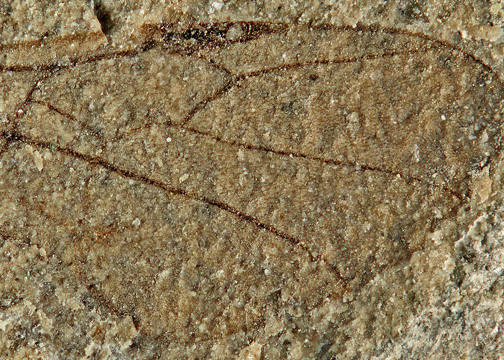
Roproniidae are treated here as a small family of approximately 25 extant species in four genera, apparently closely related to Proctorenyxidae. Clarifying the phylogenetic position of these two lineages within Proctotrupoidea remains a difficult and pressing task requiring broad, integrative analyses. The family is most diverse in eastern Asia, continental China (Shaanxi, Hunan, Fujian, Zhejiang, Guizhou, Sichuan, and one species near the Kachin border), Taiwan, Japan (Honshu, Hokkaido), Kunashir and southern Sakhalin (Townes, 1948; Yasumatsu, 1956, 1958; Lin, 1987; He & Chen, 1991; Yang, 1997; He & Xu, 2015). Three Nearctic species occur in the USA (both coasts) and southern Ontario (Townes, 1948; Porter, 2002). In the Western Palaearctic, two species are known from southern Turkey (Hatay and Karatepe; Madl, 2001). The first European fossil was described from the Paleocene of Menat, France (Garrouste et al., 2016). Named earlier fossil representatives of Roproniidae are otherwise limited to the Cretaceous Kachin amber (Engel & Huang, 2017) and four genera with five species in the extinct subfamily Beipiaosiricinae Hong, 1983 (Middle Jurassic–Early Cretaceous of China and Eastern Siberia) (Rasnitsyn, 1990; Zhang & Zhang, 2001). The present study adds a new roproniid from the Ypresian Fur Formation of the Limfjord region (Northern Jutland, Denmark), constituting the second Cenozoic and youngest European fossil representative of the family.
References
- Archibald, S.B. & Makarkin, V.N. (2006) Tertiary giant lacewings (Neuroptera: Polystoechotidae): revision and description of new taxa from western North America and Denmark. Journal of Systematic Palaeontology, 4 (2), 119–155. https://doi.org/10.1017/S1477201906001817
- Dietrich, C.H. & Perkovsky, E.E. (2023) First leafhopper from the early Eocene Fur Formation of Denmark representing a new genus of Cicadellinae (Hemiptera: Cicadomorpha). Palaeoentomology, 6 (5), 447–450. https://doi.org/10.11646/palaeoentomology.6.5.2
- Engel, M.S. & Huang, D.Y. (2017) A new crown wasp in Cretaceous amber from Myanmar (Hymenoptera: Stephanidae). Cretaceous Research, 69, 56–61. https://doi.org/10.1016/j.cretres.2016.08.014
- Garrouste, R., Pouillon, J.-M. & Nel, A. (2016) The first Cenozoic roproniid wasp from the Paleocene of Menat, France (Hymenoptera: Proctotrupoidea). European Journal of Taxonomy, 239, 1–9. https://doi.org/10.5852/ejt.2016.239
- He, J. & Chen, X. (1991) Xiphyropronia gen. nov., a new genus of the Roproniidae (Hymenoptera: Proctotrupoidea) from China. Canadian Journal of Zoology, 69 (6), 1711–1719. https://doi.org/10.1139/z91-239
- He, J.H. & Xu, Z.F. (2015) Hymenoptera Proctotrupoidea (I). Fauna Sinica 56. Science Press, Beijing, 1034 pp.
- Jones, M.T., Percival, L.M., Stokke, E.W., Frieling, J., Mather, T.A., Riber, L. & Svensen, H.H. (2019) Mercury anomalies across the Palaeocene–Eocene Thermal Maximum. Climate of the Past, 15 (1), 217–236. https://doi.org/10.5194/cp-15-217-2019
- Kim, C.-J, Lelej, A.S., Park, B. & Lee, J.-W. (2016) Review of the family Proctorenyxidae (Hymenoptera: Proctotrupoidea), with description of new species from South Korea. Zootaxa, 4103 (1), 94–100. https://doi.org/10.11646/zootaxa.4103.1.12
- Kozlov, M.A. (1994) Renyxidae fam. n. a new remarkable family of parasitic Hymenoptera (Proctotrupoidea) from the Russian Far East. Far Eastern Entomologist, 1, 1–7.
- Larsson, S.G. (1975) Palaeobiology and the mode of burial of the insects of the lower Mo-clay of Denmark. Bulletin of the Geological Society of Denmark, 24, 193–209.
- Lelej, A.S. (1994) Female description of Renyxa incredibilis Kozlov (Hymenoptera, Proctotrupoidea, Renyxidae). Far Eastern Entomologist, 4, 1–7.
- Lelej, A.S. & Kozlov, M.A. (1999) Proctorenyxidae nom. n. and Proctorenyxa nom. n. a new replacement names for Renyxidae Kozlov and Renyxa Kozlov (Hymenoptera, Proctotrupoidea). Far Eastern Entomologist, 74, 6–7.
- Lin, K.S. (1987) On the genus Ropronia Provancher, 1886 (Hymenoptera: Roproniidae) of Taiwan and Fukien, China. Taiwan Agriculture Research Institute Special Publication, 22, 41–50.
- Madl, M. (2001) Zwei neue Ropronia-Arten aus der Türkei (Hymenoptera, Serphoidea, Roproniidae). Linzer biologische Beiträge, 23 (1), 387–392.
- Madsen, H. & Rasmussen, J.A. (2021) Geologien fortæller: Moler og Fossiler [What geology tells: The mo-clay and its fossils]. Museum Mors, Nykøbing Mors, Denmark, 103 pp.
- Makarkin, V.N, Nielsen, C. & Perkovsky, E.E. (2025) A further new genus of Drepanicinae (Neuroptera: Mantispidae) from the earliest Eocene Fur Formation, Denmark. Zootaxa, 5570 (3), 583–590. https://doi.org/10.11646/zootaxa.5570.3.9
- Makarkin, V.N., Simonsen, T.J. & Perkovsky, E.E. (2026) Diversity of the mostly Mesozoic genus Mesypochrysa Martynov, 1927 (Neuroptera: Chrysopidae: Limaiinae) in the earliest Eocene Fur Formation, Denmark. Palaeoworld, 35 (2), 201059. https://doi.org/10.1016/j.palwor.2025.201059
- Pedersen, G.K. & Surlyk, F. (1983) The Fur Formation, a late Paleocene ash-bearing diatomite from northern Denmark. Bulletin of the Geological Society of Denmark, 32, 43–65. https://doi.org/10.37570/bgsd-1983-32-03
- Porter, C.C. (2002) First record of the family Roproniidae (Hymenoptera: Proctotrupoidea) from Florida. Insecta Mundi, 16 (1-3), 30.
- Rasmussen, J.A., Madsen, H., Schultz, B.P., Sylvestersen, R.L. & Bonde, N. (2016) The lowermost Eocene deposits and biota of the western Limfjord region, Denmark—Field Trip Guidebook. In: 2nd International Mo-clay Meeting at Museum, Skive and Fossil and Mo-clay Museum, Museum Mors, Nykøbing Mors, Denmark, 2–4 November 2016, 1–35.
- Rasnitsyn, A.P. (1990) Hymenoptera. In: Rasnitsyn, A.P. (Ed.), Late Mesozoic insects of Eastern Transbaikalian. Transactions of the Paleontological Institute, Academy of Sciences of the USSR, Nauka Press, Moscow, 239, 177–205. [In Russian]
- Rasnitsyn, A.P. & Lara, M.B. (2025) Potrerilloxyela menendezi Lara et al. 2014 (Hymenoptera: Xyelidae) from the Upper Triassic of Argentina revisited to explore transformation of the cubital vein in Hymenoptera. Historical Biology. https://doi.org/10.1080/08912963.2025.2482166
- Rust, J. (1999) Biologie der Insekten aus dem ältesten Tertiär Nordeuropas. Habilitationsschrift zur Erlangung der venia legendi für das Fach Zoologie in der biologischen Fakultät der Georg-August-Universität Göttingen. Göttingen, ix+482 pp., 34 pls.
- Shcherbakov, E.O., Perkovsky, E.E., Sylvestersen, R.L. & Anisyutkin, L.N. (2025) The northernmost Eocene genus and species of praying mantises (Dictyoptera: Mantodea) from Fur Formation, Denmark. Zootaxa, 5715 (1), 433–440. https://doi.org/10.11646/zootaxa.5715.1.37
- Townes, H. (1948) The serphoid Hymenoptera of the family Roproniidae. Proceedings of the United States National Museum, 98, 85–89. https://doi.org/10.5479/si.00963801.98-3224.85
- Yang, C.K. (1997) The descriptions of Hsiufuropronia chaoi, gen. and sp. nov. (Hym.: Roproniidae). Wuyi Science Journal, 13, 101–105. [In Chinese]
- Yasumatsu, K. (1956) Two new species of Roproniidae (Hymenoptera). Insecta Matsumurana, 19, 117–122.
- Yasumatsu, K. (1958) A new species of the genus Ropronia from Saghalien (Hymenoptera: Roproniidae). Insecta Matsumurana, 21, 112–114.
- Zhang, H.C. & Zhang, J.F. (2001) Proctotrupoid wasps (Insecta, Hymenoptera) from the Yixian Formation of western Liaoning Province. Acta Micropalaeontologica Sinica, 18, 11–28.