

Abstract
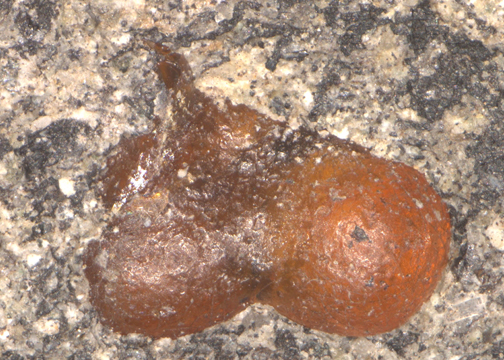
Cretaceous amber plays a key role in understanding the evolution of Late Mesozoic biotas and the changes in palaeoclimate and palaeoenvironment. This study reports Late Cretaceous amber from the Taipinglinchang Formation in Jiayin County, Heilongjiang Province, northeastern China, and presents its Fourier Transform Infrared (FT-IR) spectroscopic characteristics. These ambers are small in size, relatively concentrated on the bedding horizons, and associated with abundant charcoals, reflecting that wildfire events were responsible for the formation of the amber beds. Research on this amber occurrence provides important empirical materials for investigating the resin secretion characteristics of resin-producing plants and the palaeoenvironmental conditions of the Jiayin area during the Late Cretaceous.
References
- Azar, D., Gèze, R. & Acra, F. (2010) Chapter 14: Lebanese amber. In: Penney, D. (Ed.), Biodiversity of fossils in amber from the major world deposits. Siri Scientific Press, Manchester, pp. 271–298.
- Azar, D., Maksoud, S., Cai, C.Y. & Huang, D.Y. (2019) A new amber outcrop from the Lower Cretaceous of northeastern China. Palaeoentomology, 2 (4), 345–349. https://doi.org//10.11646/palaeoentomology.2.4.8
- Benton, M.J., Wilf, P. & Sauquet, H. (2022) The Angiosperm Terrestrial Revolution and the origins of modern biodiversity. New Phytologist, 233 (5), 2017–2035. https://doi.org//10.1111/nph.17822
- Bouju, V. & Perrichot, V. (2020) A review of amber and copal occurrences in Africa and their paleontological significance. BSGF - Earth Sciences Bulletin, 191 (17), 1–11. https://doi.org//10.1051/bsgf/2020018
- Bugdaeva, E.V., Nosova, N.V., Sun, G., Liang, F., Golovneva, L.B. & Song, Y. (2025) The coal-forming plants of Early Cretaceous resin coals of the southern Primorye (Russia) and Heilongjiang Province (China). Russian Journal of Pacific Geology, 19 (6), 671–682. https://doi.org//10.1134/S1819714025700460
- Condamine, F.L., Silvestro, D., Koppelhus, E.B. & Antonelli, A. (2020) The rise of angiosperms pushed conifers to decline during global cooling. Proceedings of the National Academy of Sciences, 117 (46), 28867–28875. https://doi.org//10.1073/pnas.2005571117
- Delclòs, X., Arillo, A., Peñalver, E., Barrón, E., Soriano, C., López Del Valle, R., Bernárdez, E., Corral, C. & Ortuño, V.M. (2007) Fossiliferous amber deposits from the Cretaceous (Albian) of Spain. Comptes Rendus Palevol, 6 (1-2), 135–149. https://doi.org//10.1016/j.crpv.2006.09.003
- Delclòs, X., Peñalver, E., Barrón, E., Peris, D., Grimaldi, D.A., Holz, M., Labandeira, C.C., Saupe, E.E., Scotese, C.R., Solórzano-Kraemer, M.M., Álvarez-Parra, S., Arillo, A., Azar, D., Cadena, E.A., Dal Corso, J., Kvaček, J., Monleón-Getino, A., Nel, A., Peyrot, D., Bueno-Cebollada, C.A., Gallardo, A., González-Fernández, B., Goula, M., Jaramillo, C., Kania-Kłosok, I., López-Del Valle, R., Lozano, R.P., Meléndez, N., Menor-Salván, C., Peña-Kairath, C., Perrichot, V., Rodrigo, A., Sánchez-García, A., Santer, M., Sarto i Monteys, V., Uhl, D., Viejo, J.L. & Pérez-de la Fuente, R. (2023) Amber and the Cretaceous resinous interval. Earth-Science Reviews, 243, 104486. https://doi.org//10.1016/j.earscirev.2023.104486
- Gao, F.H., Fan, F. & Gao, H.M. (2010) Geochemical characteristics of biomarkers of source rocks from Taipinglinchang formation in Sunwu-Jiayin Basin. Journal of China University of Petroleum (Edition of Natural Science), 34 (4), 33–37, 66. [In Chinese]
- Gao, H.L., Su, Y.T., Cai, C.Y., Azar, D., Song, X.B., Lian, X.N. & Huang, D.Y. (2024) Discussion on the age of the Early Cretaceous amber from the Hailar Basin, NE China. Mesozoic, 1 (2), 192–207. https://doi.org//10.11646/mesozoic.1.2.11
- Golovneva, L.B., Sun, G. & Bugdaeva, E.V. (2008) Campanian flora of the Bureya River basin (Late Cretaceous of the Amur region). Paleontological Journal, 42 (5), 554–567. https://doi.org//10.1134/S0031030108050110
- Grimaldi, D.A., Engel, M.S. & Nascimbene, P.C. (2002) Fossiliferous Cretaceous amber from Myanmar (Burma): its rediscovery, biotic diversity, and paleontological significance. American Museum Novitates, 3361, 1–71. https://doi.org//10.1206/0003-0082(2002)361<0001:FCAFMB>2.0.CO;2
- Grimaldi, D., Beck, C.W. & Boon, J.J. (1989) Occurrence, chemical characteristics, and paleontology of the fossil resins from New Jersey. American Museum Novitates, 2948, 1–28.
- Huber, B.T., Norris, R.D. & MacLeod, K.G. (2002) Deep-sea paleotemperature record of extreme warmth during the Cretaceous. Geology, 30 (2), 123–126. https://doi.org//10.1130/0091-7613(2002)030<0123:DSPROE>2.0.CO;2
- Ji, G.Z., Cai, C.Y., Yu, X.F., Azar, D., Dong, C., Song, X.B., Wang, Y.H., Xu, M.M. & Huang, D.Y. (2025) Distribution and mineralogical characteristics of amber in the Upper Cretaceous Gaogou Formation in Xixia, Henan Province, China. Mesozoic, 2 (1), 60–69. https://doi.org//10.11646/mesozoic.2.1.8
- Klages, J.P., Gerschel, H., Salzmann, U., Nehrke, G., Müller, J., Hillenbrand, C.D., Bohaty, S.M. & Bickert, T. (2024) First discovery of Antarctic amber. Antarctic Science, 36 (5), 439–440. https://doi.org//10.1017/S0954102024000208
- Langenheim, R.L. Jr., Smiley, C.J. & Gray, J. (1960) Cretaceous amber from the Arctic coastal plain of Alaska. Bulletin of the Geological Society of America, 71 (9), 1345–1356. https://doi.org//10.1130/0016-7606(1960)71[1345:CAFTAC]2.0.CO;2
- Li, G. (2005) Halyseheria yui from the Nenjiangian Taipinglinchang Formation of Heilongjiang Province, China. Acta Palaeontologica Sinica, 44 (2), 322–325. [In Chinese]
- Li, W.R. & Jin, J.D. (2001) On the Upper Cretaceous Jiayin Group of Heilongjiang Province, China. In: Deng, T. & Wang, Y. (Eds.), Proceedings of the Eighth Annual Meeting of the Chinese Society of Vertebrate Paleontology. China Ocean Press, Beijing, China, pp. 65–74. [In Chinese]
- Li, Y.L., Zheng, D.R., Sha, J.G., Zhang, H.C., Denyszyn, S. & Chang, S.C. (2023) Lower Cretaceous Hailar amber: The oldest-known amber from China. Cretaceous Research, 145, 105472. https://doi.org//10.1016/j.cretres.2022.105472
- Liu, Q., Zeng, G.C., Lian, X.N., Fu, Y.Z., Cai, C.Y. & Huang, D.Y. (2021) A new amber outcrop from the Oligocene Nanning Basin of Guangxi, southern China. Palaeoentomology, 4 (4), 326–330. https://doi.org//10.11646/palaeoentomology.4.4.7
- Liang, F., Tan, X., Zhang, Y.J., Feng, Y.H., Bugdaeva, E., Markevich, V. & Sun, G. (2023) Discovery of water fern megaspore Ghoshispora and new dating for the Upper Cretaceous Yong’ancun formation in Jiayin, NE China. Cretaceous Research, 152, 105675. https://doi.org//10.1016/j.cretres.2023.105675
- Luo, L.H., Yu, X.F., Huang, L.L., Azar, D. & Huang, D.Y. (2025) Eocene amber from the Huangxian Basin of Longkou, eastern China. Palaeoentomology, 8 (6), 651–660. https://doi.org//10.11646/palaeoentomology.8.6.5
- Luo, Y.X., Zhang, Z.C. & Li, W.R. (1983) Late Mesozoic and Tertiary strata in the Jiayin-Xunke region, Heilongjiang. Journal of Stratigraphy, 7 (3), 169–183. [In Chinese] https://doi.org//10.19839/j.cnki.dcxzz.1983.03.002
- Maksoud, S., Granier, B.R.C. & Azar, D. (2022) Palaeoentomological (fossil insects) outcrops in Lebanon. Carnets de Géologie, 22 (16), 699–743. https://doi.org//10.2110/carnets.2022.2216
- McKellar, R.C., Wolfe, A.P., Tappert, R. & Muehlenbachs, K. (2008) Correlation of Grassy lake and Cedar lake ambers using infrared spectroscopy, stable isotopes, and palaeoentomology. Canadian Journal of Earth Sciences, 45 (9), 1061–1082. https://doi.org//10.1139/E08-049
- Najarro, M., Peñalver, E., Pérez-de la Fuente, R., Ortega-Blanco, J., Menor-Salván, C., Barrón, E., Soriano, C., Rosales, I., López Del Valle, R., Velasco, F., Tornos, F., Daviero-Gomez, V., Gomez, B. & Delclòs, X. (2010) Review of the El Soplao amber outcrop, Early Cretaceous of Cantabria, Spain. Acta Geologica Sinica (English Edition), 84 (4), 959–976. https://doi.org//10.1111/j.1755-6724.2010.00258.x
- Néraudeau, D., Perrichot, V., Colin, J.P., Girard, V., Gomez, B., Guillocheau, F., Masure, E., Peyrot, D., Tostain, F., Videt, B. & Vullo, R. (2008) A new amber deposit from the Cretaceous (uppermost Albian-lowermost Cenomanian) of southwestern France. Cretaceous Research, 29 (5-6), 925–929. https://doi.org//10.1016/j.cretres.2008.05.009
- Ni, Z.J., Song, X.B., Azar, D., Wang, Z.X., Cai, C.Y., Xuan, Q., Maksoud, S., Lian, X.N. & Huang, D.Y. (2023) Discovery of Late Cretaceous amber from Guangzhou, South China. Palaeoentomology, 6 (4), 329–332. https://doi.org//10.11646/palaeoentomology.6.4.3
- Perkovsky, E.E. & Vasilenko, D.V. (2019) A summary of recent results in the study of Taimyr amber. Paleontological Journal, 53 (10), 984–993. https://doi.org//10.1134/S0031030119100149
- Scott, A.C. (1989) Observations on the nature and origin of fusain. International Journal of Coal Geology, 12 (1-4), 443–475. https://doi.org//10.1016/0166-5162(89)90061-X
- Scott, A.C. (2000) The Pre-Quaternary history of fire. Palaeogeography, Palaeoclimatology, Palaeoecology, 164 (1-4), 281–329. https://doi.org//10.1016/S0031-0182(00)00192-9
- Serio, M., Song, X.B., Hu, H., Cai, C.Y. & Huang, D.Y. (2025) Paleocene amber from Sanshui Basin. Palaeoentomology, 8 (2), 125–128. https://doi.org//10.11646/palaeoentomology.8.2.2
- Shi, G.L., Dutta, S., Paul, S., Wang, B. & Jacques, F.M.B. (2014) Terpenoid compositions and botanical origins of Late Cretaceous and Miocene amber from China. PLoS ONE, 9 (10), e111303. https://doi.org//10.1371/journal.pone.0111303
- Song, X.B., Lian, X.N., Yu, X.F., Wu, X.K., Wang, Y.H., Cai, C.Y., Xuan, Q., Gao, J., Azar, D., Ni, Z.J., Xu, M.M. & Huang, D.Y. (2025) Discovery of Late Eocene amber from the Maoming Basin, Guangdong province. Palaeoentomology, 8 (2), 129–137. https://doi.org//10.11646/palaeoentomology.8.2.3
- Song, X.B., Sui, X., Xuan, Q., Azar, D., Cai, C.Y., Wang, Z.X. & Huang, D.Y. (2024) A new amber outcrop from the Late Cretaceous of Xingning Basin, South China. Palaeoentomology, 7 (6), 770–777. https://doi.org//10.11646/palaeoentomology.7.6.12
- Sun, G., Dong, Z.M., Akhmetiev, M., Markevich, V., Ashraf, A.R., Godefroit, P., Dilcher, D.L., Sun, C.L., Sun, Y.W., Quan, C., Golovneva, L., Bugdaeva, E., Bolotsky, Yu, Suzuki, S., Kodrul, T., Nishida, H., Kezina, T., Harding, I., Yang, H.X., Ge, W.C., Chen, Y.J. & Yang, T. (2014) Late Cretaceous-Paleocene biota and the K-Pg Boundary from Jiayin of Heilongjiang, China with discussion on the extinction of dinosaurs. Shanghai Science Technology Education Press, Shanghai, 194 pp. [In Chinese]
- Sun, G., Liang, F., Yang, T. & Zhang, S.Q. (2020) Late Cretaceous flora from Jiayin of Heilongjiang, China. Shanghai Science Technology Education Press, Shanghai, 176 pp. [In Chinese]
- Tihelka, E., Jarzembowski, E.A., Azar, D., Huang, D.Y. & Cai, C.Y. (2023) An unusual artematopodid beetle from Early Cretaceous Wealden amber (Coleoptera: Elateroidea: Artematopodidae). Palaeoentomology, 6 (5), 445–458. https://doi.org//10.11646/palaeoentomology.6.5.4
- Zhao, H.B., Yin, Z.G., Wan, X.Q., Yu, Q.W. & Niu, Y.H. (2006) Influence of Late Cretaceous climate change to extinction of dinosaurs in Jiayin area of Heilongjiang, analyzed by spore and pollen. Geoscience, 20 (2), 216–224. [In Chinese]