

Abstract
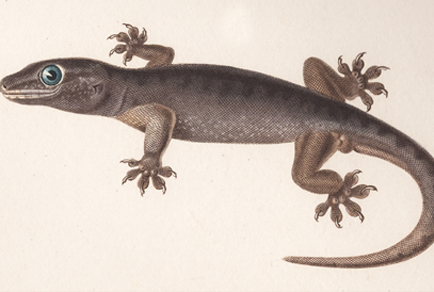
Gehyra oceanica (Lesson, 1830) is the universally employed nomen for a gekkonid gecko from the islands of the tropical Pacific Ocean. It is threatened by an older subjective synonym, Stellio argyropus Tilesio, 1820, based on a specimen described and figured from Nuku Hiva in the Marquesas Islands. Although the priority of the latter name has been recognized for more than 30 years, it has neither been treated as a valid nomen nor been demonstrated to be a nomen oblitum. The requirements of Articles 23.9.1 and 23.9.2 of the International Code of Zoological Nomenclature are here satisfied. Therefore, S. argyropus is demonstrated to be a nomen oblitum and Gecko oceanicus Lesson, 1830 is declared a nomen protectum.
References
- Anonymous (1810) Histoire de l’Académie Impériale des Sciences. Années 1807 et 1808. Mémoires de l’Académie impériale des Sciences de St. Petersbourg, 2: 1–58.
- Anonymous [International Commission on Zoological Nomenclature] (1985) International code of zoological nomenclature. Third edition. London (International Trust for zoological Nomenclature): i–xx + 1–338.
- Anonymous [International Commission on Zoological Nomenclature] (1999) International code of zoological nomenclature. Fourth edition. London (International Trust for zoological Nomenclature): i–xxix + 1–306.
- Bauer, A. M. & Henle, K. (1994) Familia Gekkonidae (Reptilia, Sauria). Part 1. Australia and Oceania. Das Tierreich, 109: i–xiii + 1–309. <https://doi.org/10.1515/9783110885958>.
- Beckon, W. N. (1992) The giant Pacific geckos of the genus Gehyra: morphological variation, distribution, and biogeography. Copeia, 1992 (2): 443–460. <https://doi.org/10.2307/1446204>.
- Blankenburg, G. & Blankenburg, H.-J. (2019) Wilhelm Gottlieb Tilesius von Tilenau 1769–1857. Bad Langensalza (Verlag Rockstuhl): 1–219.
- Boulenger, G. A. (1885) Catalogue of the lizards in the British Museum (Natural History). Second edition. Vol. 1. Geckonidæ, Eublepharidæ, Uroplatidæ, Pygopodidæ, Agamidæ. London (British Museum (Natural History)): i–xii + 1–436, pl. 1–32. <https://doi.org/10.5962/bhl.title.53974>.
- Burt, C. E. & Burt, M. D. (1932). Herpetological results of the Whitney South Sea Expedition. VI. Pacific island amphibians and reptiles in the collection of the American Museum of Natural History. Bulletin of the American Museum of natural History, 63: 461–597.
- Camp, C. L. (1923) Classification of the lizards. Bulletin of the American Museum of natural History, 48: 289–481.
- Cogger, H. G., Cameron, E. L. & Cogger, E. (1983) Zoological catalogue of Australia. Vol. 1. Amphibia and Reptilia. Canberra (Australian Government Publishing Service): i–vi + 1–313. <https://doi.org/10.1163/9789004626614_003>.
- Cretella, M. (2010) The complete collation and dating of the section Zoologie of the Coquille voyage. Bollettino malacologico, 46 (2): 83–103.
- Creveldt, [J. H.] (1809) Beschreibung einer neuen Eidechse aus der Gattung der Geckonen. Der Gesellschaft Naturforschender Freunde zu Berlin, Magazin für die neuesten Entdeckungen in der gesammten Naturkunde, Berlin, 3: 266–274, pl. 8.
- Dickinson, E. C., Bruce, M. D. & David, N. (2015) A review of the authorship and dates of publication of birds newly described from the ‘Voyage de la Coquille’ (1822‒1825) with comments on some spellings. Zoological Bibliography, 3 (5): 69–162.
- Dickinson, E. C. & Raty, L. (2019) Necessary corrections to ‘A review of the authorship and dates of publication of birds newly described from the “Voyage de la Coquille” (1822‐1825) with comments on some spellings’. Zoological Bibliography, 6 (8): 113–116.
- Duméril, A. M. C. & Bibron, G. (1836) Erpétologie générale ou histoire naturelle complète des reptiles. Tome Troisième. Contenant l’histoire de toutes les espèces des quatre premières familles de l’ordre des lézards ou sauriens, savoir: les crocodiles, les caméléons, les geckos et les varans. Paris (Librairie Encyclopédique de Roret): i–iv + 1–517 + [1], 2 folding tables, pl. 25–28, 33, 35, 43–48. <https://doi.org/10.5962/bhl.title.118790>.
- Flecks, M., Schmitz A., Böhme W., Henkel W. F. & Ineich I. (2012) A new species of Gehyra Gray, 1834 (Squamata, Gekkonidae) from the Loyalty Islands and Vanuatu, and phylogenetic relationships in the genus Gehyra in Melanesia. Zoosystema, 34 (2): 203–221. <https://doi.org/10.5252/z2012n2a1>.
- Girard, C. (1858) Descriptions of some new reptiles, collected by the United States Exploring Expedition, under the command of Capt. Charles Wilkes, U.S.N. Fourth Part. Including the species of saurian, exotic to North America. Proceedings of the Academy of natural Sciences of Philadelphia, 9: 195–199.
- Govor, E. (2010) Twelve days at Nuku Hiva. Honolulu (University of Hawai’i Press): i–xi + 1–301 + [i].
- Houttuyn, M. (1782) Het onderscheid der salamanderen van de haagdissen in ’t algemeen, en van de gekkoos in ’t byzonder, aangetoond. Venhandelingen uitgegeven door het Zeeuwsch Genootschap der Wetenschappen te Vlissingen, 9: 305–336, 1 pl.
- Ineich, I. (1987) Recherches sur le peuplement et l’évolution des reptiles terrestres de Polynésie française. Montpellier (Thèse de Doctorat, Université des Sciences et Techniques du Languedoc): 1–515.
- Ineich, I. (2016) Reptiles terrestres et marins des îles Marquises: des espèces communes mais des populations isolées. In: R. Galzin, S.-D. Duron & J.-Y. Meyer, (ed.), Biodiversité terrestre et marine des îles Marquises, Polynésie Française, Paris (Société Française d’Ichtyologie): 365–389.
- Ineich, I. & Blanc, C. P. (1988) Distribution des reptiles terrestres en Polynésie orientale. Atoll Research Bulletin, 318: 1–75. <https://doi.org/10.5479/si.00775630.318.1>.
- Kluge, A. G. (2001) Gekkotan lizard taxonomy. Hamadryad, 26: 1–209.
- Kraus, F. (2024) Status of Gehyra marginata Boulenger, 1887 on New Guinea. Herpetology Notes, 17: 805–807.
- Krusenstern, A. (1814) Atlas zur Reise um die Welt unternommen auf Befehl Seiner Kaiserlischen Majestät Alexander des Ersten auf den Schiffen Nadeshda und Neva unter dem Commando des Capitains von Krusenstern. St. Petersburg: [i], 106 pl.
- Lesson, R.-P. (1830) Reptiles. In: L. I. Duperrey, Voyage autour du monde, exécuté par ordre du roi, sur la corvette de sa majesté, La Coquille, pendant les années 1822, 1823, 1824 et 1825. Histoire Naturelle, Zoologie. Atlas. Paris (Arthus Bertrand): pl. 2 fig. 3 [Gecko des îles océaniennes, Gecko oceanicus, Less.]. <https://doi.org/10.5962/bhl.title.57936>.
- Lesson, R.-P. (1831) Description de quelques reptiles nouveaux ou peu connus. In: R.-P. Lesson, Voyage autour du monde, exécuté par ordre du roi, sur la corvette de sa majesté, La Coquille, pendant les années 1822, 1823, 1824 et 1825. Zoologie. 2. Paris (Arthus Bertrand): 34–65. <https://doi.org/10.5962/bhl.title.57936>.
- Linnaeus, C. (1758) Systema Naturae per regna tria naturae, secundum classes, ordines, genera, species, cum characteribus, differentiis, synonymis, locis. Editio decima, reformata. Tomus 1. Holmiae (Laurentii Salvii): [i–iv] + 1–824. <https://doi.org/10.5962/bhl.title.542>.
- Rocha, S., Ineich, I. & Harris, D.J. (2009) Cryptic variation and recent bipolar range expansion within the stump-toed gecko Gehyra mutilata across Indian and Pacific Ocean islands. Contributions to Zoology, 78 (1): 1–8. <https://doi.org/10.1163/18759866-07801001>.
- Rooij, N. de (1915) The reptiles of the Indo-Australian Archipelago. I. Lacertilia, Chelonia, Emydosauria. Leiden (E. J. Brill): i–xiv + 1–384. <https://doi.org/10.5962/bhl.title.5069>.
- Schneider, J. G. (1792) Amphibiorum physiologiae specimen alterum, historiam et species generis stellionum seu geckonum sistens. Traieti ad Viadrum [Frankfurt an der Oder] (Typis Chr. Ludov. Frid. Apitzii. Commissum Iohanni Andr. Kunze): [i–ii] + 1–54.
- Schneider, J. G. (1797) Amphibiorum physiologiae specimen alterum, historiam et species generis stellionum seu geckonum sistens. Züllichoviae [Sulechów (Zielona Góra)] (Apud Friedericum Frommannum): [i–ii] + 1–54.
- Schneider, J. G. (1812) Kritische Uebersicht der einzelnen Arten aus der Gattung von Eidechsen, welche ich Wandkletterer nenne, Linné aber und andere, Geckonen. Denkschriften der Akademie der Wissenschaften München, 3 [1811‒1812]: 31–70, pl. 1.
- Scott, F., Parker, F. & Menzies, J. I. (1977) A checklist of the amphibians and reptiles of Papua New Guinea. Wildlife in Papua New Guinea, 77 (3): [i–ii] + 1–18.
- Stejneger, L. (1902) Ptychozoon kuhli, a new name for P. homalocephalum. Proceedings of the biological Society of Washington, 15: 37.
- Tilesio [Tilesius, W. G.] (1810) Piscium Camtschaticorum ТЕРПУКЬ et ВАХНЯ. Descriptions et icones. Mémoires de l’Académie impériale des Sciences de St. Petersbourg, 2: 335–375, pl. 15–20.
- Tilesio [Tilesius, W. G.] (1811) Piscium Camtschaticorum descriptions et icones. Mémoires de l’Académie impériale des Sciences de St. Petersbourg, 3: 225–285, pl. 8–13.
- Tilesio [Tilesius, W. G.] (1815) De Cancris Camtschaticis, oniscis, entomostracis et cancellis marinis microscopicis noctilucentibus. Cum tabulis IV. Aeneis et appendice adnexo de acaris et ricinis Camtschaticis. Mémoires de l’Académie impériale des Sciences de St. Petersbourg, 5: 331–405, pl. 5–8.
- Tilesio [Tilesius, W. G.] (1820) De geckone australi argyropode nec non de generum naturalium in zoologia systematica dignitate tuenda, atque de geckonibus in genere. Mémoires de l’Academie impériale des Sciences de St.-Pétersbourg, 7: 311–358, pl. 10–11.
- Tilesius, W. G. (1806) Fernere Nachrichten von den neuen Marquesas-Inseln und deren Bewohnern. (Aus einem Briefe des Hrn. Hofraths Tilesius aus Kamtschatka, vom 9. Jun. 1805). Magazin für den neuesten Zustand der Naturkunde mit Rücksicht auf die dazugehörigen Hülfswissenschaften, 12 (6): 492–498, pl. 6.
- Tilesius, W. G. (1809) Nachricht von einigen Brasilischen Amphibien, nebst der Beschreibung und Abbildung von der gehörnten Kröte (Rana cornuta Lin.). Magazin für die neuesten Entdeckungen in der gesammten Naturkunde, 3: 83–95, pl. 3.
- Tilesius, W. G. (1812) Abbildungen und Beschreibungen einiger Fische aus Japan und einiger Mollusken aus Brasilien, welche bey Gelegenheit der ersten Russ. Kaiserl. Erdumseglung lebendig beobachtet wurden. Denkschriften der Akademie der Wissenschaften München, 3 [1811‒1812]: 71–88, pl. 2–4.
- Whitaker, R., Whitaker, Z. & Mills, D. (1982) Reptiles of Papua New Guinea. Wildlife Papua New Guinea, 82 (2): i–iii + 1–53.
- Wiegmann, A. F. A. (1834) Amphibien. In: F. J. F. Meyen, Reise um die Erde ausgeführt auf dem Königlich Preussischen Seehandlungs-Schiffe Prinzess Louise, comandiert von Capitain W. Wendt, in den Jahren 1830, 1831 und 1832. von Dr. F. J. F. Meyen. Dritter Theil. Zoologisher Bericht. Berlin (Sander’schen Buchhandlung): 433–522, pl. 52–61.
- Zug, G. R. (1991) The lizards of Fiji: natural history and systematics. Bishop Museum Bulletins in Zoology, 2: i‒xii + 1–136.
- Zug, G. R. (2013) Reptiles and amphibians of the Pacific islands. A comprehensive guide. Berkeley (University of California Press): i–x + 1–306, 70 pl. <https://doi.org/10.1525/9780520955400>.