

Abstract
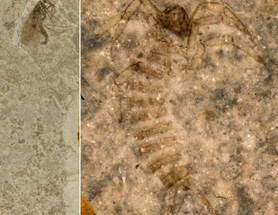
“Orthophlebiidae” represent the oldest known mecopterans characterized by scorpion-tail-like male genitalia. They were the dominant mecopterans during the Jurassic, but experienced a marked decline during the Cretaceous. Herein, I describe and illustrate a new genus and species of Orthophlebiidae sensu stricto from the Lower Cretaceous Dabeigou Formation in Liaoning Province, Northern China. The new species, Sinorthophlebia weichangensis gen. et sp. nov., is characterized by an elongate abdomen with segment VIII forming a conical shape, as well as a remnant fork of M4, indicating a relatively derived position within the family. Our discovery may provide a valuable reference for future studies on the evolution of wing venation in Panorpoidea and, more broadly, on the evolution of the Jehol entomofauna.
References
- Archibald S. B. 2005. New Dinopanorpidae (Insecta: Mecoptera) from the Eocene Okanagan Highlands (British Columbia, Canada and Washington State, USA). Canadian Journal of Earth Sciences 42(2): 119–136. https://doi.org/10.1139/E04-073
- Archibald S. B., Mathewes R. W. & Greenwood D. R. 2013. The Eocene apex of panorpoid scorpionfly family diversity. Journal of Paleontology 87(4): 677–695. https://doi.org/10.1666/12-129
- Bashkuev A. S. & Jarzembowski E. A. 2023. The first British Cretaceous eomeropid scorpionfly (Mecoptera: Eomeropidae). Palaeoentomology 6(3): 255–259. https://doi.org/10.11646/palaeoentomology.6.3.8
- Bashkuev A. S. & Sukatsheva I. D. 2021. New species of Kamopanorpa Martynov from the Permian of South Siberia with comments on the systematic position of Microptysmatidae (Protomeropina = Permotrichoptera). Palaeoentomology 4(5): 453–461. https://doi.org/10.11646/palaeoentomology.4.5.11
- Bechly G. 2007. Mecoptera: scorpionflies. In: D. M. Martill, G. Bechly & R. F. Loveridge (Eds), The Crato fossil beds of Brazil: window into an ancient world. Cambridge University Press, Cambridge, England, pp. 365–369.
- Byers G. W. & Thornhill R. 1983. Biology of the Mecoptera. Annual Review of Entomology 28(1): 203–228.
- Coram R. A. & Jepson J. E. 2012. Fossil Insects of the Purbeck Limestone Group of Southern England: Palaeoentomology from the Dawn of the Cretaceous. Siri Scientific Press, Manchester, UK, 172 pp.
- Ding H., Shih C. K., Bashkuev A. S., Zhao Y. Y. & Ren D. 2014. The earliest fossil record of Panorpidae (Mecoptera) from the Middle Jurassic of China. Zookeys 431: 79–92. https://doi.org/10.3897/zookeys.431.7561
- Engqvist L. & Sauer K. P. 2003. Determinants of sperm transfer in the scorpionfly Panorpa cognata: male variation, female condition and copulation duration. Journal of Evolutionary Biology 16(6): 1196–1204. https://doi.org/10.1046/j.1439-0310.2003.00937.x
- He H. Y, Wang X. L., Jin F., Zhou Z. H., Wang F. Y., Yang L. K., Ding X. L., Boven A. & Zhu R. X. 2006. The 40Ar/39Ar dating of the early Jehol biota from Fengning, Hebei Province, northern China. Geochemistry, Geophysics, Geosystems 7: Q04001. https://doi.org/10.1029/2005GC001083
- Hong Y. C. 2009. Midtriassic new genera and species of Orthophlebiidae and Neorthophlebiidae (Insecta, Mecoptera) from Shaanxi, China. Acta Zootaxonomica Sinica 34(3): 423–427.
- Hong Y. C., Chen S. E. & Liu C. T. 2002. Middle Triassic new fossils of Protorthophlebia Tillyard (Insecta: Mecoptera) from Tongchuan region, Shaanxi Province, China. Entomologia Sinica 9(2): 51–57.
- Huang D. Y. 2015. Yanliao biota and Yanshan movement. Acta Palaeontologica Sinica 54(4): 501–546. https://doi.org/10.19800/j.cnki.aps.2015.04.008
- Huang D. Y., Engel M. S., Cai C. Y., Wu H. & Nel A. 2012. Diverse transitional giant fleas from the Mesozoic era of China. Nature 438: 201–204. https://doi.org/10.1038/nature10839
- Jarzembowski E. & Soszyńska-Maj A. 2017. The first orthophlebiid scorpionfly (Insecta: Mecoptera) from the Wealden (Lower Cretaceous) of southern England. Earth and Environmental Science Transactions of the Royal Society of Edinburgh 107(2–3): 191–194. https://doi.org/10.1017/S1755691017000081
- Jouault C., Coutret B., Konhauser K. O. & Nel A. 2023. A new hangingfly species (Mecoptera: Bittacidae) from the Paleocene Paskapoo Formation (Canada). Palaeoentomology 6(5): 507–518. https://doi.org/10.11646/palaeoentomology.6.5.9
- Kaczmarek S., Li L. & Soszyńska A. 2024. First female of Eomeropidae (Mecoptera) from Kachin amber sheds light on morphology and environmental preferences of eomeropids in the Cretaceous. Palaeoentomology 7(4): 468–471. https://doi.org/10.11646/palaeoentomology.7.4.5
- Kopylov D., Rasnitsyn A., Aristov D., Bashkuev A., Bazhenova N., Dmitriev V., Gorochov A., Ignatov M., Ivanov V., Khramov A., Legalov A., Lukashevich E., Mamontov Y., Melnitsky S., Ogłazak B., Ponomarenko A., Prokin A., Ryzhkova O., Shmakov A., Sinitshenkova N., Solodovnikov A., Strelnikova O., Sukacheva I., Uliakhin A., Vasilenko D., Wegierek P., Yan E. & Zmarzłyk M. 2020. The Khasurty fossil insect lagerstätte. Paleontological Journal 54(11): 1221–1394. https://doi.org/10.1134/S0031030120110027
- Krzemiński W. & Krzemińska E. 2003. Triassic Diptera: descriptions, revisions and phylogenetic relations. Acta Zoologica Cracoviensia 46: 153–184.
- Krzemiński W., Soszyńska-Maj A., Kopeć K. & Sukatsheva I. D. 2017. The oldest representative of the family Austropanorpidae (Mecoptera) from the Lower Jurassic of Siberia. Earth and Environmental Science Transactions of the Royal Society of Edinburgh 107(2–3): 151–155. https://doi.org/10.1017/S1755691017000214
- Lian X. N., Cai C. Y. & Huang D. Y. 2021. The early assemblage of Middle–Late Jurassic Yanliao biota: checklist, bibliography and statistical analysis of described taxa from the Daohugou beds and coeval deposits. Palaeoentomology 4(2): 095–136. https://doi.org/10.11646/palaeoentomology.4.2.1
- Lian X. N., Cai C. Y. & Huang D. Y. 2023. Sinoagetopanorpidae fam. nov., a New Family of Scorpionflies (Insecta, Mecoptera) from the Guadalupian of South China. Insects 14(1): 96. https://doi.org/10.3390/insects14010096
- Lian X. N., Zhang Y., Cai C. Y., Feng Z. & Huang D. Y. 2024. A new genus of Mesopsychidae from the late Middle Triassic Tongchuan entomofauna and its taxonomic and palaeogeographic implications. Mesozoic 1(2): 144–158. https://doi.org/10.11646/mesozoic.1.2.7
- Liao H. Y., Cai C. Y., Shen Y. B., Sun X. Y. & Huang D. Y. 2020. An Early Cretaceous branchiopod community in northeastern China: Discovery of daphniid (Cladocera: Anmopoda) ephippia in the early assemblage of the Jehol Biota. Cretaceous Research 113: 104491. https://doi.org/10.1016/j.cretres.2020.104491
- Lin M. Q. & Li J. G. 2021. Palynological assemblages from the Tuchengzi and Dabeigou formations in the Luanping Basin at Sanchazi Section, Northern Hebei Province and their implications. Acta Palaeontologica Sinica 60(2): 263–280. https://doi.org/10.19800/j.cnki.aps.2020072
- Lin M. Q., Li J. G. & Wu Y. X. 2022. Early Cretaceous palynological assemblages from the Dabeigou Formation at Yushuxia in the Luanping Basin, northern Hebei Province, China and their stratigraphic significances. Review of Palaeobotany and Palynology 307: 104751. https://doi.org/10.1016/j.revpalbo.2022.104751
- Lin Q. B. 1980. Mesozoic insects from Zhejiang and Anhui provinces, China In: C. A. o. S. Nanjing Institute of Geology and Palaeontology (Ed), Division and correlation of the Mesozoic volcano-sedimentary formations in the provinces of Zhejiang and Anhui. Science Press Beijing, pp. 211–220.
- Lin X., Labandeira C. C., Shih C., Hotton C. L. & Ren D. 2019. Life habits and evolutionary biology of new two-winged long-proboscid scorpionflies from mid-Cretaceous Myanmar amber. Nature Communications 10(1): 1235. https://doi.org/10.1038/s41467-019-09236-4
- Minet J., Huang D. Y., Wu H. & Nel A. 2010. Early Mecopterida and the systematic position of the Microptysmatidae (Insecta: Endopterygota). Annales de la Société entomologique de France 46(1–2): 262–270. https://doi.org/10.1080/00379271.2010.10697667
- Misof B., Liu S., Meusemann K., Peters R. S., Donath A., Mayer C., Frandsen P. B., Ware J., Flouri T. & Beutel R. G. 2014. Phylogenomics resolves the timing and pattern of insect evolution. Science 346(6210): 763–767. https://doi.org/10.1126/science.1257570.
- Novokshonov V. G. 1997. Early evolution of scorpionflies (Insecta: Panorpida). Nauka, Moscow, 137 pp.
- Ping C. 1928. Cretaceous fossil insects of China. Palaeontologica Sinica B 13: 1–56.
- Qin Z. H., Xi D. P., Sames B., Do Carmo D. A., Wang X. R., Xu Y. K., Yu Z. Q., Wei F., Leite A. M. & Wan X. Q. 2018. Ostracods of the non-marine Lower Cretaceous Dabeigou Formation at Yushuxia (Luanping Basin, North China): implications for the early Jehol biota age. Cretaceous Research 86: 199–218. https://doi.org/10.1016/j.cretres.2018.03.010
- Ren D. 1997. Studies on Late Jurassic scorpion-flies from Northeast China. Acta Zootaxonomica Sinica 22(1): 75–87.
- Ren D., Labandeira C. C., Santiago-Blay J. A., Rasnitsyn A., Shih C. K., Bashkuev A. S., Logan M. A. V., Hotton C. L. & Dilcher D. 2009. A probable pollination mode before angiosperms: Eurasian, long-proboscid scorpionflies. Science 326: 840–847. https://doi.org/10.1126/science.1178338
- Ren D., Lu L. W., Guo Z. G. & Ji S. A. 1995. Faunae and Stratigraphy of Jurassic-Cretaceous in Beijing and the Adjacent Areas. Geological Publishing House, Beijing, 222 pp.
- Ross A. J. 2024. Complete checklist of Burmese (Myanmar) amber taxa 2023. Mesozoic 1(1): 21–57. https://doi.org/10.11646/mesozoic.1.1.4
- Soszyńska-Maj A., Krzemińska E., Pérez-de la Fuente R., Wang J. S., Szpila K., Skibińska K., Kopeć K. & Krzeminski W. 2022. Evolution of sexual conflict in scorpionflies. Elife 11: e70508. https://doi.org/10.7554/eLife.70508
- Soszyńska-Maj A., Krzemiński W., Kopeć K., Cao Y. Z. & Ren D. 2019. New Middle Jurassic fossils shed light on the relationship of recent Panorpoidea (Insecta, Mecoptera). Historical Biology 32(8): 1081–1097. https://doi.org/10.1080/08912963.2018.1564747
- Tihelka E., Giacomelli M., Huang D. Y., Pisani D., Donoghue P. C. J. & Cai C. Y. 2020. Fleas are parasitic scorpionflies. Palaeoentomology 3(6): 641–653. https://doi.org/10.11646/palaeoentomology.3.6.16
- Tong X. & Hua B. Z. 2019. Nuptial feeding and genital coupling of Neopanorpa scorpionflies (Insecta: Mecoptera: Panorpidae) with notal organs of various lengths. Contributions to Zoology 88(4): 498–512. https://doi.org/10.1163/18759866-20191409
- Wang J. S. & Hua B. Z. 2022. A color atlas of the Chinese Mecoptera. Springer Nature, 354 pp.
- Willmann R. & Novokschonov V. 1998. New Mecoptera from the Upper Jurassic of Karatau (Kazachstan) (Insecta, Mecoptera: ‘Orthophlebiidae’). Paläontologische Zeitschrift 72(3–4): 281–297.
- Xi D. P., Wan X. Q., Li G. B. & Li G. 2019. Cretaceous integrative stratigraphy and timescale of China. Science China Earth Sciences 62(1): 256–286. https://doi.org/10.1007/s11430-017-9262-y
- Yu Z., Qin Z., Xi D., Deng C., He H. & Zhou Z. 2022. New geochronology of the Lower Cretaceous in the Luanping Basin, northern Hebei: Age constraints on the development of early Jehol Biota. Palaeogeography, Palaeoclimatology, Palaeoecology 586: 110768. https://doi.org/10.1016/j.palaeo.2021.110768
- Zhang H., Liu X. M., Zhang Y. Q., Yuan H. L. & Hu Z. C. 2005. Zircon U-Pb ages and significance of bottom and top beds of Zhangjiakou Formation in Liaoning and Hebei Provinces. Earth Science-Journal of China University of Geosciences 30(4): 387–401.
- Zhang H., Wang B. & Fang Y. 2010. Evolution of insect diversity in the Jehol Biota. Science China Earth Sciences 53(12): 1908–1917. https://doi.org/10.1007/s11430-010-4098-5
- Zhang J. F. & Zhang H. C. 2003. Insects and spiders. In: M. M. Chang, P. J. Chen, Y. Q. Wang & Y. Wang (Eds), The Jehol Biota: The Emergence of Feathered Dinosaurs, Beaked Birds and Flowering Plants. Shanghai Scientific & Technical Publishers, Shanghai, pp. 59–67.
- Zhang Q. Q., Zheng D. R., Wang B. & Zhang H. C. 2022. A review of Triassic insects in China. Geological Society, london, Special Publications 521: 45–60. https://doi.org/10.1144/SP521-2021-121
- Zhang Y. J., Lin X. D., Shih C. K., Ren D. & Zhao Y. Y. 2023. First report of detailed mouthpart structures of Orthophlebiidae (Insecta: Mecoptera) from mid-Cretaceous amber of northern Myanmar. Cretaceous Research 144: 105443. https://doi.org/10.1016/j.cretres.2022.105443
- Zhao X. Y., Zhao X. D., Jarzembowski E. A., Chen L. & Wang B. 2018. First record of adult Coptoclava longipoda Ping (Coleoptera: Coptoclavidae) from the lower cretaceous of Laiyang, China. Cretaceous Research 92: 205–209. https://doi.org/10.1016/j.cretres.2018.08.013
- Zhou Z. H., Meng Q. R., Zhu R. X. & Wang M. 2021. Spatiotemporal evolution of the Jehol Biota: Responses to the North China craton destruction in the Early Cretaceous. Proceedings of the National Academy of Sciences 118(34): e2107859118.