

Abstract
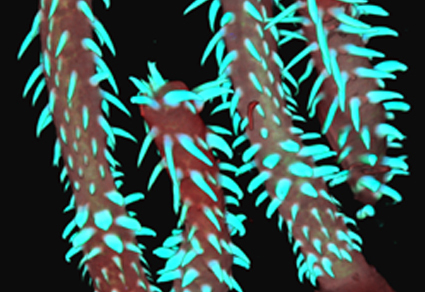
Trypanorhynch cestodes were identified in the stomach and spiral valve of Mobula thurstoni (Lloyd) from Lombok Strait, Bali, Indonesia. This study includes the description of Hemionchos arthanai sp. nov. (Cestoda: Eutetrarhynchidae). New site and locality records were established for H. striatus Campbell and Beveridge, 2006, H. mobulae Campbell and Beveridge, 2006, Mobulocestus Campbell and Beveridge, 2006, Nybelinia balinensis Palm, Palm and Haseli, 2019, and Parachristianella campbelli Schaeffner and Marques, 2018. Hemionchos arthanai sp. nov. can be distinguished from the other Hemionchos species due to its smooth scolex surface lacking transverse annulations, the configuration of its five metabasal hooks per row where the hooks 1–4 (1´–4´) possess characteristic cavities, and its basal armature. The basal armature consists of two rows of enlarged uncinate hooks devoid of cavities, followed by three rows of slender uncinate to spiniform hooks without cavities, and three rows of conical, dorsoventrally flattened, falcate hooks with a strongly recurved mucronate tip. Although the life cycle of H. arthanai sp. nov. is unknown, euphausiaceans are expected to serve as intermediate hosts. This assumption is supported by the fact that H. mobulae has been detected in euphausiaceans, which are prey items for manta rays.
References
- Beveridge, I. & Bennett, M.B. (2022) New species of Hemionchos (Cestoda: Trypanorhyncha) from elasmobranchs in the Indo-Pacific region, with a revised diagnosis of the genus. Systematic Parasitology, 99 (5), 451–466. https://doi.org/10.1007/s11230-022-10018-7
- Campbell, R.A. & Beveridge, I. (2006) Three new genera and seven new species of trypanorhynch cestodes (family Eutetrarhynchidae) from manta rays, Mobula spp. (Mobulidae) from the Gulf of California, Mexico. Folia Parasitologica, 53 (4), 255–275. https://doi.org/10.14411/fp.2006.033
- Carpenter, K.E. & Springer, V.G. (2005) The center of the center of marine shore fish biodiversity: the Philippine Islands. Environmental Biology of Fishes, 72 (4), 467–480. https://doi.org/10.1007/s10641-004-3154-4
- Chervy, L. (2009) Unified terminology for cestode microtriches: a proposal from the International Workshops on Cestode Systematics in 2002–2008. Folia Parasitologica, 56 (3), 199–230. https://doi.org/10.14411/fp.2009.025
- Cribb, T.H. & Bray, R.A. (2010) Gut wash, body soak, blender and heat-fixation: approaches to the effective collection, fixation and preservation of trematodes of fishes. Systematic Parasitology, 76, 1–7. https://doi.org/10.1007/s11230-010-9229-z
- Dollfus, R.P. (1942) Études critiques sur les Tétrarhynques du Muséum de Paris. Archives du Muséum national d'Histoire Naturelle, 6ème série, 19 (1), 7–466.
- Froese, R. & Pauly, D. (Eds.) (2025) FishBase. Version April 2025. World Wide Web Electronic Publication. https://www.fishbase.org/ (accessed 5 November 2025)
- Guardone, L., Giusti, A., Bilska-Zajac, E., Malandra, R., Różycki, M. & Armani, A. (2020) Molecular characterization of Clistobothrium sp. viable plerocercoids in fresh longfin inshore squid (Doryteuthis pealeii) and implications for cephalopod inspection. Pathogens, 9 (7), 596. https://doi.org/10.3390/pathogens9070596
- Kleinertz, S., Yulianto, I., Kurschat, C., Koepper, S., Simeon, B.M., Klimpel, S., Theisen, S., Unger, P., Retnoningtyas, H., Neitemeier‑Duventester, X., Barton, D.P., Damriyasa, I.M. & Palm, H.W. (2022) Elasmobranchs from Indonesian waters: feeding ecology and trypanorhynch cestode fauna composition to support efforts in shark and ray conservation. Acta Parasitologica, 67, 1612–1625. https://doi.org/10.1007/s11686-022-00593-7
- Klimpel, S., Kuhn, T., Münster, J., Dörge, D.D., Klapper, R. & Kochmann, J. (2019) Parasitic Groups. In: Klimpel, S., Kuhn, T., Münster, J., Dörge, D.D., Klapper, R. & Kochmann, J. (Eds.), Parasites of Marine Fish and Cephalopods. Springer, Cham, pp. 29–76. https://doi.org/10.1007/978-3-030-16220-7_3
- Lee, J.Y., Kim, J.W. & Park, G.M. (2016) Plerocercoids of Nybelinia surmenicola (Cestoda: Tentacularidae) in squids, Todarodes pacificus, from East Sea, the Republic of Korea. Korean Journal of Parasitology, 54 (2), 221–224. https://doi.org/10.3347/kjp.2016.54.2.221
- Morales-Ávila, J.R. (2016) Taxonomía y ecología de los parásitos helmintos de los eufáusidos y sus depredadores en el Golfo de California para inferir sus ciclos de vida. PhD Dissertation, Centro Interdisciplinario de Ciencias Marinas del Instituto Politécnico Nacional, La Paz, Baja California Sur. [unknown pagination]
- Morales-Ávila, J.R., Gómez-Gutiérrez, J. & García-Varela, M. (2019) Phylogenetic placement and microthrix pattern of Paranybelinia otobothrioides Dollfus, 1966 (Trypanorhyncha) from krill Nyctiphanes simplex Hansen, 1911. International Journal for Parasitology: Parasites and Wildlife, 10, 138–148. https://doi.org/10.1016/j.ijppaw.2019.08.006
- Neitemeier-Duventester, X., Bick, A., Theisen, S. & Palm, H.W. (2022) Confocal laser scanning microscopy (CLSM) as a new tool for morphological characterisation of both newly collected and museum voucher specimens of the Trypanorhyncha Diesing, 1863 (Platyhelminthes: Cestoda). Folia Parasitologica, 69, 026. https://doi.org/10.14411/fp.2022.026
- Palm, H.W. (2000) Trypanorhynch cestodes from Indonesian coastal waters (East Indian Ocean). Folia Parasitologica, 47 (2), 123–134. https://doi.org/10.14411/fp.2000.019
- Palm, H.W. (2004) The Trypanorhyncha Diesing, 1863. PKSPL-IPB Press, Bogor, x + 710 pp.
- Palm, H.W. & Bray, R.A. (2014) Marine Fish Parasitology in Hawaii. Westarp and Partner Digitaldruck Hohenwarsleben, XII + 302 pp.
- Palm, H.W. & Caira, J.N. (2008) Host specificity of adult versus larval cestodes of the order Trypanorhyncha (Cestoda). International Journal for Parasitology, 38 (3–4), 381–388. https://doi.org/10.1016/j.ijpara.2007.07.004
- Palm, H.W., Damriyasa, I.M., Linda, O. & Oka, I.B.M. (2008) Molecular genotyping of Anisakis (Nematoda: Ascaridoidea) from Indonesia suggests a need for further taxonomic investigation. Parasitology Research, 104 (3), 499–508. https://doi.org/10.1007/s00436-008-1205-8
- Palm, H.W. & Haseli, M. (2023) Tentaculariids (Cestoda, Trypanorhyncha) of elasmobranchs from Malaysian Borneo. Zoosystema, 45 (18), 513–529. https://doi.org/10.5252/zoosystema2023v45a18
- Palm, H.W. & Klimpel, S. (2007) Evolution of the parasitic life in the ocean. Trends in Parasitology, 23 (1), 10–12. https://doi.org/10.1016/j.pt.2006.11.002
- Palm, H.W., Palm, N. & Haseli, M. (2019) Tentaculariid trypanorhynchs (Platyhelminthes: Cestoda) from Mobula japanica (Müller & Henle) from Indonesia, with the description of two new species. Parasitology Research, 118, 3307–3313. https://doi.org/10.1007/s00436-019-06497-2
- Rückert, S., Palm, H.W. & Klimpel, S. (2009) Parasite fauna of seabass Lates calcarifer (Bloch) and grouper Epinephelus coioides (Hamilton) from Indonesian aquacultures. Journal of Fish Diseases, 32 (11), 925–933. https://doi.org/10.1111/j.1365-2761.2009.01070.x
- Schaeffner, B.C. & Marques, F.P. (2018) Integrative taxonomy unravels the species diversity of Parachristianella (Cestoda: Trypanorhyncha) from both sides of the Panamanian isthmus. Invertebrate Systematics, 32 (2), 278–318. https://doi.org/10.1071/IS17008
- Suryaningtyas, E.W., Neitemeier-Duventester, X., Damriyasa, I.M., Frank, M., Haseli, M. & Palm, H.W. (2025) Archaenybelina gen. nov. (Trypanorhyncha Diesing, 1863) from Mobula thurstoni (Lloyd, 1908), including the description of two new species from Bali, Indonesia. Zoomorphology, 144 (1), Article 3. https://doi.org/10.1007/s00435-024-00687-y
- Theisen, S. (2020) Indonesian marine fish parasite biodiversity. Doctoral dissertation, Universität Rostock, Rostock.
- White, W.T., Last, P.R., Stevens, J.D., Yearsley, G.K., Fahmi, F. & Dharmadi, D. (2006) Economically Important Sharks and Rays of Indonesia. ACIAR Publishing, Canberra, 338 pp.
- Yamaguti, S. (1954) Parasitic worms of fish from Celebes and Borneo. Part 1. Cestodes. Acta Medicinae Okayama, 8 (4), 303–320.