
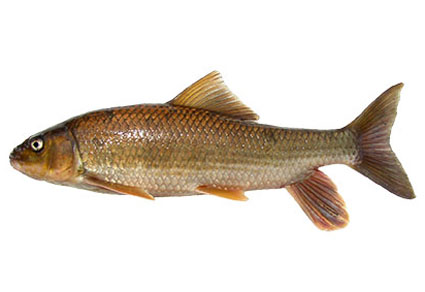

Abstract
Recognized as an undescribed species since the mid-1990s, the Carolina Redhorse is herein described as Moxostoma carolina sp. nov. The Carolina Redhorse is distinguished from all other species described in the genus Moxostoma by the number of caudal peduncle scales, the texture and angle of the lower lip, and by pigmentation and tuberculation patterns. It is morphologically similar to M. erythrurum, although the two species are allopatric and phylogenetic analysis of the COI mitochondrial gene supports the Carolina Redhorse as a distinct evolutionary lineage. The Carolina Redhorse is rare, localized, and endemic to lower Piedmont streams and run-of-river reservoirs in North Carolina and South Carolina. Characteristics of five of the species with which the Carolina Redhorse is sympatric and M. erythrurum are discussed, and a dichotomous key is provided.
References
- Akin, D.R., Jenkins, R.E. & Armbruster, J.W. (2025) Description of the Apalachicola Redhorse (Catostomidae: Moxostoma). Zootaxa, 5711 (2), 181–202. thttps://doi.org/10.11646/zootaxa.5711.2.2
- Armbruster, J.W. & Jenkins, R.E. (2025) Evidence for a Greater Pleistocene Distribution for the Copper Redhorse in North America (Catostomidae: Moxostoma hubbsi). Fishes, 10 (3), 101.
- https://doi.org/10.3390/fishes10030101
- Bagley, J.C., Mayden, R.L. & Harris, P.M. (2018) Phylogeny and divergence times of suckers (Cypriniformes: Catostomidae) inferred from Bayesian total-evidence analyses of molecules, morphology, and fossils. PeerJ, 6 (e5168), 1–35. thttps://doi.org/10.7717/peerj.5168
- Baird, S.F. & Girard, C.F. (1854) Descriptions of new species of fishes collected in Texas, New Mexico and Sonora, by Mr. John H. Clark, on the U. S. and Mexican Boundary Survey, and in Texas by Capt. Stewart Van Vliet, U.S.A. Proceedings of the Academy of Natural Sciences of Philadelphia, 7, 24–29.
- Bean, T.H. (1880) Descriptions of two species of fishes collected by Prof. A. Dugès in central Mexico. Proceedings of the United States National Museum, 2, 302–305. thttps://doi.org/10.5479/si.00963801.2-95.302
- Chao, K.H., Barton, K., Palmer, S., Lanfear, R. & Holland, B. (2021) SangeranalyseR: Simple and Interactive Processing of Sanger Sequencing Data in R. Genome Biology and Evolution, 12 (3), 1–7. thttps://doi.org/10.1093/gbe/evab028
- Clements, M.D., Bart, H.L. Jr. & Hurley, D.L. (2012) A different perspective on the phylogenetic relationships of the Moxostomatini (Cypriniformes: Catostomidae) based on cytochrome-b and Growth Hormone intron sequences. Molecular Phylogenetics and Evolution, 63, 159–167. thttps://doi.org/10.1016/j.ympev.2012.01.001
- Cooke, S.J., Bunt, C.M., Hamilton, S.J., Jennings, C.A., Pearson, M.P., Cooperman, M.S. & Markle, D.F. (2005) Threats, conservation strategies, and prognosis for suckers (Catostomidae) in North America: insights from regional case studies of a diverse family of non-game fishes. Biological Conservation, 121, 317–331. thttps://doi.org/10.1016/j.biocon.2004.05.015
- Cooke, S.J., Paukert, C. & Hogan, Z. (2012) Endangered river fish: factors hindering conservation and restoration. Endangered Species Research, 17, 179–191. thttps://doi.org/10.3354/esr00426
- Cope, E.D. (1868) On the distribution of fresh-water fishes in the Allegheny region of southwestern Virginia. Journal of the Academy of Natural Sciences, Philadelphia, 6, 207–247.
- Cope, E.D. (1870) A partial synopsis of the fishes of the freshwaters of North Carolina. Proceedings of the American Philosophical Society, 11 (81), 448–495.
- Dixon, W. (2005) Food Habits of Undescribed Carolina Redhorse, Moxostoma sp. (Pisces, Catostomidae). Distinction Project for Honors Program, Roanoke College, Salem Virginia, 9 pp.
- Fernatt, J. (2005) Food Habits of Undescribed Carolina Redhorse, Moxostoma sp. (Pisces, Catostomidae). Distinction Project for Honors Program, Roanoke College, Salem Virginia, 9 pp.
- Fricke, R., Eschmeyer, W.N. & van der Laan, R. (Eds.) (2025) Eschmeyer’s catalog of fishes: genera, species, references. Electronic version. Available from: http://researcharchive.calacademy.org/research/ichthyology/catalog/fishcatmain.asp (accessed 1 March 2025)
- Froese, R. & Pauly, D. (2025) FishBase Editors. Version 0420/2025. World Wide Web Electronic Publication. Available from: https://www.fishbase.org/search.php (accessed 27 January 2026)
- Girard, C.F. (1856) Researches upon the cyprinoid fishes inhabiting the fresh waters of the United States, west of the Mississippi Valley, from specimens in the museum of the Smithsonian Institution. Proceedings of the Academy of Natural Sciences of Philadelphia, 8, 165–213.
- Harris, P.M., Mayden, R.L., Espinosa Pérez, H.S. & García de Leon, F. (2002) Phylogenetic relationships of Moxostoma and Scartomyzon (Catostomidae) based on mitochondrial cytochrome b sequence data. Journal of Fish Biology, 61, 1433–1452. thttps://doi.org/10.1006/jfbi.2002.2158
- Hubbs, C.L. & Lagler, K.F. (1958) Fishes of the Great Lakes Region. University of Michigan Press, Ann Arbor, Michigan, 213 pp.
- https://doi.org/10.3998/mpub.12946839
- Ivanova, N.V., Zemlak, T.S., Hanner, R.H. & Hebert, P.D. (2007) Universal primer cocktails for fish DNA barcoding. Molecular Ecology Notes, 7 (4), 544–548. thttps://doi.org/10.1111/j.1471-8286.2007.01748.x
- Jenkins, R.E. (1970) Systematic studies of the catostomid fish tribe Moxostomatini. PhD Dissertation, Cornell University, Ithaca, New York, 799 pp.
- Jenkins, R.E. (1980a) Moxostoma anisurum (Rafinesque), Silver Redhorse. In: Lee, D.S., Gilbert, C.R., Hocutt, C.H., Jenkins, R.E., McAllister, D.E. & Stauffer, J.R. Jr. (Eds.), Atlas of North American Freshwater Fishes. North Carolina State Museum Natural History. Raleigh, North Carolina, pp. 416. thttps://doi.org/10.5962/bhl.title.141711
- Jenkins, R.E. (1980b) Moxostoma erythrurum (Rafinesque), Golden Redhorse. In: Lee, D.S., Gilbert, C.R., Hocutt, C.H., Jenkins, R.E., McAllister, D.E. & Stauffer, J.R. Jr. (Eds.), Atlas of North American Freshwater Fishes. North Carolina State Museum Natural History, Raleigh, North Carolina, pp. 422. thttps://doi.org/10.5962/bhl.title.141711
- Jenkins, R.E. (1980c) Moxostoma macrolepidotum (Lesueur), Shorthead Redhorse. In: Lee, D.S., Gilbert, C.R., Hocutt, C.H., Jenkins, R.E., McAllister, D.E. & Stauffer, J.R. Jr. (Eds.), Atlas of North American Freshwater Fishes. North Carolina State Museum Natural History. Raleigh, North Carolina, 867 pp. thttps://doi.org/10.5962/bhl.title.141711
- Jenkins, R.E. (1980d) Moxostoma pappillosum (Cope), V-lip Redhorse. In: Lee, D.S., Gilbert, C.R., Hocutt, C.H., Jenkins, R.E., McAllister, D.E. & Stauffer, J.R. Jr. (Eds.), Atlas of North American Freshwater Fishes. North Carolina State Museum Natural History. Raleigh, North Carolina, pp. 430. thttps://doi.org/10.5962/bhl.title.141711
- Jenkins, R.E. (1980e) Moxostoma robustum (Cope), Smallfin Redhorse. In: Lee, D.S., Gilbert, C.R., Hocutt, C.H., Jenkins, R.E., McAllister, D.E. & Stauffer, J.R. Jr. (Eds.), Atlas of North American Freshwater Fishes. North Carolina State Museum Natural History. Raleigh, North Carolina, pp. 433. thttps://doi.org/10.5962/bhl.title.141711
- Jenkins, R.E. (1995) Workshop on Suckers. 2 November 1995. Unpublished Handout. Duke Power Company, Huntersville, North Carolina, 12 pp.
- Jenkins, R.E. (2011) Carolina Redhorse, Moxostoma sp., Undescribed Species of Sucker (Pisces, Catostomidae) Known from the Cape Fear and Pee Dee River Drainages, North Carolina and South Carolina - Description, Life History, and Distribution. Final Report, U.S. Department of Interior, U.S. Fish and Wildlife Service, Asheville, North Carolina, 5 pp.
- Jenkins, R.E. n.d. (post 1994) Anatomy and systematic review of the catostomid fish tribe Moxostomatini, with a key to the Redhorse and Jumprock Suckers, Moxostoma and Scartomyzon. Unpublished Manuscript, Department of Biology, Roanoke College, Salem, Virginia, 38 pp.
- Jenkins, R.E. & Burkhead, N.M. (1994) Freshwater Fishes of Virginia. American Fisheries Society, Bethesda, Maryland, 1080 pp.
- Jenkins, R.E., Favrot, S.D., Freeman, B.J., Albanese, B. & Armbruster, J.W. (2025) Description of the Sicklefin Redhorse (Catostomidae: Moxostoma). Ichthyology and Herpetology, 113, 27–43. thttps://doi.org/10.1643/i2024049
- Jenkins, R.E. & Freeman, B.F. (1997) Robust Redhorse, Moxostoma robustum (Cope). In: Menhinick, E.F. & Braswell, A.L. (Eds.), Endangered, Threatened, and Rare Fauna of North Carolina. Part IV. A Reevaluation of The Freshwater Fishes. Occasional Papers of the North Carolina State Museum of Natural Sciences and the North Carolina Biological Survey, Raleigh, North Carolina. No. 11. North Carolina State Museum of Natural Sciences, Raleigh, North Carolina, pp. 71–75.
- Jordan, D.S. (1877) Contributions to North American ichthyology based primarily on the collections of the United States National Museum. No. 2. A.—Notes on Cottidae, Etheostomatidae, Percidae, Centrarchidae, Aphododeridae, Umbridae, Esocidae, Dorysomatidae, Cyprinidae, Catostomidae, and Hyodontidae, with revisions of the genera and descriptions of new or little-known species. Bulletin of the United States National Museum, 10, 5–68. thttps://doi.org/10.5962/bhl.title.39649
- Jordan, D.S. (1885) Note on the scientific name of the yellow perch, the striped bass, and other North American fishes. Proceedings of the United States National Museum, 8, 72–73. thttps://doi.org/10.5479/si.00963801.8-485.72
- Jordan, D.S. (1889) Descriptions of fourteen species of fresh-water fishes collected by the U. S. Fish Commission in the summer of 1888. Proceedings of the United States National Museum, 11, 351–362. thttps://doi.org/10.5479/si.00963801.11-723.351
- Jordan, D.S. & Brayton, A.W. (1877) On Lagochila, a new genus of catostomoid fishes. Proceedings of the Academy of Natural Sciences of Philadelphia, 29, 280–283.
- Kalyaanamoorthy, S., Minh, B.Q., Wong, T.K.F., von Haeseler, A. & Jermiin, L.S. (2017) ModelFinder: fast model selection for accurate phylogenetic estimates. Nature Methods, 14(6), 587–589. thttps://doi.org/10.1038/nmeth.4285
- Katoh, K. & Standley D.M. (2013) MAFFT Multiple Sequence Alignment Software Version 7: Improvements in Performance and Usability. Molecular Biology and Evolution, 30(4), 772–780. thttps://doi.org/10.1093/molbev/mst010
- Larsson, A. (2014) AliView: a fast and lightweight alignment viewer and editor for large datasets. Bioinformatics, 30 (22), 3276–3278. thttps://doi.org/10.1093/bioinformatics/btu531
- Lesueur, C.A. (1817) A new genus of fishes, of the order Abdominales, proposed, under the name of Catostomus; and the characters of this genus, with those of its species, indicated. Journal of the Academy of Natural Sciences of Philadelphia, 1, 88–96.
- Minh, B.Q., Nguyen, M.A.T. & von Haeseler, A. (2013) Ultrafast approximation for phylogenetic bootstrap. Molecular Biology and Evolution, 30 (5), 1188–1195. thttps://doi.org/10.1093/molbev/mst024
- Minh, B.Q., Schmidt, H.A., Chernomor, O., Schrempf, D., Woodhams, M.D., von Haeseler, A., Lanfear, R. & Teeling, E. (2020) IQ-TREE 2: New models and efficient methods for phylogenetic inference in the genomic era. Molecular Biology and Evolution, 37 (5), 1530–1534. thttps://doi.org/10.1093/molbev/msaa015
- North Carolina Administrative Code (NCAC) (2023) Subchapters 10I. 0103–10I. 0105: Endangered, threatened, and special concern species listed. Amended effective February 1, 2023. North Carolina Office of Administrative Hearings, Raleigh, North Carolina. [unknown pagination]
- North Carolina Natural Heritage Program [NCNHP] (2022) Natural Heritage Program List of Rare Animal Species of North Carolina. North Carolina Natural Heritage Program. North Carolina Department of Natural and Cultural Resources, Raleigh, North Carolina, 59 pp.
- North Carolina Wildlife Resources Commission [NCWRC] (2015) North Carolina Wildlife Action Plan. North Carolina Wildlife Resources Commission, Raleigh, North Carolina, 1328 pp.
- North Carolina Wildlife Resources Commission [NCWRC] (2021) Protected Wildlife Species of North Carolina. North Carolina Wildlife Resources Commission, Raleigh, North Carolina, 10 pp.
- Page, L.M., Bemis, K.E., Dowling, T.E., Espinosa-Pérez, H., Findley, L.T., Gilbert, C.R., Hartel, K.E., Lea, R.N., Mandrak, N.E., Neighbors, M.A., Schmitter-Soto, J.J. & Walker, H.J. Jr. (2023) Common and Scientific Names of Fishes from the United States, Canada, and Mexico. American Fisheries Society Special Publication 37. American Fisheries Society, Bethesda, Maryland, 439 pp.
- Page, L.M. & Burr, B.M. (2011) Peterson Field Guide to Freshwater Fishes of North America North of Mexico. 2nd Edition. Houghton Mifflin Company, New York, New York, 663 pp.
- Rafinesque, C.S. (1818) Discoveries in natural history, made during a journey through the western region of the United States. American Monthly Magazine and Critical Review, 3, 354–356.
- Rafinesque, C.S. (1820) Fishes of the Ohio River. [Ichthyologia Ohiensis. Part 6]. The Western Review and Miscellaneous Magazine: A Monthly Publication, Devoted to Literature and Science, 2 (5), 299–307.
- Raley, M.E., Starnes, W.C. & Jenkins, R.E. (2004) Results of Distributional Surveys and Preliminary Genetic Investigations for the Carolina Redhorse (Moxostoma sp.). In: Southeastern Fishes Council (SFC) Annual Meeting/Atlantic Slope Fish Genetics Workshop, National Conservation Training Center, Shepherdstown, West Virginia, 29–30 June 2004, Poster Presentation.
- Raley, M.E. & Starnes, W.C. (2007) Current Knowledge of the Distributional Status and Genetic Relationships (Based on Cytochrome-B and S7 Intron Sequences) of the Rare “Carolina Redhorse”, Moxostoma sp. In: Annual meeting of the Southeastern Fishes Council, Chattanooga, Tennessee, November 2007, Poster Presentation.
- Raley, M.E., Starnes, W.C. & Jenkins, R.E. (2007) Current Knowledge of the Distributional Status and Genetic Relationships (Based On Cytochrome-B And S7 Intron Sequences) of the Rare “Carolina Redhorse”, Moxostoma sp. In: Annual meeting of the American Society of Ichthyology and Herpetology, St. Louis, Missouri, July 2007, Poster Presentation.
- Regan, C.T. (1907) n.k. In: Biologia Centrali-Americana. Pisces. Part 215. Published for the editor by R. H. Porter, London, pp. 33–160.
- Robins, C.R. & Raney, E.C. (1956) Studies of the catostomid fishes of the genus Moxostoma, with descriptions of two new species. Cornell University Agricultural Experiment Station Memoir 343, 3–56.
- Robins, C.R. & Raney, E.C. (1957) The systematic status of the suckers of the genus Moxostoma from Texas, New Mexico and Mexico. Tulane Studies in Zoology, 5, 291–318. thttps://doi.org/10.5962/bhl.part.26159
- Rohde, F.C., Arndt, R.G., Foltz, J.W. & Quattro, J.M. (2009) Freshwater Fishes of South Carolina. University of South Carolina Press, Columbia, South Carolina, 430 pp.
- Sabaj, M.H. (2020) Codes for natural history collections in ichthyology and herpetology. Copeia 108, 593–669. thttps://doi.org/10.1643/ASIHCODONS2020
- Smith, H.M. (1907) The Fishes of North Carolina. Vol. 2. North Carolina Geological and Economic Survey, Raleigh, 453 pp.
- https://doi.org/10.5962/bhl.title.56126
- South Carolina Department of Natural Resources (SCDNR) (2015) South Carolina State Wildlife Action Plan. “Carolina” Redhorse, Moxostoma sp. cf. erythrurum. Supplemental Volume: Species of Conservation Concern. South Carolina Department of Natural Resources, Columbia, South Carolina, 3 pp.
- Starnes, W.C. (2004) Results of Distributional Surveys and Preliminary Genetic Investigations for the Carolina Redhorse (Moxostoma sp.) – An Interim Report. Submitted to Progress Energy Corporation, New Hill, North Carolina, 19 pp.
- Starnes, W.C., Jenkins, R.E. & Raley, M.E. (2005) Results of Distributional Surveys and Preliminary Genetic Investigations for the Carolina Redhorse (Moxostoma sp.). 2nd Interim Report. Submitted to Progress Energy Corporation, Raleigh, North Carolina, 25 pp.
- Tracy, B.H. & Jenkins, R.E. (2021) Professor Edward Drinker Cope’s travels through North Carolina, August–December 1869: insights from the transcriptions and annotations of letters to his father and his contributions to North Carolina ichthyology. Southeastern Fishes Council Proceedings, 61, 72–135. thttps://doi.org/10.7290/sfcp61o1zf
- Tracy, B.H., Rohde, F.C. & Hogue, G.M. (2020) An annotated atlas of the freshwater fishes of North Carolina. Southeastern Fishes Council Proceedings, 60, 1–198. thttps://doi.org/10.7290/sfcp60gca7
- Tracy, B.H., Rohde, F.C., Smith, S.A., Bissette, J.L. & Hogue, G.M. (2024) A Guide to North Carolina’s Freshwater Fishes. University of North Carolina Press, Chapel Hill, North Carolina, 455 pp.
- Trautman, M.B. & Martin, R.G. (1951) Moxostoma aureolum pisolabrum, a new subspecies of sucker from the Ozarkian streams of the Mississippi River system. Occasional Papers of the Museum of Zoology University of Michigan, 534, 1–10.