

Abstract
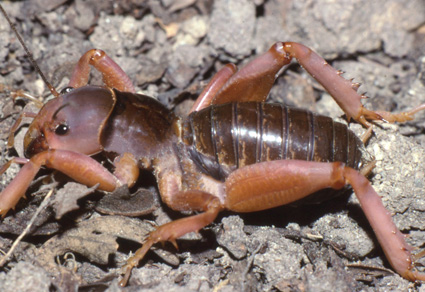
We review and discuss all named United States and Mexico species of Ammopelmatus Tinkham Jerusalem crickets, even if synonymized in earlier literature. We recognize as valid 12 previously named taxa: A. cahuilaensis (Tinkham), A. comanchus (Saussure & Pictet), A. davewerneri (Tinkham), A. fuscus (Haldeman), A. intermedius (David & Smith), A. kelsoensis Tinkham, A. longispinus (Brunner von Wattenwyl), A. mescaleroensis (Tinkham), A. muwu Rentz & Weissman, A. navajo (Rentz), A. nigrocapitatus (Tinkham & Rentz), and A. pictus (Scudder).
We confirm A. californicus (Brunner von Wattenwyl) as a junior synonym of A. longispinus. We synonymize A. monahansensis (Stidham & Stidham) under A. mescaleroensis. We designate neotypes for A. fuscus and A. mescaleroensis.
We declare the following 6 names to be nomen dubium: A. cephalotes (Walker), A. fasciatus (Thomas), A. hydrocephalus (Brunner von Wattenwyl), A. irregularis (Brunner von Wattenwyl), A. oculatus (Scudder), and A. terrenus (Rehn).
We recognize 11 major clades, and 26 Groups within those 11 clades, delimited by DNA, morphology, karyotype, ecology, and calling drum pattern. In their phylogenetic tree order, we recognize (1) the Winchester Group, with 11 (possibly 12) species; (2) the Big Sur Group, with 1 species; (3) the Longispinus Group, with 12 species; (4) the Portal Group, with 2 species; (5) the Argus Group, with 5 species; (6) the Mojave Desert Group, with 8 species, 1 which is tentative; (7) the Springville Group, with 1 species; (8) the Lightfooti Group, with 10 species; (9) the Smithi Group, with 3 species; (10) the Grayi Group, with 1 species; (11) the Southern California Group #1, with 4 species; (12) the Southern California Group #2, with 4 species; (13) the Southern California/Baja California Group #3, with 9 species; (14) the Lincoln County Group, with 1 species; (15) the Utah Group, with 3 species; (16) the Fuscus Group, with 5 species, 2 of which are tentative; (17) the Mono Lake Group, with 7 species; (18) the Muwu Group, with 1 species; (19) the Pratti Group, with 1 species; (20) the Fast Drumming Group, with 13 species; (21) the Vandenberg Air Force Base Group, with 2 species; (22) the San Gabriel/ Pelona Mts Group, with 2 species; (23) the Islander Group, with 2 species; (24) the Southern California Group #4, with 3 species; (25) the Southern California Group #5, with 2 species; and (26) the Monica Mts Group, with 2 species;
We describe the following 105 taxa as new: A. abelai Weissman, A. acton Weissman, A. angelusoaks Weissman, A. anzaborrego Weissman, A. argus Weissman, A. ashleighi Weissman, A. bajasur Weissman, A. bakersfield Weissman, A. ballmeri Weissman, A. ballonadark Weissman, A. bartonflats Weissman, A. bigsur Weissman, A. brachysocius Weissman, A. briani Weissman, A. brockovichi Weissman, A. bruneaudunes Weissman, A. calimesa Weissman, A. carsoncity Weissman, A. castaneus Weissman, A. catalinae Weissman, A. cathedralgorge Weissman, A. cedarview Weissman, A. chimineas Weissman, A. chinalake Weissman, A. christmasvalleydunes Weissman, A. clarki Weissman, A. coralpink Weissman, A. coyflat Weissman, A. crypticus Weissman, A. danieli Weissman, A. descansodunes Weissman, A. dogtown Weissman, A. eatoncanyon Weissman, A. ensenada Weissman, A. etiwanda Weissman, A. evansi Weissman, A. finnon Weissman, A. fisheri Weissman, A. fremontpeak Weissman, A. glacierlodge Weissman, A. glennville Weissman, A. gomezfarias Weissman, A. grahami Weissman, A. grapevine Weissman, A. grayi Weissman, A. hovorei Weissman, A. icenoglei Weissman, A. idaho Weissman, A. intermedioides Weissman, A. islander Weissman, A. joshuatree Weissman, A. juniperdunes Weissman, A. kennedymeadows Weissman, A. kennedymeadowsdos Weissman, A. kirai Weissman, A. knighti Weissman, A. kokoweef Weissman, A. lagunahanson Weissman, A. lakecachuma Weissman, A. lakesherwood Weissman, A. larumorosa Weissman, A. leei Weissman, A. lightfooti Weissman, A. lincolncounty Weissman, A. longispinoides Weissman, A. mahogani Weissman, A. monolake Weissman, A. mtpinos Weissman, A. mtshasta Weissman, A. oneillpark Weissman, A. owensvalley Weissman, A. pinnacles Weissman, A. pinyonpines Weissman, A. piute Weissman, A. portal Weissman, A. pratti Weissman, A. reno Weissman, A. rentzi Weissman, A. rusti Weissman, A. sakai Weissman, A. sandiego Weissman, A. sanfrancisco Weissman, A. sangabriel Weissman, A. sanjacinto Weissman, A. sanmartinensis Weissman, A. sanpedromartir Weissman, A. santarosaplateau Weissman, A. sierrapelona Weissman, A. skinner Weissman, A. smithi Weissman, A. sonoraensis Weissman, A. springville Weissman, A. stringfellow Weissman, A. tarcanyon Weissman, A. tehachapi Weissman, A. temblor Weissman, A. tomsplace Weissman, A. vandenberg Weissman, A. warnermts Weissman, A. westgardpass Weissman, A. whitewater Weissman, A. winnemucca Weissman, A. wrightwoodi Weissman, A. yubalake Weissman, and A. zayante Weissman.
Ammopelmatus has its highest species’ diversity in Southern and Central California, with most taxa having limited distributions; and with most species nearest genetic relative usually being geographically close. Six newly described taxa rank as the six heaviest insect species in California, with some adults exceeding 12 grams.
Where two Ammopelmatus species are sympatric, we present data that indirectly suggest that calling song drums may act as a premating barrier; and that diploid chromosome number may act as a post mating barrier.
References
- Anon (2018) 2017–2018 monitoring results for the Coachella Valley Jerusalem Cricket (Stenopelmatus cahuilaensis) within the Coachella Valley MSHCP Area. Coachella Valley Conservation Commission, University of California Riverside’s Center for Conservation Biology, Palm Desert, California, 10 pp.
- Baird, S.J.E. & Macholán, M. (2012) What can the Mus musculus musculus/M. m. domesticus hybrid zone tell us about speciation? In: Macholán, M., Baird, S.J.E., Munclinger, P. & Piálek, J. (Eds.), Evolution of the House Mouse. Cambridge University Press, London, pp. 334–372. https://doi.org/10.1017/CBO9781139044547.016
- Barrows, C.W. (2012) Temporal patterns of abundance of arthropods on sand dunes. The Southwestern Naturalist, 57, 262–266. https://doi.org/10.1894/0038-4909-57.3.262
- Bechtel, R.C., Hanks, L.M. & Rust, R.W. (1981) Orthopteroids of Sand Mountain and Blow Sand Mountains, Nevada. Entomological News, 92, 125–129.
- Becker, M.A., Carrasco, C., Kautt, A.F., Castañedarico, S., Orrock, J.L., Maldonado, J.E. & Edwards, C.W. (2025) Phylogenetics of Channel Island deer mice based on the cytochrome B gene sheds light on multiple colonization events and supports current taxonomy. Western North American Naturalist, 85, 293–309. https://doi.org/10.3398/064.085.0215
- Bogiatto, R.J., Sardella, B.A. & Essex, J.J. (2003) Food habits of great horned owls in northeastern California with notes on seasonal diet shifts. Western North American Naturalist, 63, 258–263.
- Bond, A.B. & Kamil, A.C. (1998) Apostatic selection by blue jays produces balanced polymorphism in virtual prey. Nature, 395, 594–596. https://doi.org/10.1038/26961
- Brandt, E.E., Duke, S., Wang, H. & Mhatre, N. (2023) The ground offers acoustic efficiency gains for crickets and other calling animals. Proceedings of the National Academy of Sciences, 120, e2302814120. https://doi.org/10.1073/pnas.2302814120
- Buckell, E.R. (1930) The Dermaptera and Orthoptera of Vancouver Island, British Columbia. Proceedings Entomological Society of British Columbia, 27, 17–51.
- Castresana, J. (2000) Selection of conserved blocks from multiple alignments for their use in phylogenetic analysis. Molecular Biology and Evolution, 17, 540–552. https://doi.org/10.1093/oxfordjournals.molbev.a026334
- Chan, L.M., Painter, C.W., Hill, M.T., Hibbitts, T.J., Leavitt, D.J., Ryberg, W.A., Walkup, D. & Fitzgerald, L.A. (2020) Phylogeographic structure of the dunes sagebrush lizard, an endemic habitat specialist. PLoS ONE, 15 (9), e0238194. https://doi.org/10.1371/journal.pone.0238194
- Chapman, R.F. (1962) The ecology and distribution of grasshoppers in Ghana. Proceedings Zoological Society of London, 139, 1–66. https://doi.org/10.1111/j.1469-7998.1962.tb01821.x
- Chu, J.B. (2002) Diet for an endangered insect: what does the Zayante Band-winged grasshopper eat? Master’s Thesis, San Jose State University, San Jose, California, 79 pp.
- Cigliano, M.M., Braun, H., Eades, D.C. & Otte, D. (2025) Orthoptera Species File. Available from: http://Orthoptera.SpeciesFile.org (accessed 31 March 2025)
- Clark, W.H. & Tinkham, E.R. (1977) Occurrence of the Jerusalem cricket, Stenopelmatus fuscus (Orthoptera: Gryllacrididae), in a nest of the Owyhee harvester ant, Pogonomyrmex owyheei (Hymenoptera: Formicidae), with taxonomic notes on Stenopelmatus. Journal of the Idaho Academy of Science, 13, 47–52.
- Cobb, N., Gruber, E., Heske, E., Flecker, A., Lightfoot, D., Masters, A., McClintock, N., Price, J., Seibert, T. & Smith, M. (1981) An ecological study of the Alvord Basin Dunes, southeastern Oregon. Final Technical Report, NSF Grant No. SP-7905328. Oregon State University, Corvallis, Oregon, 142 pp.
- Cockerell, T.D.A. (1939) The insects of the California Islands. Proceedings VIth Pacific Scientific Congress, 4, 283–295.
- Cole, J.A., Weissman, D.B., Lightfoot, D.C., Ueshima, N., Warchałowska-Śliwa, E., Maryańska-Nadachowska, A. & Chatfield-Taylor, W. (2021) A revision of the shield-back katydid genus Neduba (Orthoptera: Tettigoniidae: Tettigoniinae: Nedubini). Zootaxa, 4910 (1), 1–92. https://doi.org/10.11646/zootaxa.4910.1.1
- Cole, J.A., Weissman, D.B., Lightfoot, D.C., Ueshima, N. & Warchałowska-Śliwa, E. (2025) A revision of the shield-backed katydid genus Aglaothorax (Orthoptera: Tettigoniidae: Tettigoniinae: Nedubini). Zootaxa, 5667 (1), 1–104. https://doi.org/10.11646/zootaxa.5667.1.1
- Connors, M.G. (2024) A nomenclatural review of family-group names in the Tettigoniidae (Orthoptera: Ensifera). Zootaxa, 5468 (1), 1–51. https://doi.org/10.11646/zootaxa.5468.1.1
- Cypher, B.L., Kelly, E.C., Ferrara, F.J., Drost, C.A., Westall, T.L. & Hudgens, B.R. (2017) Diet patterns of island foxes on San Nicolas Island relative to feral cat removal. Pacific Conservation Biology, 23, 180–188. https://doi.org/10.1071/PC16037
- Davis, A.C. (1927) Studies of the anatomy and histology of Stenopelmatus fuscus Hald. University of California Publications in Entomology, 4, 159–208.
- Davis, A.C. & Smith, L.M. (1926) Notes on the genus Stenopelmatus with description of a new species (Orthoptera). The Pan-Pacific Entomologist, 2, 174–181.
- De Luca, P.A. & Morris, G.K. (1998) Courtship communication in meadow katydids: female preference for large male vibrations. Behaviour, 135, 777–793. https://doi.org/10.1163/156853998792640422
- Duncan, C.D. (1923) Notes on the biology of two species of Stenopelmatus (Orth.: Tettigoniidae). Entomological News, 34, 73–77.
- Ellwein, A.L., McFadden, L.D., McAuliffe, J.A. & Mahan, S.A. (2018) Late Quaternary soil development enhances aeolian landform stability, Moenkopi Plateau, southern Colorado Plateau, USA. Geosciences, 8, 146–175. https://doi.org/10.3390/geosciences8050146
- Fahey, M. (2012) Available from: https://baynature.org/article/the-rare-santa-cruz-sandhills-and-the-people-who-love-them/ (accessed 6 January 2026)
- Garagna, S., Page, J., Fernandez-Donoso, R., Zuccotti, M. & Searle, J.B. (2014) The Robertsonian phenomenon in the house mouse: mutation, meiosis and speciation. Chromosoma, 123, 529–544. https://doi.org/10.1007/s00412-014-0477-6
- Gorochov, A.V. (2020) The families Stenopelmatidae and Anostostomatidae (Orthoptera). 1. Higher classification, new and little known taxa. Entomological Review, 100, 1–46. https://doi.org/10.1134/S0013873820080084
- Gould, S.J. (1985) The Flamingo’s Smile. Reflections in Natural History. Vol. 2. Only his wings remained. W.W. Norton & Company, New York, New York, 476 pp.
- Gray, D.A., Weissman, D.B., Cole, J.A., Lemmon, E.M. & Lemmon, A.R. (2020) Multilocus phylogeny of Gryllus field crickets (Orthoptera: Gryllidae: Gryllinae) utilizing anchored hybrid enrichment. Zootaxa, 4750 (3), 328–348. https://doi.org/10.11646/zootaxa.4750.3.2
- Gutiérrez-Rodríguez, J., Zaldívar-Riverón, A., Weissman, D.B. & Vandergast, A.G. (2022) Extensive species diversification and marked geographic phylogenetic structure in the Mesoamerican genus Stenopelmatus (Orthoptera: Stenopelmatidae: Stenopelmatinae) revealed by mitochondrial and nuclear 3RAD data. Invertebrate Systematics, 36, 1–21. https://doi.org/10.1071/IS21022
- Gwynne, D.T. & Kelly, C. (2001) A book review of The Biology of Wetas, King Crickets and their Allies. Journal of Orthoptera Research, 10, 370–372. https://doi.org/10.1665/1082-6467(2001)010[0370:ABROTB]2.0.CO;2
- Hager, F.A. & Kirchner, W.H. (2019) Directionality in insect vibration sensing: behavioral studies of vibrational orientation. In: Hill, P.S.M., Lakes-Harlan, R., Mazzoni, V., Narins, P.M., Virant-Doberlet, M. & Wessel, A. (Eds.), Biotremology: Studying Vibrational Behavior. Animal Signals and Communication. Vol. 6. Springer, Cham, pp. 235–255. https://doi.org/10.1007/978-3-030-22293-2_12
- Hall, W.P. (2009) Chromosome variation, genomics, speciation and evolution in Sceloporus lizards. Cytogenetic Genome Research, 127, 143–165. https://doi.org/10.1159/000304050
- Harrison, S.P. (2013) Plant and animal endemism in California. University of California Press. Berkeley, California, 189 pp. https://doi.org/10.1525/9780520954731
- Hebard, M. (1916) A study of the species of the genus Stenopelmatus found in the United States. Journal of the New York Entomological Society, 24, 70–86.
- Hebard, M. (1936) Orthoptera of North Dakota. Agricultural Experiment Station, North Dakota Agricultural College, Bulletin, 284, 1–69.
- Hewitt, G.M. & John, B. (1971) The cytogenetic systems of grasshoppers and locusts. I. Chortoicetes terminifera. Chromosoma, 34, 302–323. https://doi.org/10.1007/BF00286155
- Hoang, D.T., Chernomor, O., von Haeseler, A., Minh, B.Q. & Vinh, L.S. (2018) UFBoot2: Improving the ultrafast bootstrap approximation. Molecular Biology & Evolution, 35, 518–522. https://doi.org/10.1093/molbev/msx281
- Hoekstra, J.M. (1998) Conserving Orthoptera in the wild: lessons from Trimerotropis infantilis (Oedipodinae). Journal of Insect Conservation, 2, 179–185. https://doi.org/10.1023/A:1009612317241
- Hogue, C.L. (1993) Insects of the Los Angeles Basin. Natural History Museum of Los Angeles County, Los Angeles, California, 446 pp.
- Hubbell, T.H. (1960) Notes on Orthoptera in European Museums. Unpublished notes deposited at University of Michigan, Museum of Zoology, Ann Arbor, Michigan, 28 pp.
- Hubbell, T.H. (1977) Middle American cave-crickets and allies. I. The group Phoberopodes, with a review of the phallic structures of the Ceuthophilinae (Orthoptera Saltatoria: Ensifera: Rhaphidophoridae). Accademia Nazionale dei Lincei, 171, 275–324.
- Jaiswara, R., Balakrishnan, R., Robillard, T., Rao, K., Cruaud, C. & Desutter-Grandcolas, L. (2011) Testing concordance in species boundaries using acoustic, morphological, and molecular data in the field cricket genus Itaropsis (Orthoptera: Grylloidea, Gryllidae: Gryllinae). Zoological Journal of the Linnean Society, 164, 285–303. [2012] https://doi.org/10.1111/j.1096-3642.2011.00769.x
- John, B. (1983) The role of chromosome change in the evolution of orthopteroid insects. In: Sharma, A.K. & Sharma, A. (Eds.), Chromosomes in evolution of eukaryotic groups. Vol. 1. CRC Press, Inc., Boca Raton, Florida, pp. 1–110.
- John, B. & Hewitt, G.M. (1968) Patterns and pathways of chromosome evolution within the Orthoptera. Chromosoma, 25, 40–74. https://doi.org/10.1007/BF00338233
- John, B. & Rentz, D.C.F. (1987) The chromosomes of four endemic Australian fossorial orthopterans: A study in convergence and homology. Bulletin of the Sugadaira Montane Research Center, No. 8, 205–216.
- John, B. & Weissman, D.B. (1977) Cytogenetic components of reproductive isolation in Trimerotropis thalassica and T. occidentalis. Chromosoma, 60, 187–203. https://doi.org/10.1007/BF00288465
- John, B., Lightfoot, D.C. & Weissman, D.B. (1983) The meiotic behaviour of natural F1 hybrids between Trimerotropis suffusa Scudder and T. cyaneipennis Bruner (Orthoptera: Oedipodinae). Canadian Journal of Genetics and Cytology, 25, 467–477. https://doi.org/10.1139/g83-071
- Kalyaanamoorthy, S., Minh, B.Q., Wong, T.K.F., von Haeseler, A. & Jermiin, L.S. (2017) ModelFinder: Fast model selection for accurate phylogenetic estimates. Natural Methods, 14, 587–589. https://doi.org/10.1038/nmeth.4285
- Kambhampati, S. (1995) A phylogeny of cockroaches and related insects based on DNA sequence of mitochondrial ribosomal RNA genes. Proceedings of the National Academy of Sciences, 92, 2017–2020. https://doi.org/10.1073/pnas.92.6.2017
- Karny, H.H. (1929) Revision der Gryllacriden des Naturhistorischen Museums in Wien einschließlich der collection Brunner v. Wattenwyl. 1. Hälfte. Annalen des Naturhistorischen Museums in Wien, 43, 3–186. [https://www.biodiversitylibrary.org/item/223806#page/9/mode/1up]
- Karny, H.H. (1937) Orthoptera Fam. Gryllacrididae, subfamiliae Omnes. In: Wytsman, P. (Ed.), Genera Insectorum. Vol. 206. V. Verteneuil & L. Desmet, Bruxelles, pp. 1–317. [https://www.biodiversitylibrary.org/item/223806#page/9/mode/1up]
- Katoh, K. & Standley, D.M. (2013) MAFFT multiple sequence alignment software version 7: improvements in performance and usability. Molecular Biology and Evolution, 30, 772–780. https://doi.org/10.1093/molbev/mst010
- Kavanaugh, D.H. & Clark, W.H. (2012) Prolixocupes lobiceps (LeConte) on the Baja California Peninsula: First records for suborder Archostemata (Insecta: Coleoptera) and family Cupedidae from México. The Pan-Pacific Entomologist, 88, 423–430. https://doi.org/10.3956/2012-50.1
- King, D. (2004) Dune vibes. The mystery of Death Valley’s droning sands. California Wild, Summer 2004, 16–19.
- King, M. (1993) Species Evolution. The role of chromosome change. Cambridge University Press, Cambridge, 336 pp.
- Kovach, S.D. & Dow, R.J. (1981a) Status and ecology of the island fox on San Nicolas Island, 1980. Technical Memorandum TM-81-28. Pacific Missile Test Center, Point Mugu, California, 33 pp.
- Kovach, S.D. & Dow, R.J. (1981b) Ecology of the feral cat on San Nicolas Island, 1980. Technical Memorandum TM-81-29. Pacific Missile Test Center, Point Mugu, California, 27 pp.
- Laughrin, L.L. (1973) California Island fox survey. California Department of Fish and Game Wildlife Management Administration Report No. 73-3. California Department of Fish and Game, Sacramento, California, 41pp.
- Laughrin, L.L. (1977) The Island fox; a field study of its behavior and ecology. Unpublished Dissertation, University of California, Santa Barbara, California, 83 pp.
- Leavitt, D. J. & Fitzgerald, L.A. (2013) Disassembly of a dune-dwelling lizard community due to landscape fragmentation. Ecosphere, 4 (8), 97. https://doi.org/10.1890/ES13-00032.1
- Lucek, K., Giménez, M.D., Joron, M., Rafajlović, M., Searle, J.B., Walden, N., Westram, A.M. & Faria, R. (2023) The impact of chromosomal rearrangements in speciation: From micro- to macroevolution. Cold Spring Harbor Perspectives in Biology. [published online] https://doi.org/10.1101/cshperspect.a041447
- Luković, J., Chiang, J.C.H., Blagojević, D. & Sekulić, A. (2021) A later onset of the rainy season in California. Geophysical Research Letters, 48 (4), e2020GL090350. https://doi.org/10.1029/2020GL090350
- Majerus, M.E. (2009) Industrial Melanism in the Peppered Moth, Biston betularia: An excellent teaching example of Darwinian evolution in action. Evolution: Education and Outreach, 2, 63–74. https://doi.org/10.1007/s12052-008-0107-y
- Matushkina, N. & Stetsun, H. (2025) Ecomorphology of insect ovipositors. In: Betz, O. (Ed.), Insect Ecomorphology. Elsevier, Cambridge, Massachusetts, pp. 261–296. https://doi.org/10.1016/B978-0-443-18544-1.00007-7
- Mesa, A. & Ferreira, A. (1984) A cytogenetic look at the Haglidae through study of the chromosomes of two of its four relict species: Cyphoderris monstrosa and C. strepitans (Orthoptera: Ensifera). Occasional Papers of the Museum of Zoology, University of Michigan, 705, 1–11.
- Michaeli, N., Dubiner, S., Levin, E, & Scharf, I. (2025) Ontogenetic color change, color choice, and evidence for male dimorphism in the polymorphic mantis Sphodromantis viridis: insights from Mediterranean and desert populations. Israel Journal of Ecology and Evolution, 71 (4), 162–170. https://doi.org/10.1163/22244662-bja10115
- Miskelly, J.W. (2012) Updated checklist of the Orthoptera of British Columbia. Journal of Entomology Society of British Columbia, 109, 24–30.
- Muhs, D.R., Simmons, K.R., Kennedy, G.L. & Rockwell, T.K. (2002) The last interglacial period on the Pacific Coast of North America: timing and paleoclimate. Geological Society of America Bulletin, 114, 569–592. https://doi.org/10.1130/0016-7606(2002)114%3C0569:TLIPOT%3E2.0.CO;2
- Muhs, D.R., Wehmiller, J.F., Simmons, K.R. & York, L.L. (2003) Quaternary sea-level history of the United States. Developments in Quaternary Science, 1, 147–183. https://doi.org/10.1016/S1571-0866(03)01008-X
- Nakahama, N., Isagi, Y. & Ito, M. (2019) Methods for retaining well-preserved DNA with dried specimens of insects. European Journal of Entomology, 116, 486–491. https://doi.org/10.14411/eje.2019.050
- Neems, R.M. & Butlin, R.K. (1995) Divergence in cuticular hydrocarbons between parapatric subspecies of the meadow grasshopper, Chorthippus parallelus (Orthoptera, Acrididae). Biological Journal of the Linnean Society, 54, 139–149. https://doi.org/10.1111/j.1095-8312.1995.tb01028.x
- Newton, L.G., Starrett, J., Jochim, E.E. & Bond, J.E. (2023) Phylogeography and cohesion species delimitation of California endemic trapdoor spiders within the Aptostichus icenoglei sibling species complex (Araneae: Mygalomorphae: Euctenizidae). Ecology and Evolution, 13, e010025. https://doi.org/10.1002/ece3.10025
- Nosil, P., Carvalho, C.F. de, Villoutreix, R., Zamorano, L.S., Sinclair-Waters, M., Planidin, N.P., Parchman, T.L., Feder, J. & Gompert, Z. (2024) Evolution repeats itself in replicate long-term studies in the wild. Science Advances, 10 (21), eadl3149. https://doi.org/10.1093/jeb/voaf018
- Palacios-Gimenez, O.M., Castillo, E.R.D. & Schielzeth, H. (2025) Karyotype evolution and speciation in Orthoptera. Journal of Evolutionary Biology, 38, 516–529. https://doi.org/10.1093/jeb/voaf018
- Papenfuss, T.J. & Parham, J.F. (2013) Four new species of California legless lizards (Anniella). Breviora, 536, 1–17. https://doi.org/10.3099/MCZ10.1
- Phipps, J. (1968) Ecological distribution and life cycle of some tropical African grasshoppers (Acridoidea). Bulletin Entomological Society Nigeria, 1, 71–97.
- Poinar, G., Jr. & Weissman, D.B. (2004) Hairworm and nematode infections of North American Jerusalem crickets, field crickets, and katydids (Orthoptera: Stenopelmatidae, Gryllidae and Tettigoniidae. Journal of Orthoptera Research, 13, 143–147. https://doi.org/10.1665/1082-6467(2004)013[0143:HANION]2.0.CO;2
- Polis, G.A. (1979) Prey and feeding phenology of the desert sand scorpion Paruroctonus mesaensis (Scorpionidae: Vaejovidae). Journal of Zoology, London, 188, 333–346. https://doi.org/10.1111/j.1469-7998.1979.tb03419.x
- Polyakov, A.V., White, T.A., Jones, R.M., Borodin, P.M. & Searle, J.B. (2011) Natural hybridization between extremely divergent chromosomal races of the common shrew (Sorex Araneus, Soricidae, Soricomorpha): hybrid zone in Siberia. Journal of Evolutionary Biology, 24, 1393–1402. https://doi.org/10.1111/j.1420-9101.2011.02266.x
- Powell, J.A. & Hogue, C.L. (1979) California Insects. University of California Press, Los Angeles, California, 388 pp. https://doi.org/10.1525/9780520906136
- Prentice, T.R., Redak, R.A. & Barrows, C.W. (2011) Survey methodology and distribution of a cryptic Jerusalem cricket species, Stenopelmatus cahuilaensis Tinkham (Orthoptera: Stenopelmatidae: Stenopelmatinae). The Pan-Pacific Entomologist, 87, 1–14. https://doi.org/10.3956/2010-17.1
- Rahn, M.E. & Rust, R.W. (2000) Nested Coleoptera and Orthoptera on sand dunes in the Basin and Range Province of western North America. Journal of Insect Conservation, 4, 33–43. https://doi.org/10.1023/A:1009699431838
- Ramírez-Delgado, V.H., Serrano-Meneses, M.A. & Cueva del Castillo, R. (2025) A macroevolutionary perspective of cryptic coloration in sexually dichromatic grasshoppers of the genus Sphenarium (Orthoptera: Pyrgomorphidae). Oecologia, 207, 19. https://doi.org/10.1007/s00442-024-05643-7
- Randall, J.A. (2014) Vibrational Communication: Spiders to Kangaroo Rats. In: Witzany, G. (Ed.), Biocommunication of animals. Springer Science+Business Media, Dordrecht, pp. 103–133. https://doi.org/10.1007/978-94-007-7414-8_7
- Randell, R.L. & Kevan, D.K.M. (1962) A cytological study of certain American species of Gryllus Linné (Orthoptera: Gryllidae) and their hybrids. Annals of the Entomological Society of Quebec, 7, 48–60.
- Rehn, J.A.G. (1902) Two new species of N. American Stenopelmatinae. Entomological News, 13, 240–241.
- Rentz, D.C. (1972) The lock and key as an isolating mechanism in katydids. American Scientist, 60, 750–755.
- Rentz, D.C.F. (1978) New species and records of western Orthoptera. The Pan-Pacific Entomologist, 54, 81–97.
- Rentz, D. (2010) A guide to the katydids of Australia. CSIRO Publishing, Collingwood, 214 pp. https://doi.org/10.1071/9780643100183
- Rentz, D.C.F. & Weissman, D.B. (1981) Faunal affinities, systematics, and bionomics of the Orthoptera of the California Channel Islands. University of California Publications Entomology, 94, 1–240.
- Rocha-Sánchez, A.Y., Almaguer-Sierra, P. & L. Barrientos-Lozano, L. (2018) Basic procedure for extraction and preparation of inner male genitalia in Tettigoniidae (Orthoptera: Ensifera). TecnoINTELECTO, 15, 11–18. [translated to English by Gomez-Morales, D.A.]
- Rowland, S.M. (1984) Geology of Santa Catalina Island. California Geology, 37, 239–251.
- Ruiz-Mendoza, P.X., Jasso-Martínez, J.M., Gutiérrez-Rodríguez, J., Samacá-Sáenz, E. & Zaldívar-Riverón, A. (2023) Mitochondrial genome characterization and mitogenome phylogenetics in the central Mexican Stenopelmatus talpa complex (Orthoptera: Stenopelmatidae: Stenopelmatini). Revista Mexicana de Biodiversidad, 94, e945094. https://doi.org/10.22201/ib.20078706e.2023.94.5094
- Rust, R.W. (1986) Seasonal Distribution, trophic structure and origin of sand obligate insect communities in the Great Basin. Pan-Pacific Entomologist, 62, 44–52.
- Sawyer, J. & Keeler-Wolf, T. (1995) A manual of California vegetation. California Native Plant Society, Sacramento, California, 471 pp.
- Schultz, D.T., Haddock, S.H.D., Bredeson, J.V., Green, R.E., Simakov, O. & Rokhsar, D.S. (2023) Ancient gene linkages support ctenophores as sister to other animals. Nature, 618, 110–117. https://doi.org/10.1038/s41586-023-05936-6
- Scudder, S.H. (1899) The Stenopelmatinae of the Pacific Coast. The Canadian Entomologist, 31, 113–121. https://doi.org/10.4039/Ent31113-5
- Sevgili, H., Bağdatlı, E. & Açıkel, E. (2025) Cuticular hydrocarbon profiles in plump bush crickets vary according to species, sex and mating status. Scientific Report, 15, 33233. https://doi.org/10.1038/s41598-025-17544-7
- Sharkey, M.J., Janzen, D.H., Hallwachs, W., Chapman, E.G., Smith, M.A., Dapkey, T., Brown, A., Ratnasingham, S., Naik, S., Manjunath, R., Perez, K., Milton, M., Hebert, P., Shaw, S.R., Kittel, R.N., Solis, M.A., Metz, M.A., Goldstein, P.Z., Brown, J.W., Quicke, D.L.J., van Achterberg, C., Brown, B.V. & Burns, J.M. (2021) Minimalist revision and description of 403 new species in 11 subfamilies of Costa Rican braconid parasitoid wasps, including host records for 219 species. ZooKeys, 1013, 1–665. https://doi.org/10.3897/zookeys.1013.55600
- Shaw, D.D., Lightfoot, D.C. & Weissman, D.B. (1998) Chromosomes as isolating mechanisms in trimerotropine grasshoppers. Journal of Orthoptera Research, 7, 157–163. https://doi.org/10.2307/3503513
- Shin, S., Baker, A.J., Enk, J., McKenna, D.D., Foquet, B., Vandergast, A.G., Weissman, D.B. & Song, H. (2024) Orthoptera-specific target enrichment (OR-TE) probes resolve relationships over broad phylogenetic scales. Scientific Reports, 14, 21377. https://doi.org/10.1038/s41598-024-72622-6
- Simon, C., Frati, F., Beckenbach, A., Crespi, B., Liu, H. & Flook, P. (1994) Evolution, weighting, and phylogenetic utility of mitochondrial gene sequences and a compilation of conserved polymerase chain reaction primers. Annals of the Entomological Society of America, 87, 651–701. https://doi.org/10.1093/aesa/87.6.651
- Song, H., Buhay, J.E., Whiting, M.F. & Crandall, K.A. (2008) Many species in one: DNA barcoding overestimates the number of species when nuclear mitochondrial pseudogenes are coamplified. Proceedings of the National Academy of Sciences, 105 (36), 13486–13491. https://doi.org/10.1073/pnas.0803076105
- Spencer, G.J. (1958) A record of a sand cricket, Stenopelmatinae, from the coastal wet belt of British Columbia. Proceedings Entomological Society of British Columbia, 55, 35.
- Stamatakis, A. (2014) RAxML version 8: A tool for phylogenetic analysis and post-analysis of large phylogenies. Bioinformatics, 30, 1312–1313. https://doi.org/10.1093/bioinformatics/btu033
- Stevens, N.M. (1905) Studies in spermatogenesis with especial reference to the “accessory chromosome.” Carnegie Institution of Washington, Publication No. 36, 1–32.
- Stevens, N.M. (1909) Further studies on the chromosomes of the Coleoptera. The Journal of Experimental Zoology, 6, 109–113. https://doi.org/10.1002/jez.1400060104
- Stidham, T.A. & Stidham, J.A. (2001) A new species of Jerusalem cricket (Orthoptera: Stenopelmatidae) from Texas. Southwestern Entomologist, 26, 221–226.
- Strauß, J. (2017) The scolopidial accessory organ in the Jerusalem cricket (Orthoptera: Stenopelmatidae). Arthropod Structure & Development, 46, 171–177. https://doi.org/10.1016/j.asd.2016.12.001
- Strauß, J. & Howard, D.R. (2022) Vibrational Behaviour and Communication in the New Zealand Weta (Orthoptera: Anostostomatidae). In: Hill, P.S.M., Mazzoni, V., Stritih-Peljhan, N., Virant-Doberlet, M. & Wessel, A. (Eds.), Biotremology: Physiology, Ecology, and Evolution. Animal Signals and Communication. Vol. 8. Springer, Cham, pp. 37–65. https://doi.org/10.1007/978-3-030-97419-0_3
- Strauß, J. & Lakes-Harlan, R. (2008) Neuroanatomy of the complex tibial organ of Stenopelmatus (Orthoptera: Ensifera: Stenopelmatidae) The Journal of Comparative Neurology, 511, 81–91. https://doi.org/10.1002/cne.21836
- Strauß, J., Stritih-Peljhanc, N., Nierid, R., Virant-Doberletc, M. & Mazzonie, V. (2021) Communication by substrate-borne mechanical waves in insects: From basic to applied biotremology. Advances in Insect Physiology, 61, 189–307. https://doi.org/10.1016/bs.aiip.2021.08.002
- Strickland, E. (2018) Sin City lights up with a dash of molten salt. Sierra Magazine, September–October, 25. [https://www.sierraclub.org/sierra/2018-4-september-october/sin-city-lights-dash-molten-salt]
- Suastes-Jiménez, M.A., Barrientos-Lozano, L., Gutiérrez-Rodríguez, J., Jasso-Martínez, J.M. & Zaldívar-Riverón, A. (2023) Taxonomic revision of the Stenopelmatus talpa species group (Orthoptera: Stenopelmatidae: Stenopelmatini). Revista Mexicana de Biodiversidad, 94, e945184. [http://zoobank.org/urn:lsid:zoobank.org:pub:31072EA4-A6E1-4A2D-98FC-6B8B4240A2BE]
- Sumner, A.T. (1972) A simple technique for demonstrating centromere heterochromatin. Experimental Cell Research, 75, 304–306. https://doi.org/10.1016/0014-4827(72)90558-7
- Sylvester, T., Hjelmen, C.E., Hanrahan, S.J., Lenhart, P.A., Johnston, J.S. & Blackmon, H. (2020) Lineage-specific patterns of chromosome evolution are the rule not the exception in Polyneoptera insects. Proceedings Royal Society B, 287, 20201388. https://doi.org/10.1098/rspb.2020.1388
- Tamura, K., Peterson, D., Peterson, N., Stecher, G., Nei, M. & Kumar, S. (2011) MEGA5: molecular evolutionary genetics analysis using maximum likelihood, evolutionary distance, and maximum parsimony methods. Molecular Biology and Evolution, 28, 2731–2739. https://doi.org/10.1093/molbev/msr121
- Thorne, R.F., Moran, R.V. & Minnich, R.A. (2010) Vascular plants of the high Sierra San Pedro Mártir, Baja California, Mexico: an annotated checklist. Aliso, 28, 1–50. https://doi.org/10.5642/aliso.20102801.02
- Timm, V.F., Gonçalves, L.T., Valente, V.L.D.S. & Maríndia Deprá, M. (2022) The efficiency of the COI gene as a DNA barcode and an overview of Orthoptera (Caelifera and Ensifera) sequences in the BOLD System. Canadian Journal of Zoology, 100 (11), 710–718. https://doi.org/10.1139/cjz-2022-0041
- Tinkham, E.R. (1965) Studies in Nearctic desert sand dune Orthoptera. A new genus and species of stenopelmatine crickets from the Kelso Dunes with notes on its multi-annual life history and key. Part X. The Great Basin Naturalist, 25, 63–72. https://doi.org/10.5962/bhl.part.1716
- Tinkham, E.R. (1966) Critical notes on the genus Stenopelmatus Burmeister in California, with a redescription of S. intermedius Davis and Smith and a key to the species. Proceedings of the California Academy of Sciences, Series 4, 33, 543–550.
- Tinkham, E.R. (1968) Studies in Nearctic desert sand dune Orthoptera. Part XI. A new arenicolous species of Stenopelmatus from Coachella Valley with key and biological notes. The Great Basin Naturalist, 28, 124–131. https://doi.org/10.5962/bhl.part.28690
- Tinkham, E.R. (1970) Studies in Nearctic desert sand dune Orthoptera. Part XII. A remarkable new genus and species of stenopelmatine crickets from the Viscaino Desert, Baja California, Mexico, with key. Great Basin Naturalist, 30, 173–179. https://doi.org/10.5962/bhl.part.5893
- Tinkham, E.R. (1979) Studies in Nearctic desert sand dune Orthoptera, part XVI: a new black Stenopelmatus from the Mescalero Sands. The Great Basin Naturalist, 39, 226–230. https://doi.org/10.5962/bhl.part.7949
- Tinkham, E.R. & Rentz, D.C. (1969) Notes on the bionomics and distribution of the genus Stenopelmatus in central California with the description of a new species (Orthoptera: Gryllacrididae). The Pan-Pacific Entomologist, 45, 4–14.
- Tinkham, E.R., Marhdt, C.R. & Banta, B.H. (1974) Notes on Viscainopelmatus davewerneri (Orthoptera: Gryllacrididae: Stenopelmatinae) from the Viscaino Desert, Baja California Sur, Mexico. Great Basin Naturalist, 34, 203–206. https://doi.org/10.5962/bhl.part.15515
- Vandergast, A.G. & Weissman, D.B. (2008) Multiple origins of Channel Island Jerusalem crickets. Seventh California Islands Symposium, Oxnard, California, 5–8 February 2008. [unknown pagination]
- Vandergast, A.G., Bohonak, A.J., Weissman, D.B. & Fisher, R.N. (2007) Understanding the genetic effects of recent habitat fragmentation in the context of evolutionary history: phylogeography and landscape genetics of a southern California endemic Jerusalem cricket (Orthoptera: Stenopelmatidae: Stenopelmatus). Molecular Ecology, 16, 977–992. https://doi.org/10.1111/j.1365-294X.2006.03216.x
- Vandergast, A.G., Lewallen, E.A., Deas, Joseph, Bohonak, A.J., Weissman, D.B. & Fisher, R.N. (2009) Loss of genetic connectivity and diversity in urban microreserves in a southern California endemic Jerusalem cricket (Orthoptera: Stenopelmatidae: Stenopelmatus n. sp. “santa monica”). Journal of Insect Conservation, 13, 329–345. https://doi.org/10.1007/s10841-008-9176-z
- Vandergast, A.G., Weissman, D.B., Wood, D.A., Rentz, D.C.F., Bazelet, C.S. & Ueshima, N. (2017) Tackling an intractable problem: Can greater taxon sampling help resolve relationships within the Stenopelmatoidea (Orthoptera: Ensifera)? Zootaxa, 4291 (1), 1–33. https://doi.org/10.11646/zootaxa.4291.1.1
- Vanderplank, S. & Mata, S. (2010) The Succulent Scrub of San Martín Island, Baja California, Mexico. Cactus & Succulent Journal, 82, 252–258. https://doi.org/10.2985/0007-9367-82.6.252
- Vickery, V.R. (1997) Rubrogryllus coloratus, a new cricket genus and species (Grylloptera: Gryllidae: Gryllinae) from Baja California, Mexico. The Canadian Entomologist, 129, 673–677. https://doi.org/10.4039/Ent129673-4
- Vickery, V.R. & Kevan, D.K.M. (1983) A monograph of the orthopteroid insects of Canada and adjacent regions. Lyman Entomological Museum and Research Laboratory Memoir, No. 13 (1), 1–679.
- Walker, T.J. & Weissman, D.B. (2001) Appendix A: Effect of temperature on drumming rates of Jerusalem crickets (Stenopelmatus: Stenopelmatidae: Orthoptera). In: Field, L.H. (Ed.), The Biology of Wetas, King Crickets and Their Allies. CAB International, Wallingford, Oxfordshire, pp. 374–375.
- Warchałowska-Śliwa, E., Grzywacz, B., Maryańska-Nadachowska, A., Karamysheva, T.V., Heller, K.-G., Lehmann, A.W., Lehmann, G.U.C. & Chobanov, D.P. (2013) Molecular and classical chromosomal techniques reveal diversity in bushcricket genera of Barbitistini (Orthoptera). Genome, 56, 667–676. https://doi.org/10.1139/gen-2013-0119
- Warchałowska-Śliwa, E., Grzywacz, B., Kociński, M., Maryańska-Nadachowska, A., Heller, K.-G. & Hemp, C. (2021) Highly divergent karyotypes and barcoding of the East African genus Gonatoxia Karsch (Orthoptera: Phaneropterinae) Scientific Reports, 11, 22781. https://doi.org/10.1038/s41598-021-02110-8
- Weissman, D.B. (1979) Assessment of mating status of female grasshoppers. Entomological News, 90, 121–124.
- Weissman, D.B. (1988) The orthopteroid collection of Ernest R. Tinkham. Metaleptea, 10, 71–82.
- Weissman, D.B. (2001a) North and Central America Jerusalem crickets (Orthoptera: Stenopelmatidae): taxonomy, distribution, life cycle, ecology, and related biology of the American species. In: Field, L.H. (Ed.), The Biology of Wetas, King Crickets and Their Allies. CAB International, Wallingford, Oxfordshire, pp. 57–72. https://doi.org/10.1079/9780851994086.0057
- Weissman, D.B. (2001b) Communication and reproductive behaviour in North American Jerusalem crickets (Stenopelmatus) (Orthoptera: Stenopelmatidae). In: Field, L.H. (Ed.), The Biology of Wetas, King Crickets, and Their Allies. CAB International, Wallingford, Oxfordshire, pp. 351–373. https://doi.org/10.1079/9780851994086.0351
- Weissman, D.B. (2005) Jerusalem! cricket? (Orthoptera: Stenopelmatidae: Stenopelmatus); origins of a common name. American Entomologist, 51, 138–139. https://doi.org/10.1093/ae/51.3.138
- Weissman, D.B. & French, E. (1980) Autecology and population structure of Trimerotropis occidentalis (Bruner) (Orthoptera: Acrididae: Oedipodinae), a grasshopper with a reproductive dormancy. Acrida, 9, 145–157.
- Weissman, D.B. & Gray, D.A. (2019) Crickets of the genus Gryllus in the United States (Orthoptera: Gryllidae: Gryllinae). Zootaxa, 4705 (1), 1–277. https://doi.org/10.11646/zootaxa.4705.1.1
- Weissman, D.B. & Lightfoot, D.C. (2007) Techniques for the field capture and captive rearing of North American Jerusalem crickets (Orthoptera: Stenopelmatinae). Sonoran Arthropod Studies Institute 2007 Invertebrates in Captivity Conference, 2007, 22–29.
- Weissman, D.B., Judge, K.A., Williams, S.C., Whitman, D.W. & Lee, V.F. (2008) Small-male mating advantage in a species of Jerusalem cricket (Orthoptera: Stenopelmatinae: Stenopelmatus). Journal of Orthoptera Research, 17, 321–332. https://doi.org/10.1665/1082-6467-17.2.321
- Weissman, D.B., Vandergast, A.G., Song, H., Shin, S., McKenna, D.D. & Ueshima, N. (2021) Generic relationships of New World Jerusalem crickets (Orthoptera: Stenopelmatoidea: Stenopelmatinae), including all known species of Stenopelmatus. Zootaxa, 4917 (1), 1–122. https://doi.org/10.11646/zootaxa.4917.1.1
- Weissman, D.B., Song, H. & Vandergast, A.G. (2024) Phylogenomics, male internal genitalia, a new species, and other notes on New World Stenopelmatus Jerusalem crickets (Orthoptera: Stenopelmatoidea: Stenopelmatini). Zootaxa, 5443 (2), 237–252. https://doi.org/10.11646/zootaxa.5443.2.6
- White, M.J.D. (1973) Animal Cytology and Evolution. 3rd Edition. Cambridge University Press, New York, New York, 961 pp.
- Wilder, S.M., Rypstra, A.L. & Elgar, M.A. (2009) The importance of ecological and phylogenetic conditions for the occurrence and frequency of sexual cannibalism. Annual Review of Ecology, Evolution, and Systematics, 40, 21–39. https://doi.org/10.1146/annurev.ecolsys.110308.120238
- Williams, S.C. (1968) A new method of preserving scorpions for morphological study. Wasmann Journal of Biology, 26 (1), 133–136.
- Winter, G., Varma, M. & Schielzeth, H. (2021) Simple inheritance of color and pattern polymorphism in the steppe grasshopper Chorthippus dorsatus. Heredity, 127, 66–78. https://doi.org/10.1038/s41437-021-00433-w
- Wong, T.K.F., Ly-Trong, N., Ren, H., Banos, H., Roger, A.J., Susko, E., Bielow, C., De Maio, N., Goldman, N., Hahn, M.W., Huttley, G., Lanfear, R. & Minh, B.Q. (2025) IQ-TREE 3: Phylogenomic Inference Software using Complex Evolutionary Models. EcoEvoRixv. [submitted, https://ecoevorxiv.org/repository/view/8916/] https://doi.org/10.32942/X2P62N
- Woods, G., Nadel, H, Clark, H.O. Jr. & Hagen, S.I. (2009) Birds foraging on Jerusalem crickets, with recent observations in the Central Valley, California. Central Valley Bird Club, 12, 17–22.
- Yan, X., Zhan, Y., Yang, W., Ross, O., Liu, Y., Li, Z., Lopez, I., Perez, I., Tao, E., Vogel, J., Cui, D., Song, L. & Frazier, A.E. (2025) Current and Future Habitat Suitability for Special Status Species at the Jack and Laura Dangermond Preserve. Center for Spatial Science, Santa Barbara, California. [unknown pagination]
- Zermeño-Díaz, D.M. (2025) A characterisation of extreme-heat occ+urrence and its trends in Mexico based on a high resolution dataset. International Journal of Climatology, e70231. [early view] https://doi.org/10.1002/joc.70231
- Zhang, C., Rabiee, M., Sayyari, E. & Mirarab, S. (2018) ASTRAL-III: Polynomial time species tree reconstruction from partially resolved gene trees. BMC Bioinformatics, 19, 153. https://doi.org/10.1186/s12859-018-2129-y
- Zuparko, R.L. & Schweikert, J.S. (2020) Collecting parasitic Hymenoptera from a northern California swimming pool. The Pan-Pacific Entomologist, 96, 273–278. https://doi.org/10.3956/2020-96.4.273