

Abstract
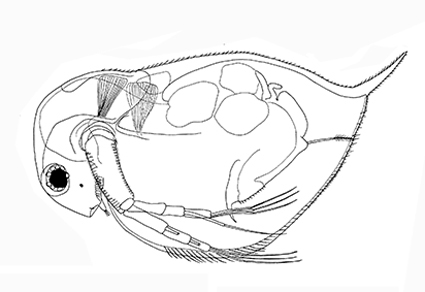
The cladoceran subgenus Daphnia (Ctenodaphnia) Dybowski & Grochowski, 1895 (Cladocera: Anomopoda: Daphniidae), particularly diverse in temporary waters of temperate regions, contains several species groups with distinct morphologies. Among these, populations with a “head plate”, a prominent anterior median projection of the carapace to the head shield, have been described multiple times since the mid-19th century. In our previous paper, we have demonstrated that the “crowned” Eurasian daphniids, the head plate of which may be flanked with conspicuous thorns, represent two strongly divergent clades separated tens of millions years ago that are not in a sister-group relationship: D. (C.) triquetra Sars, 1903 and D. (C.) atkinsoni group. Here, we focus on a detailed final revision of the atkinsoni group based on morphology, mitochondrial and whole-genome phylogenies. Both molecular (including genomic) and morphological analyses of available samples confirmed existence of three species: D. (C.) atkinsoni Baird, 1859 s. str. nomen protectum, D. (C.) ulomskyi Behning, 1941, and D. (C.) nuda Keiser, 1931. The overall diversity of the group may be higher, e.g., as a fourth genetic lineage was reported from Hungary. As we had no material for its revision, its taxonomic status needs to be checked in the future. The three studied species are redescribed in detail. They mainly differ in the adult male morphology, while their parthenogenetic females are similar. Our pessimistic conclusion is that the taxonomy based solely on morphological characters is already reaching the limits of its resolution in intensively studied cladoceran taxa such as Daphnia (Ctenodaphnia), following the fate of D. (Daphnia) morphological taxonomy. Only a few, and very minute, morphological differences support the discrimination of taxa described above.
References
- Adamowicz, S.J., Petrusek, A., Colbourne, J.K., Hebert, P.D.N. & Witt, J.D.S. (2009) The scale of divergence: a phylogenetic appraisal of intercontinental allopatric speciation in a passively dispersed freshwater zooplankton genus. Molecular phylogenetics and evolution, 50, 423–436. https://doi.org/10.1016/j.ympev.2008.11.026
- Alonso, M. (1985) Daphnia (Ctenodaphnia) mediterranea: a new species of hyperhaline waters, long confused with D. (C.) dolichocephala Sars, 1895. Hydrobiologia, 128, 217–228. https://doi.org/10.1007/BF00006817
- Alonso, M. (1996) Fauna Iberica. Crustacea, Branchiopoda. Museo Nacional de Ciencias Naturales, Madrid, 486 pp.
- Baird, W. (1850) The natural history of the British Entomostraca. The Ray Society, London, 364 pp. https://doi.org/10.5962/bhl.title.1807
- Baird, W. (1859) Description of several species of Entomostraceous Crustacea from Jerusalem. The Annals and Magazine of Natural History, Series 3, 4 (22), 280–283. https://doi.org/10.1080/00222935908697126
- Bankevich, A., Nurk, S., Antipov, D., Gurevich, A.A., Dvorkin, M., Kulikov, A.S., Lesin, V.M., Nikolenko, S.I., Pham, S., Prjibelski, A.D., Pyshkin, A.V., Sirotkin, A.V., Vyahhi, N., Tesler, G., Alekseyev, M.A. & Pevzner, P.A. (2012) SPAdes: a new genome assembly algorithm and its applications to single-cell sequencing. Journal of computational biology, 19, 455–477. https://doi.org/10.1089/cmb.2012.0021
- Barido-Sottani, J., Boskova, V., Du Plessis, L., Kuhnert, D., Magnus, C., Mitov, V., Muller, N.F., PecErska, J., Rasmussen, D.A., Zhang, C., Drummond, A.J., Heath, T.A., Pybus, O.G., Vaughan, T.G. & Stadler, T. (2018) Taming the BEAST - a community teaching material resource for BEAST2. Systematic biology, 67, 170–174. https://doi.org/10.1093/sysbio/syx060
- Behning, A.L. (1941) Kladotsera Kavkaza - The Cladocerans of the Caucasus. Gruzmedgiz Publishing, Tbilisi, 384 pp.
- Bekker, E.I., Karabanov, D.P., Galimov, Y.R., Haag, C.R., Neretina, T.V. & Kotov, A.A. (2018) Phylogeography of Daphnia magna Straus (Crustacea: Cladocera) in Northern Eurasia: Evidence for a deep longitudinal split between mitochondrial lineages. PLoS ONE, 13, e0194045. https://doi.org/10.1371/journal.pone.0194045
- Bekker, E.I., Karabanov, D.P., Galimov, Y.R. & Kotov, A.A. (2016) DNA barcoding reveals high cryptic diversity in the North Eurasian Moina species (Crustacea: Cladocera). PLoS ONE, 11, e0161737. https://doi.org/10.1371/journal.pone.0161737
- Benzie, J.A.H. (2005) The genus Daphnia (including Daphniopsis). In: Dumont, H.J. (Ed.), Guides to the Identification of the Microinvertebrates of the Continental Waters of the World. Vol. 21. Kenobi Productions; Backhuys Publishers, Ghent and Leiden, pp. 1–376.
- Berg, K.K. (1931) Studies on the genus Daphnia O.F.Muller with especial reference to the mode of reproduction. Videnskabelige meddelelser fra den Naturhistoriske forening i Kjobenhavn, 99, 1–222.
- Birge, E.A. (1918) The water fleas (Cladocera). In: Ward, H.B. & Whipple, G.C. (Eds.), Freshwater biology. John Wiley & Sons, New York, New York, pp. 676–740.
- Birney, E., Clamp, M. & Durbin, R. (2004) GeneWise and Genomewise. Genome research, 14, 988–995. https://doi.org/10.1101/gr.1865504
- Bouckaert, R., Vaughan, T.G., Barido-Sottani, J., Duchene, S., Fourment, M., Gavryushkina, A., Heled, J., Jones, G., Kuhnert, D., Maio, N. de, Matschiner, M., Mendes, F.K., Muller, N.F., Ogilvie, H.A., Du Plessis, L., Popinga, A., Rambaut, A., Rasmussen, D., Siveroni, I., Suchard, M.A., Wu, C.-H., Xie, D., Zhang, C., Stadler, T. & Drummond, A.J. (2019) BEAST 2.5 : An advanced software platform for Bayesian evolutionary analysis. PLoS Computational Biology, 15, e1006650. https://doi.org/10.1371/journal.pcbi.1006650
- Brady, G.S. (1898) On the British species of Entomostraca belonging to Daphnia and other allied genera. Natural history transactions of Northumberland, Durham, and Newcastle-upon-Tyne, 13, 217–248.
- Brehm, V. (1954) Marokkanische Cladoceren. Bulletin de la Societe des Sciences naturelles et physiques du Maroc, 34, 337–342.
- Brodsky, A.L. (1929) Fauna of the water bodies of the Kara-Kum Desert. Acta Universitatis Asiae Mediae, Series XII-a. Geographia, Fascicle 5, 1–43.
- Brooks, J.L. (1957) The systematics of North American Daphnia. Connecticut Academy of Arts & Sciences, New Haven, Connecticut, 180 pp.
- Camacho, C., Coulouris, G., Avagyan, V., Ma, N., Papadopoulos, J., Bealer, K. & Madden, T.L. (2009) BLAST+: architecture and applications. BMC Bioinformatics, 10, 421. https://doi.org/10.1186/1471-2105-10-421
- Capella-Gutierrez, S., Silla-Martinez, J.M. & Gabaldon, T. (2009) trimAl: a tool for automated alignment trimming in large-scale phylogenetic analyses. Bioinformatics, 25, 1972–1973. https://doi.org/10.1093/bioinformatics/btp348
- Chen, S. (2023) Ultrafast one‐pass FASTQ data preprocessing, quality control, and deduplication using fastp. iMeta, 2 (2), e107. https://doi.org/10.1002/imt2.107
- Chernomor, O., Haeseler, A. von & Minh, B.Q. (2016) Terrace aware data structure for phylogenomic inference from supermatrices. Systematic biology, 65, 997–1008. https://doi.org/10.1093/sysbio/syw037
- Cock, P.J.A., Antao, T., Chang, J.T., Chapman, B.A., Cox, C.J., Dalke, A., Friedberg, I., Hamelryck, T., Kauff, F., Wilczynski, B. & Hoon, M.J.L. de (2009) Biopython: freely available Python tools for computational molecular biology and bioinformatics. Bioinformatics, 25, 1422–1423. https://doi.org/10.1093/bioinformatics/btp163
- Colbourne, J.K., Wilson, C.C. & Hebert, P.D.N. (2006) The systematics of Australian Daphnia and Daphniopsis (Crustacea: Cladocera): a shared phylogenetic history transformed by habitat-specific rates of evolution. Biological Journal of the Linnean Society, 89, 469–488. https://doi.org/10.1111/j.1095-8312.2006.00687.x
- Cornetti, L., Fields, P.D., Van Damme, K. & Ebert, D. (2019) A fossil-calibrated phylogenomic analysis of Daphnia and the Daphniidae. Molecular phylogenetics and evolution, 137, 250–262. https://doi.org/10.1016/j.ympev.2019.05.018
- Cox, A.J. & Hebert, P.D.N. (2001) Colonization, extinction, and phylogeographic patterning in a freshwater crustacean. Molecular ecology, 10, 371–386. https://doi.org/10.1046/j.1365-294X.2001.01188.x
- Dlouha, S., Thielsch, A., Kraus, R.H.S., Seda, J., Schwenk, K. & Petrusek, A. (2010) Identifying hybridizing taxa within the Daphnia longispina species complex: a comparison of genetic methods and phenotypic approaches. Hydrobiologia, 643, 107–122. https://doi.org/10.1007/s10750-010-0128-8
- Douglas, J., Zhang, R. & Bouckaert, R. (2021) Adaptive dating and fast proposals: revisiting the phylogenetic relaxed clock model. PLoS Computational Biology, 17, e1008322. https://doi.org/10.1371/journal.pcbi.1008322
- Dumont, H.J., Laureys, P. & Pensaert, J. (1979) Anostraca, Conchostraca, Cladocera and Copepoda from Tunisia. Hydrobiologia, 66, 259–274. https://doi.org/10.1007/BF00020908
- Ebert, D. (2022) Daphnia as a versatile model system in ecology and evolution. EvoDevo, 13, 16. https://doi.org/10.1186/s13227-022-00199-0
- Flossner, D. (1972) Krebstiere, Crustacea (Kiemen- und Blattfuber, Branchiopoda, Fischlause, Branchiura). VEB Gustav Fischer Verlag, Jena, 501 pp.
- Flossner, D. (2000) Die Haplopoda und Cladocera (ohne Bosminidae) Mitteleuropas. Backhuys, Leiden, x + 428 pp.
- Frey, D.G. (1973) Comparative morphology and biology of three species of Eurycercus (Chydoridae, Cladocera) with a description of Eurycercus macrocanthus sp. nov. Internationale Revue der gesamten Hydrobiologie und Hydrographie, 58, 221–267. https://doi.org/10.1002/iroh.19730580204
- Frey, D.G. (1982) G.O.Sars and the Norwegian Cladocera: a continuing frustration. Hydrobiologia, 96, 267–293. https://doi.org/10.1007/BF00010617
- Fric, A. (1872) Die Krustenthiere Bohmens. Archiv fuer die Naturwissenschaftliche Landesdurchforschung von Bohmen, 2, 201–269.
- Garibian, P.G., Pereboev, D.D. & Kotov, A.A. (2025) Daphnia (Ctenodaphnia) mediterranea Alonso, 1985 (Crustacea: Cladocera) as a Mediterranean species penetrating also the Ponto-Caspian region, a rare case for the cladocerans. Zootaxa, 5660 (4), 573–580. https://doi.org/10.11646/zootaxa.5660.4.7
- Gauthier, H. (1928) Recherches sur la faune des eaux continentales de l’Algerie et de la Tunisie. Minerva, Alger, 419 pp.
- Gauthier, H. (1937) Euphyllopodes et Cladoceres continentaux recoltes par M.Monod au Sahara occidental et en Mauritanie. Bulletin de la Societe des Sciences naturelles et physiques du Maroc, 17, 75–98.
- Gertz, E.M., Yu, Y.-K., Agarwala, R., Schäffer, A.A. & Altschul, S.F. (2006) Composition-based statistics and translated nucleotide searches: improving the TBLASTN module of BLAST. BMC biology, 4, 41. https://doi.org/10.1186/1741-7007-4-41
- Ghaouaci, S., Amarouayache, M., Sinev, A.Y., Korovchinsky, N.M. & Kotov, A.A. (2018) An annotated checklist of the Algerian Cladocera (Crustacea: Branchiopoda). Zootaxa, 4377 (3), 412–430. https://doi.org/10.11646/zootaxa.4377.3.5
- Glagolev, S.M. (1986) Morphology, systematics and geographic distribution of the cladoceran genus Daphnia from Eurasia. Dissertatsia kandidata biologicheskich nauk, Moscow, 226 pp.
- Glagolev, S.M. (1995a) Daphnia. In: Tsalolikhin, S.J. (Ed.), A key-book of the freshwater invertebrates of Russia. Vol. 2. Crustacea. ZIN RAN, St. Petersburg, pp. 48–58.
- Glagolev, S.M. (1995b) Genus Daphnia. In: Alekseev, V.R. (Ed.), Key to freshwater invertebrates of Russia and adjacent lands. 2. Crustacea. Zoological Institute of Russian Academy of Sciences, St. Petersburg, pp. 48–58.
- Guher, H. (2014) A checklist for zooplankton (Rotifera, Copepoda, Cladocera) of European Turkey inland waters. Ege Journal of Fisheries and Aquatic Sciences, 31, 221–225. https://doi.org/10.12714/egejfas.2014.31.4.08
- Guindon, S., Dufayard, J.-F., Lefort, V., Anisimova, M., Hordijk, W. & Gascuel, O. (2010) New algorithms and methods to estimate maximum-likelihood phylogenies: assessing the performance of PhyML 3.0. Systematic biology, 59, 307–321. https://doi.org/10.1093/sysbio/syq010
- Hamza, W., Neretina, A.N., Al Neyadi, S.E.S., Amiri, K., Karabanov, D.P. & Kotov, A.A. (2022) Discovery of a new species of Daphnia (Crustacea: Cladocera) from the Arabian Peninsula revealed a southern origin of a common Northern Eurasian species group. Water, 14 (15), 1–24. https://doi.org/10.3390/w14152350
- Hann, B.J. (1986) Revision of the genus Daphniopsis Sars, 1903 (Cladocera: Daphniidae) and a description of Daphniopsis chilensis, new species, from South America. Journal of Crustacean Biology, 6, 246–263. https://doi.org/10.2307/1547985
- Hebert, P.D.N. (1987) Genetics of Daphnia. Memorie dell’Istituto italiano di idrobiologia, 45, 439–460.
- Hebert, P.D.N. & Finston, T.L. (1993) A taxonomic reevaluation of North American Daphnia (Crustacea: Cladocera). I. The D. similis complex. Canadian Journal of Zoology, 71, 908–925. https://doi.org/10.1139/z93-119
- Hebert, P.D.N. & Finston, T.L. (1997) A taxonomic reevaluation of North American Daphnia (Crustacea: Cladocera). III. The D. catawba complex. Canadian Journal of Zoology, 75, 1254–1261. https://doi.org/10.1139/z97-148
- Hellich, B. (1877) Die Cladoceren Bohmens. Archiv fuer die Naturwissenschaftliche Landesdurchforschung von Bohmen, 3, 1–131.
- Herbst, H.V. (1962) Blattfusskrebse (Phyllopoden: Echte Blattfusser und Wasserflohe). Kosmos, Stuttgart, 130 pp.
- Hoang, D.T., Chernomor, O., Haeseler, A. von, Minh, B.Q. & Le Vinh, S. (2018) UFBoot2: Improving the ultrafast bootstrap approximation. Molecular biology and evolution, 35, 518–522. https://doi.org/10.1093/molbev/msx281
- Hollwedel, W. (1975) Ein fur Deutschland erster nachweis von Daphnia atkinsoni Baird, 1859 (Crustacea, Cladocera). Archiv fur Hydrobiologie, 75, 140–145.
- Hudec, I. (1981) Comparative study of Daphnia atkinsoni and Daphnia ulomskyi (Crustacea, Cladocera). Vestnik Ceskoslovenske spolecnosti zoologicke, 45, 172–180.
- Hudec, I. (2010) Anomopoda, Ctenopoda, Haplopoda, Onychopoda (Crustacea: Branchiopoda). VEDA vydavatel̕’tvo Slovenskej akademie vied, Bratislava, 496 pp.
- Huerta-Cepas, J., Serra, F. & Bork, P. (2016) ETE 3: reconstruction, analysis, and visualization of phylogenomic data. Molecular biology and evolution, 33, 1635–1638. https://doi.org/10.1093/molbev/msw046
- Ibrasheva, S.I. & Smirnova, V.A. (1983) Cladocerans of the Kazakhstan. Mektep Publishing, Alma-Ata, 136 pp. [Kladotsera Kazahstana, in Russian]
- ICZN (1999) International code of zoological nomenclature. Fourth edition. International Trust for Zoological Nomenclature, London, XXIX + 306 pp.
- Jin, J.-J., Yu, W.-B., Yang, J.-B., Song, Y., dePamphilis, C.W., Yi, T.-S. & Li, D.-Z. (2020) GetOrganelle: a fast and versatile toolkit for accurate de novo assembly of organelle genomes. Genome biology, 21, 241. https://doi.org/10.1186/s13059-020-02154-5
- Johnson, D.S. (1952) The British species of the genus Daphnia (Crustacea, Cladocera). Proceedings of the Zoological Society of London, 122, 435–462. https://doi.org/10.1111/j.1096-3642.1952.tb00320.x
- Jones, D.H. (1984) Daphnia magna and D. atkinsoni (Crustacea: Cladocera); new records in Scotland. Journal of natural history, 18, 689–696. https://doi.org/10.1080/00222938400770591
- Juhling, F., Putz, J., Bernt, M., Donath, A., Middendorf, M., Florentz, C. & Stadler, P.F. (2012) Improved systematic tRNA gene annotation allows new insights into the evolution of mitochondrial tRNA structures and into the mechanisms of mitochondrial genome rearrangements. Nucleic acids research, 40, 2833–2845. https://doi.org/10.1093/nar/gkr1131
- Kalyaanamoorthy, S., Minh, B.Q., Wong, T.K.F., Haeseler, A. von & Jermiin, L.S. (2017) ModelFinder: Fast model selection for accurate phylogenetic estimates. Nature methods, 14, 587–589. https://doi.org/10.1038/nmeth.4285
- Karabanov, D.P., Bekker, E.I. & Kotov, A.A. (2020) Underestimated consequences of biological invasions in phylogeographic reconstructions as seen in Daphnia magna (Crustacea, Cladocera). Zoologicheskii zhurnal, 99, 1232–1241.
- Karabanov, D.P., Bekker, E.I., Shiel, R.J. & Kotov, A.A. (2018) Invasion of a Holarctic planktonic cladoceran Daphnia galeata Sars (Crustacea: Cladocera) in the Lower Lakes of South Australia. Zootaxa, 4402 (1), 136–148. https://doi.org/10.11646/zootaxa.4402.1.6
- Karabanov, D.P., Kotov, A.A., Borovikova, E.A., Kodukhova, Y.V. & Zhang, X. (2023) Comparison of the efficiency of single-locus species delimitation methods: a case study of a single lake fish population in comparison against the barcodes from international databases. Water, 15, 1851. https://doi.org/10.3390/w15101851
- Karpowicz, M., Karabanov, D., Swislocka-Cutter, M., Slugocki, L., Whitmore-Stolar, E.A., Connolly, J.K., Watkins, J.M. & Kotov, A.A. (2024) A rapid and parallel Late Pleistocene/Holocene morphological radiation in a predaceous planktonic water flea: the case of Bythotrephes (Cladocera: Cercopagididae). Zoological journal of the Linnean Society, 202, zlae132. https://doi.org/10.1093/zoolinnean/zlae132
- Katoh, K., Rozewicki, J. & Yamada, K.D. (2019) MAFFT online service: Multiple sequence alignment, interactive sequence choice and visualization. Briefings in bioinformatics, 20, 1160–1166. https://doi.org/10.1093/bib/bbx108
- Keiser, N. (1931) Uber die Cladoceren und Copepoden der Wuste Kara-Kum. Internationale Revue der gesamten Hydrobiologie und Hydrographie, 25, 355–372. https://doi.org/10.1002/iroh.19310250506
- Korovchinsky, N.M. (1996) How many species of Cladocera are there? Hydrobiologia, 321, 191–204. https://doi.org/10.1007/BF00143750
- Korovchinsky, N.M. (2018) Further revision of the genus Bythotrephes Leydig (Crustacea: Cladocera: Onychopoda): redescription of B. brevimanus Lilljeborg, reevaluation of B. cederstromii Schodler, and description of a new species of the genus. Zootaxa, 4379 (3), 347–387. https://doi.org/10.11646/zootaxa.4379.3.2
- Korovchinsky, N.M., Kotov, A.A., Boikova, O.S. & Smirnov, N.N. (2021a) Water fleas (Crustacea: Cladocera) of Northern Eurasia. Vol. 1. KMK Scientific press Ltd., Moscow, 482 pp.
- Korovchinsky, N.M., Kotov, A.A., Sinev, A.Y., Neretina, A.N. & Garibian, P.G. (2021b) Water fleas (Crustacea: Cladocera) of Northern Eurasia. Vol. 2. KMK Scientific press Ltd., Moscow, 544 pp.
- Kotov, A.A. (2015) A critical review of the current taxonomy of the genus Daphnia O.F.Muller, 1785 (Anomopoda, Cladocera). Zootaxa, 3911 (2), 184–200. https://doi.org/10.11646/zootaxa.3911.2.2
- Kotov, A.A. & Boikova, O.S. (2001) Study of the late embryogenesis of Daphnia (Anomopoda, ‘Cladocera’, Branchiopoda) and a comparison of development in Anomopoda and Ctenopoda. Hydrobiologia, 442, 127–143. https://doi.org/10.1023/A:1017594402114
- Kotov, A.A., Garfias-Espejo, T. & Elías-Gutierrez, M. (2004) Separation of two Neotropical species: Macrothrix superaculeata (Smirnov, 1982) versus M. elegans Sars, 1901 (Macrothricidae, Anomopoda, Cladocera). Hydrobiologia, 517, 61–88. https://doi.org/10.1023/B:HYDR.0000027337.57305.b0
- Kotov, A.A., Garibian, P.G., Bekker, E.I., Taylor, D.J. & Karabanov, D.P. (2021) A new species group from the Daphnia curvirostris species complex (Cladocera: Anomopoda) from the eastern Palaearctic: taxonomy, phylogeny and phylogeography. Zoological journal of the Linnean Society, 191, 772–822. https://doi.org/10.1093/zoolinnean/zlaa046
- Kotov, A.A. & Gololobova, M.A. (2016) Traditional taxonomy: Quo vadis? Integrative zoology, 11, 500–505. https://doi.org/10.1111/1749-4877.12215
- Kotov, A.A., Karabanov, D.P. & Van Damme, K. (2022) Non-indigenous cladocera (Crustacea: Branchiopoda): from a few notorious cases to a potential global faunal mixing in aquatic ecosystems. Water, 14, 2806. https://doi.org/10.3390/w14182806
- Kotov, A.A., Sinev, A.Y., Glagolev, S.M. & Smirnov, N.N. (2010) Water fleas (Cladocera). In: Alexeev, V.R. & Tsalolokhin, S.Y. (Eds.), Key book for zooplankton and zoobenthos of fresh waters of European Russia. Vol. 1. Zooplankton. KMK Scientific press Ltd., Moscow, pp. 151–276.
- Krzywinski, M., Schein, J., Birol, I., Connors, J., Gascoyne, R., Horsman, D., Jones, S.J. & Marra, M.A. (2009) Circos: an information aesthetic for comparative genomics. Genome research, 19, 1639–1645. https://doi.org/10.1101/gr.092759.109
- Kurz, W. (1875) Dodekas neuer Cladoceren nebst einer kurzen Ubersicht der Cladocerenfauna Bohmens. Sitzungsberichte der Mathematisch-Naturwissenschaftliche Classe der Kaiserlichen Akademie der Wissenschaften, 70, 7–88.
- Laforsch, C., Haas, A., Jung, N., Schwenk, K., Tollrian, R. & Petrusek, A. (2009) “Crown of thorns” of Daphnia: an exceptional inducible defense discovered by DNA barcoding. Communicative and Integrative Biology, 2, 379–381. https://doi.org/10.4161/cib.2.5.8714
- Lampert, W. (2011) Daphnia: Development of a model organism in ecology and evolution. International Ecology Institute, Oldendorf/Luhe, XIX + 250.
- Langmead, B. & Salzberg, S.L. (2012) Fast gapped-read alignment with Bowtie 2. Nature methods, 9, 357–359. https://doi.org/10.1038/nmeth.1923
- Li, H. & Durbin, R. (2009) Fast and accurate short read alignment with Burrows-Wheeler transform. Bioinformatics, 25, 1754–1760. https://doi.org/10.1093/bioinformatics/btp324
- Li, H., Handsaker, B., Wysoker, A., Fennell, T., Ruan, J., Homer, N., Marth, G., Abecasis, G. & Durbin, R. (2009) The sequence alignment/map format and SAMtools. Bioinformatics, 25, 2078–2079. https://doi.org/10.1093/bioinformatics/btp352
- Lilljeborg, W. (1900) Cladocera Sueciae; oder Beitrage zur kenntniss der in Schweden lebenden Krebsthiere von der Ordnung der Branchiopoden und der Unterordnung der Cladoceren. Nova acta Regiae societatis scientatis scientiarum Upsaleinsis, Seriei Tertiae Vol. XIX, 1–701. https://doi.org/10.5962/bhl.title.13925
- Linnaeus, C. (1758) Systema naturae per regna tria naturae, secundum classes, ordines, genera, species, cum characteribus, differentiis, synonymis, locis. Tomus I. Editio decima, reformata. Impensis Direct. Laurentii Salvii, Holmiae, 824 pp. https://doi.org/10.5962/bhl.title.542
- Louette, G. & Meester, L. de (2004) Rapid colonization of a newly created habitat by cladocerans and the initial build-up of a Daphnia-dominated community. Hydrobiologia, 513, 245–249. https://doi.org/10.1023/B:hydr.0000018299.54922.57
- Manni, M., Berkeley, M.R., Seppey, M., Simão, F.A. & Zdobnov, E.M. (2021) BUSCO Update: novel and streamlined workflows along with broader and deeper phylogenetic coverage for scoring of Eukaryotic, Prokaryotic, and Viral genomes. Molecular biology and evolution, 38, 4647–4654. https://doi.org/10.1093/molbev/msab199
- Manujlova, E.F. (1964) The cladocerans of fauna of the USSR. Nauka, Moscow, 327 pp.
- Margaritora, F. (1983) Cladoceri (Crustacea: Cladocera). Guide per il Reconoscimiento delle Specie Animali delle Acque Interne. Vol. 22. Consiglio Nazionale delle Ricerche, Verona, 169 pp.
- Margaritora, F.G. (1985) Cladocera. Fauna d’ltalia. Vol. XXIII. Edizioni Calderini, Bologna, 399 pp.
- Marrone, F., Barone, R. & Naselli-Flores, L. (2005) Cladocera (Branchiopoda: Anomopoda, Ctenopoda, and Onychopoda) from Sicilian inland waters: an updated inventory. Crustaceana, 78, 1025–1039. https://doi.org/10.1163/156854005775361043
- Meng, G., Li, Y., Yang, C. & Liu, S. (2019) MitoZ: a toolkit for animal mitochondrial genome assembly, annotation and visualization. Nucleic acids research, 47, e63. https://doi.org/10.1093/nar/gkz173
- Mergeay, J., Aguilera, X., Declerck, S., Petrusek, A., Huyse, T. & Meester, L. de (2008) The genetic legacy of polyploid Bolivian Daphnia: the tropical Andes as a source for the North and South American D. pulicaria complex. Molecular ecology, 17, 1789–1800. https://doi.org/10.1111/j.1365-294X.2007.03679.x
- Minchin, D. (2007) A checklist of alien and cryptogenic aquatic species in Ireland. Aquatic Invasions, 2, 341–366. https://doi.org/10.3391/ai.2007.2.4.4
- Minh, B.Q., Schmidt, H.A., Chernomor, O., Schrempf, D., Woodhams, M.D., Haeseler, A. von & Lanfear, R. (2020) IQ-TREE 2: new models and efficient methods for phylogenetic inference in the genomic era. Molecular biology and evolution, 37, 1530–1534. https://doi.org/10.1093/molbev/msaa015
- Minh, B.Q., Trifinopoulos, J., Schrempf, D., Schmidt, H.A. & Lanfear, R. (2022) IQ-TREE version 2.2.0: Tutorials and Manual. Phylogenomic software by maximum likelihood. Available from: http://www.iqtree.org (accessed 25 June 2024)
- Mohammadyari, A., Ghassemzadeh, F., Mirshamsi, O., Aliabadian, M. & Atashbar, B. (2017) Daphnia OF Muller, 1785 (Crustacea: Branchiopoda: Anomopoda) species of Iran: morphology and Identification. Iranian Journal of Animal Biosystematics, 13, 77–107.
- Mukhamediev, A.M. (1986) Crustaceans of water bodies of the Fergana Valley. Fan, Tashkent, 160 pp.
- Naidenow, W. (1973) Biozonologische Untersuchungen der stehenden Gewasser im “Ludogorie” (Nordwest Bulgarien). Izvestiia na Zoologicheskiia institut, Sofia, 38, 149–181.
- Nawrocki, E.P. & Eddy, S.R. (2013) Infernal 1.1: 100-fold faster RNA homology searches. Bioinformatics, 29, 2933–2935. https://doi.org/10.1093/bioinformatics/btt509
- Negrea, S. (1983) Cladocera. Fauna Republicii Socialiste Romania. Volumul IV, Crustacea. Fascicula 12. Editura Academiei Republicii Socialiste Romania, Bucuresti, 399 pp.
- Negrea, S. (1984) Six especes de Cladocera nouvelles pour la Roumanie. Acta musei Macedonici scientiarum naturalium, 17, 55–76.
- Neretina, A.N., Karabanov, D.P., Sacherova, V. & Kotov, A.A. (2021) Unexpected mitochondrial lineage diversity within the genus Alonella Sars, 1862 (Crustacea: Cladocera) across the Northern Hemisphere. PeerJ, 9, e10804. https://doi.org/10.7717/peerj.10804
- Neretina, A.N. & Sinev, A.Y. (2016) A revision of the genus Leberis Smirnov, 1989 (Cladocera: Chydoridae) in the Old World and Australia. Zootaxa, 4079 (5), 501–533. https://doi.org/10.11646/zootaxa.4079.5.1
- Nilssen, J.P., Hobaek, A., Petrusek, A. & Skage, M. (2007) Restoring Daphnia lacustris G.O. Sars, 1862 (Crustacea, Anomopoda): a cryptic species in the Daphnia longispina group. Hydrobiologia, 594, 5–17. https://doi.org/10.1007/s10750-007-9076-3
- Noble, R.C. & Schaefter, H.W. (1967) Keys to the freshwater Cladocera of Southern Africa. II. Genera of the family Daphniidae and species of the genera Scapholeberis and Daphnia. Limnological Society of Southern Africa: Newsletter, 9, 62–79.
- Okonechnikov, K., Golosova, O. & Fursov, M. (2012) Unipro UGENE: a unified bioinformatics toolkit. Bioinformatics, 28, 1166–1167. https://doi.org/10.1093/bioinformatics/bts091
- Pereboev, D.D., Garibian, P.G., Karabanov, D.P., Efeykin, B.D., Galimov, Y.R., Petrusek, A. & Kotov, A.A. (2025) A non‐monophyly of ‘crowned’ Daphnia (Ctenodaphnia) Dybowski et Grochowski, 1895 (Cladocera: Daphniidae): from genomes to morphology. Zoologica scripta, 54, 69–90. https://doi.org/10.1111/zsc.12695
- Pereboev, D.D., Karabanov, D.P., Efeykin, B.D. & Kotov, A.A. (2024) The complete mitogenome of Podonevadne trigona (Sars, 1897) (Cladocera: Onychopoda: Podonidae) sheds light on the age of podonid differentiation. Arthropoda selecta, 33, 14–24. https://doi.org/10.15298/arthsel.33.1.02
- Petkovski, T.K. (1970) Zwei seltene Daphnia-Arten aus Mazedonien: D. chevreuxi Richard und D. ulomskyi Behning (Crustacea - Cladocera). Fragmenta Balcanica, 7, 137–147.
- Petrusek, A., Hobaek, A., Nilssen, J.P., Skage, M., Cerny, M., Brede, N. & Schwenk, K. (2008) A taxonomic reappraisal of the European Daphnia longispina complex (Crustacea, Cladocera, Anomopoda). Zoologica scripta, 37, 507–519. https://doi.org/10.1111/j.1463-6409.2008.00336.x
- Petrusek, A., Thielsch, A. & Schwenk, K. (2012) Mitochondrial sequence variation suggests extensive cryptic diversity within the Western Palearctic Daphnia longispina complex. Limnology and oceanography, 57, 1838–1845. https://doi.org/10.4319/lo.2012.57.6.1838
- Petrusek, A., Tollrian, R., Schwenk, K., Haas, A. & Laforsch, C. (2009) A “crown of thorns” is an inducible defense that protects Daphnia against an ancient predator. Proceedings of the National Academy of Sciences of the United States of America, 106, 2248–2252. https://doi.org/10.1073/pnas.0808075106
- Polivannaia, M.F. & Krazhan, S.A. (1969) To the biology of Daphnia atkinsoni Baird from the steppe reservoirs of southern Ukraine. Hydrobiological Journal, 5, 98–99.
- Popova, E.V., Petrusek, A., Korinek, V., Mergeay, J., Bekker, E.I., Karabanov, D.P., Galimov, Y.R., Neretina, T.V., Taylor, D.J. & Kotov, A.A. (2016) Revision of the Old World Daphnia (Ctenodaphnia) similis group (Cladocera: Daphniidae). Zootaxa, 4161 (2), 1–40. https://doi.org/10.11646/zootaxa.4160.2.1
- Poulsen, E.M. (1939) Freshwater Crustacea. Zoology of Iceland, 3, 1–50.
- Pretus, J.L. (1990) A commented check-list of the Balearic Branchiopoda (Crustacea). Limnetica, 6, 157–164. https://doi.org/10.23818/limn.06.15
- Rambaut, A., Drummond, A.J., Xie, D., Baele, G. & Suchard, M.A. (2018) Posterior summarization in Bayesian phylogenetics using Tracer 1.7. Systematic biology, 67, 901–904. https://doi.org/10.1093/sysbio/syy032
- Redi, F. (1684) Osservazioni intorno agli animali viventi che si trovano negli animali viventi. Piero Matini, Firenze, 232 pp.
- Reid, N.M. & Carstens, B.C. (2012) Phylogenetic estimation error can decrease the accuracy of species delimitation: a Bayesian implementation of the general mixed Yule-coalescent model. BMC Evolutionary Biology, 12, 196. https://doi.org/10.1186/1471-2148-12-196
- Richard, J. (1888) Entomostraces nouveaux on peux connus. Bulletin de la Societe Zoologique de France, 13, 43–48.
- Richard, J. (1892) Sur la distribution geographique des Cladoceres. Congres International de Zoologie. Deuxieme session a Moscou du 22–30 aout 1892, Moscou, 2, 9–23.
- Richard, J. (1894) Cladoceres recueillis par le Dr. Theod. Barrois en Palestine, en Syrie et en Egypte. Revue biologique du Nord de la France, 6, 360–378.
- Richard, J. (1896) Revision des Cladoceres. Deuxieme Partie. Anomopoda. Famille III. - Daphnidae. Annales des Sciences Naturelles, Zoologie, 8, 187–363.
- Richard, J. (1897) Entomostraces de l’Amerique du Sud, recueillis par MM. U. Deiters, H. von Ihering, G. W. Muller et C. O. Poppe. Memoires de la Societe zoologique de France, 10, 263–301.
- Rogers, D.C., Kotov, A.A., Sinev, A.Y., Glagolev, S.M., Korovchinsky, N.M., Smirnov, N.N. & Bekker, E.I. (2019) Chapter 16.2. Arthropoda: Class Branchiopoda. In: Rogers, C.D. & Thorp, J.H. (Eds.), Thorp and Covich’s Freshwater Invertebrates. Vol. 4. Keys to Palaearctic Fauna. Academic Press, London, pp. 643–724. https://doi.org/10.1016/B978-0-12-385024-9.00018-6
- Scates, M.D. (1968) Notes on the hydrobiology of Azraq Oasis Jordan. Hydrobiologia, 31, 73–80. https://doi.org/10.1007/BF00170136
- Scourfield, D.J. (1903) Synopsis of the known species of British freshwater Entomostraca. Part I. Cladocera. Journal of the Quekett Microscopical Club, London, England, Series 2, 431–454.
- Scourfield, D.J. & Harding, J.P. (1966) A Key to the British Freshwater Cladocera with notes on their ecology. Freshwater Biological Association, Ambleside, 55 pp.
- Smirnov, N.N. (1971) Chydoridae of the World’s fauna. Fauna of the USSR. Crustacea. [Chydoridae fauni mira. Fauna SSSR. Rakoobraznie]. Nauka, Leningrad, 1–531. [in Russian]
- Smirnov, N.N. (2017) Physiology of the Cladocera. Second edition. Academic Press, Amsterdam, 418 pp. https://doi.org/10.1016/B978-0-12-805194-8.00001-5
- Sowjnsky, N. (1888) Esquisse de la faune des Crustaces d’eau douce des environs de Kiew et de la partie nord du gouvernement de Kiew. Memoires de la Societe des Naturalistes de Kiew, 9, 41–87.
- Sowjnsky, N. (1891) Materials on the fauna of freshwater crustaceans of the Southwestern region. Proceedings of the Kiev Society of Naturalists, 11, 107–161.
- Sramek-Husek, R., Straskraba, M. & Brtek, J. (1962) Lupenonozci – Branchiopoda. Fauna CSSR. Svazek 16. Nakladatelstvi Ceskoslovenske Akademie Ved, Praha, 470 pp.
- Swammerdam, J. (1669) Historia insectorum generalis, ofte algemeene verhandeling van de bloedeloose dierkens. Meinardus van Dreunen, Utrecht, 216 pp.
- Thielsch, A., Knell, A., Mohammadyari, A., Petrusek, A. & Schwenk, K. (2017) Divergent clades or cryptic species? Mito-nuclear discordance in a Daphnia species complex. BMC Evolutionary Biology, 17, 227. https://doi.org/10.1186/s12862-017-1070-4
- Tule, S., Foley, G., Zhao, C., Forbes, M. & Boden, M. (2024) Optimal phylogenetic reconstruction of insertion and deletion events. Bioinformatics, 40, i277–i286. https://doi.org/10.1093/bioinformatics/btae254
- Van Damme, K., Cornetti, L., Fields, P.D. & Ebert, D. (2022) Whole-genome phylogenetic reconstruction as a powerful tool to reveal homoplasy and ancient rapid radiation in Waterflea evolution. Systematic biology, 71, 777–787. https://doi.org/10.1093/sysbio/syab094
- Van Damme, K., Sinev, A.Y. & Dumont, H.J. (2011) Separation of Anthalona gen.n. from Alona Baird, 1843 (Branchiopoda: Cladocera: Anomopoda): morphology and evolution of scraping stenothermic alonines. Zootaxa, 2875 (1), 1–64. https://doi.org/10.11646/zootaxa.2875.1.1
- Wagler, E. (1937) Klasse: Crustacea, Krebstiere. Die Tierwelt Mitteleuropas, II, 1–224.
- Weisig, S.Y. (1934) Cladocera of the Caspian lowland. [Cladocera Prikaspiyskoy nizmennosti. In Russian]. Trudy Azerbajanskogo otdelenya Zakavkazskogo filiala AN SSSR, Zoology, 7, 72–86.
- Wesenberg-Lund, C. (1894) Gronlands Ferskvandsentomostraca. 1. Phyllopoda branchiopoda et cladocera. Videnskabelige meddelelser fra den Naturhistoriske forening i Kjobenhavn, 46, 82–173.
- Wong, T., Ly-Trong, N., Ren, H., Baños, H., Roger, A., Susko, E., Bielow, C., Maio, N. de, Goldman, N., Hahn, M., Huttley, G., Lanfear, R. & Minh, B.Q. (2025) IQ-TREE 3: phylogenomic inference software using complex evolutionary models. EcoEvoRxiv, 2025, 1–11. [preprint] https://doi.org/10.32942/X2P62N
- Xiang, X.-F., Ji, G.-H., Chen, S.-Z., Yu, G.-L., Xu, L., Han, B.-P., Kotov, A.A. & Dumont, H.J. (2015) Annotated Checklist of Chinese Cladocera (Crustacea: Branchiopoda). Part I. Haplopoda, Ctenopoda, Onychopoda and Anomopoda (families Daphniidae, Moinidae, Bosminidae, Ilyocryptidae). Zootaxa, 3904 (1), 1–27. https://doi.org/10.11646/zootaxa.3904.1.1
- Xu, L., Han, B.-P., Van Damme, K., Vierstraete, A., Vanfleteren, J.R. & Dumont, H.J. (2011) Biogeography and evolution of the Holarctic zooplankton genus Leptodora (Crustacea: Branchiopoda: Haplopoda). Journal of biogeography, 38, 359–370. https://doi.org/10.1111/j.1365-2699.2010.02409.x
- Zagorodnyaya, Y.A., Shadrin, N.V., Galagovets, E.A. & Anufriieva, E.V. (2018) Daphnia (Ctenodaphnia) atkinsoni Baird 1859 and other Cladocerans in the saline lakes of Crimea. In: Kotov, A.A., Krylov, A.V. & Sabitova, R.Z. (Eds.), Current problems of studying Crustaceans. Filigran’, Yaroslavl, pp. 67–71.
- Zimin, A.V., Marcais, G., Puiu, D., Roberts, M., Salzberg, S.L. & Yorke, J.A. (2013) The MaSuRCA genome assembler. Bioinformatics, 29, 2669–2677. https://doi.org/10.1093/bioinformatics/btt476
- Zuykova, E.I., Bochkarev, N.A., Taylor, D.J. & Kotov, A.A. (2019) Unexpected endemism in the Daphnia longispina complex (Crustacea: Cladocera) in Southern Siberia. PLoS ONE, 14, e0221527. https://doi.org/10.1371/journal.pone.0221527
- Zuykova, E.I., Simonov, E.P., Bochkarev, N.A., Abramov, S.A., Sheveleva, N.G. & Kotov, A.A. (2018) Contrasting phylogeographic patterns and demographic history in closely related species of Daphnia longispina group (Crustacea: Cladocera) with focus on North-Eastern Eurasia. PLoS ONE, 13, e0207347. https://doi.org/10.1371/journal.pone.0207347
- Zuykova, E.I., Sleptzova, L.P., Bochkarev, N.A., Kuchko, Y.A., Sheveleva, N.G., Zakharov, E.S., Pestryakova, L.A. & Kotov, A.A. (2022) Mitochondrial lineage diversity and phylogeography of Daphnia (Daphnia) (Crustacea: Cladocera) in North-East Russia. Water, 14 (12), 1–25. https://doi.org/10.3390/w14121946