

Abstract
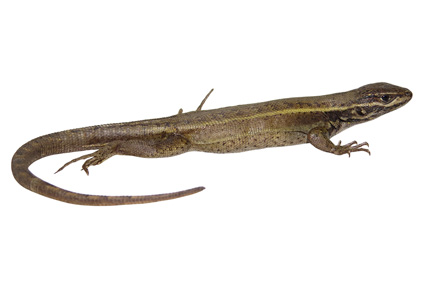
The genus Stenocercus comprises a diverse group of 80 recognized species distributed across South America, with approximately 65% (52 species) occurring in Peru. The Department of Ancash, situated in the central Andes and encompassing the Cordillera Negra and Cordillera Blanca, is a topographically complex region marked by prominent geographic barriers that may promote allopatric speciation and influence patterns of Andean biodiversity, particularly within Stenocercus lineages. Populations previously assigned to S. chrysopygus from the puna habitats of Ancash exhibit notable variation in diagnostic traits and coloration, suggesting that this taxon may represent a species complex. However, inconsistent morphological diagnoses and limited genetic data have hindered accurate taxonomic resolution, underscoring the need for integrative approaches. Furthermore, a recent study showed that only populations from the Santa River Valley correspond to S. chrysopygus sensu stricto, while the other populations assigned to the distribution of S. chrysopygus constitute lineages of different species. In this study, we describe Stenocercus aguilari sp. nov. from Huari Province, Ancash Department, and present a phylogenetic hypothesis of its position based on the mitochondrial ND2 gene. We applied multivariate morphological analyses of scale counts using MANOVA and Gaussian Mixture Models, as well as molecular species delimitation approaches based on both distance-based and tree-based single-locus methods. All analyses support the taxonomic distinctiveness of S. aguilari sp. nov. Morphologically, the new species belongs to the group characterized by granular scales on the posterior surface of the thighs, vertebral scales similar in size and shape to adjacent rows, and three caudal whorls per autotomic segment. It is distinguished from other members of this group by the absence of a posthumeral mite pocket, the presence of a Type 1 postfemoral mite pocket, higher number of midbody scales and the presence of a distinct black patch on the pelvic region of the venter in adult males. Finally, the focal lineage is divergent from all nominal species in the Stenocercus genus for which respective data are available by >14.8% uncorrected pairwise distance in the ND2 gene.
References
- Aguilar, C., Wood Jr, P.L., Cusi, J.C., Guzman, A., Huari, F., Lundberg, M., Mortensen, E., Ramírez, C., Robles, D., Suárez, J., Ticona, A., Vargas, V.J., Venegas, P.J. & Sites Jr, J.W. (2013) Integrative taxonomy and preliminary assessment of species limits in the Liolaemus walkeri complex (Squamata, Liolaemidae) with descriptions of three new species from Peru. ZooKeys, 364, 47–91. https://doi.org/10.3897/zookeys.364.6109
- Aguilar, C., Wood Jr, P.L., Belk, M.C., Duff, M.H. & Sites Jr, J.W. (2016) Different roads lead to Rome: Integrative taxonomic approaches lead to the discovery of two new lizard lineages in the Liolaemus montanus group (Squamata: Liolaemidae). Biological Journal of the Linnean Society, 120 (2), 448–467. https://doi.org/10.1111/bij.12890
- Anderson, M.J. (2001) A new method for non‐parametric multivariate analysis of variance. Austral Ecology, 26 (1), 32–46. https://doi.org/10.1111/j.1442-9993.2001.01070.pp.x
- Boulenger, G.A. (1900) Descriptions of new batrachians and reptiles collected by Mr. P. O. Simons in Peru. Annals and Magazine of Natural History, Series 7, 6 (32), 181–186. https://doi.org/10.1080/00222930008678355
- Brack, A. & Mendiola, C. (2000) Ecología del Perú. Parte II: Las regiones naturales del Perú. Ediciones Bruño, Lima, Perú, 169 pp.
- Cadle, J.E. (1991) Systematics of lizards of the genus Stenocercus (Iguania: Tropiduridae) from northern Perú: New species and comments on relationships and distribution patterns. Proceedings of the Academy of Natural Sciences of Philadelphia, 143, 1–96.
- Cadle, J.E. (1998) New species of lizards, genus Stenocercus (Iguania: Tropiduridae), from western Ecuador and Peru. Bulletin of the Museum of Comparative Zoology, 155 (6), 257–297.
- de Queiroz, K. (2007) Species concepts and species delimitation. Systematic biology, 56 (6), 879–886. https://doi.org/10.1080/10635150701701083
- Echevarría, L.Y., Torres-Ccasani, G., Romero, P.E., Torres-Carvajal, O. & Aguilar-Puntriano, C. (2025) Systematics of Stenocercus chrysopygus Boulenger, 1900 (Squamata, Tropiduridae) species complex using genetic and morphological evidence. Zoosystematics and Evolution, 101 (4), 1747–1762. https://doi.org/10.3897/zse.101.157306
- Etheridge, R. (1970) Stenocercus. In: Peters, J.A. & Donoso-Barros, R. (Eds.), Catalogue of Neotropical Squamata. Part II. Lizards and Amphisbaenians. Smithsonian Institution, Washington D.C., pp. 254–257.
- Fjeldså, J. & Irestedt, M. (2009) Diversification of the South American avifauna: Patterns and implications for conservation in the Andes. Annals of the Missouri Botanical Garden, 96 (3), 398–409. https://doi.org/10.3417/2007148
- Fox, J. & Weisberg, S. (2019) An R companion to applied regression (3rd ed.). Sage Publications.
- Fritts, T.H. (1974) A multivariate evolutionary analysis of the Andean iguanid lizards of the genus Stenocercus. San Diego Society of Natural History, 7, 1–86.
- Grambling, T.A., Jessup, M.J., Newell, D.L., Grambling, N.L. & Hiett, C.D. (2024) Magmatic conditions aiding synconvergent extension above the Peruvian flat slab. Geosphere, 20 (4), 1102–1132. https://doi.org/10.1130/GES02741.1
- Guindon, S., Dufayard, J.F., Lefort, V., Anisimova, M., Hordijk, W. & Gascuel, O. (2010) New algorithms and methods to estimate maximum-likelihood phylogenies: Assessing the performance of PhyML 3.0. Systematic Biology, 59 (3), 307–321. https://doi.org/10.1093/sysbio/syq010
- Henze, N. & Zirkler, B. (1990) A class of invariant consistent tests for multivariate normality. Communications in Statistics—Theory and Methods, 19 (10), 3595–3617. https://doi.org/10.1080/03610929008830400
- Huelsenbeck, J.P. & Ronquist, F. (2001) MRBAYES: Bayesian inference of phylogenetic trees. Bioinformatics, 17 (8), 754–755. https://doi.org/10.1093/bioinformatics/17.8.754
- Kalyaanamoorthy, S., Minh, B.Q., Wong, T.K.F., Von Haeseler, A. & Jermiin, L.S. (2017) ModelFinder: Fast model selection for accurate phylogenetic estimates. Nature Methods, 14 (6), 587–589. https://doi.org/10.1038/nmeth.4285
- Kapli, P., Lutteropp, S., Zhang, J., Kobert, K., Pavlidis, P., Stamatakis, A. & Flouri, T. (2017) Multi-rate Poisson tree processes for single-locus species delimitation under maximum likelihood and Markov chain Monte Carlo. Bioinformatics, 33 (11), 1630–1638. https://doi.org/10.1093/bioinformatics/btx025
- Katoh, K. & Standley, D.M. (2013) MAFFT multiple sequence alignment software version 7: Improvements in performance and usability. Molecular Biology and Evolution, 30 (4), 772–780. https://doi.org/10.1093/molbev/mst010
- Katoh, K., Kuma, K.I., Toh, H. & Miyata, T. (2005) MAFFT version 5: Improvement in accuracy of multiple sequence alignment. Nucleic Acids Research, 33 (2), 511–518. https://doi.org/10.1093/nar/gki198
- Kimura, M. (1980) A simple method for estimating evolutionary rate of base substitutions through comparative studies of nucleotide sequences. Journal of Molecular Evolution, 16, 111–120. https://doi.org/10.1007/BF01731581
- Köhler, G. & Lehr, E. (2015) Two new species of lizards of the genus Stenocercus (Iguania, Tropiduridae) from central Peru. Zootaxa, 3956 (3), 413–427. https://doi.org/10.11646/zootaxa.3956.3.6
- Korkmaz, S., Goksuluk, D. & Zararsiz, G. (2014) MVN: An R package for assessing multivariate normality. The R Journal, 6 (2), 151–162. [https://journal.r-project.org/archive/2014-2/korkmaz-goksuluk-zararsiz.pdf] https://doi.org/10.32614/RJ-2014-031
- Larsson, A. (2014) AliView: A fast and lightweight alignment viewer and editor for large datasets. Bioinformatics, 30 (22), 3276–3278. https://doi.org/10.1093/bioinformatics/btu531
- Levene, H. (1960) Robust tests for equality of variances. In: Olkin I. (Ed.), Contributions to probability and statistics. Stanford University Press, Stanford, California, pp. 278–292.
- Mendoza, A., Ramírez, C., Barrera, D. & Aguilar-Puntriano, C. (2021) A new species of the genus Stenocercus (Iguania: Tropiduridae) from the Peruvian Pacific coast (Ica region). Salamandra, 57 (1), 1–14.
- Michalak, M.J., Hall, S.R., Farber, D.L., Audin, L. & Hourigan, J.K. (2015) (U-Th)/He thermochronology records late Miocene accelerated cooling in the north-central Peruvian Andes. Lithosphere, 8 (2), 103–115. https://doi.org/10.1130/L485.1
- Nguyen, L.T., Schmidt, H.A., Von Haeseler, A. & Minh, B.Q. (2015) IQ-TREE: A fast and effective stochastic algorithm for estimating maximum-likelihood phylogenies. Molecular Biology and Evolution, 32 (1), 268–274. https://doi.org/10.1093/molbev/msu300
- Padial, J.M. & De La Riva, I. (2010) A response to recent proposals for integrative taxonomy. Biological Journal of the Linnean Society, 101 (3), 747–756. https://doi.org/10.1111/j.1095-8312.2010.01528.x
- Padial, J.M., Miralles, A., De la Riva, I. & Vences, M. (2010) The integrative future of taxonomy. Frontiers in zoology, 7 (1), 16. https://doi.org/10.1186/1742-9994-7-16
- Palmer, B.D., Demarco, V.G. & Guillette Jr, L.J. (1993) Oviductal morphology and eggshell formation in the lizard, Sceloporus woodi. Journal of Morphology, 217 (2), 205–217.
- Patterson, B.D. & Velazco, P.M. (2008) Phylogeny of the rodent genus Isothrix (Hystricognathi, Echimyidae) and its diversification in Amazonia and the eastern Andes. Journal of Mammalian Evolution, 15, 181–201. https://doi.org/10.1007/s10914-007-9070-6
- Puillandre, N., Brouillet, S. & Achaz, G. (2021) ASAP: Assemble species by automatic partitioning. Molecular Ecology Resources, 21 (2), 609–620. https://doi.org/10.1111/1755-0998.13281
- Pyron, R.A. & Burbrink, F.T. (2010) Hard and soft allopatry: Physically and ecologically mediated modes of geographic speciation. Journal of Biogeography, 37 (10), 2005–2015. https://doi.org/10.1111/j.1365-2699.2010.02336.x
- R Core Team. (2024) R: A language and environment for statistical computing. R Foundation for Statistical Computing. Available from: https://www.r-project.org/ (accessed 27 January 2026)
- Rambaut, A., Drummond, A.J., Xie, D., Baele, G. & Suchard, M.A. (2018) Posterior summarization in Bayesian phylogenetics using Tracer 1.7. Systematic Biology, 67 (5), 901–904. https://doi.org/10.1093/sysbio/syy032
- Ronquist, F., Teslenko, M., van der Mark, P., Ayres, D.L., Darling, A., Höhna, S., Larget, B., Liu, L., Suchard, M.A. & Huelsenbeck, J.P. (2012) MrBayes 3.2: Efficient Bayesian phylogenetic inference and model choice across a large model space. Systematic Biology, 61 (3), 539–542. https://doi.org/10.1093/sysbio/sys029
- Scrucca, L., Fop, M., Murphy, T.B. & Raftery, A.E. (2016) mclust 5: Clustering, classification and density estimation using Gaussian finite mixture models. The R Journal, 8 (1), 289–317. https://doi.org/10.32614/RJ-2016-021
- Shapiro, S.S. & Wilk, M.B. (1965) An analysis of variance test for normality (complete samples). Biometrika, 52 (3/4), 591–611. https://doi.org/10.2307/2333709
- Shimodaira, H. & Hasegawa, M. (1999) Multiple comparisons of log-likelihoods with applications to phylogenetic inference. Molecular Biology and Evolution, 16 (8), 1114–1116. https://doi.org/10.1093/oxfordjournals.molbev.a026201
- Tamura, K., Stecher, G. & Kumar, S. (2021) MEGA11: Molecular Evolutionary Genetics Analysis Version 11. Molecular Biology and Evolution, 38 (7), 3022–3027, https://doi.org/10.1093/molbev/msab120
- Teixeira, M.Jr., Prates, I., Nisa, C., Silva-Martins, N.S.C., Strüssmann, C. & Rodrigues, M.T. (2016) Molecular data reveal spatial and temporal patterns of diversification and a cryptic new species of lowland Stenocercus Duméril & Bibron, 1837 (Squamata: Tropiduridae). Molecular Phylogenetics and Evolution, 94, 410–423. https://doi.org/10.1016/j.ympev.2015.09.010
- Torres-Carvajal, O. (2000) Ecuadorian lizards of the genus Stenocercus (Squamata: Tropiduridae). Scientific Papers, Natural History Museum, The University of Kansas, 15, 1–38. https://doi.org/10.5962/bhl.title.16286
- Torres-Carvajal, O., Schulte, J.A. & Cadle, J.E. (2006) Phylogenetic relationships of South American lizards of the genus Stenocercus (Squamata: Iguania): A new approach using a general mixture model for gene sequence data. Molecular Phylogenetics and Evolution, 39 (1), 171–185. https://doi.org/10.1016/j.ympev.2005.09.007
- Torres-Carvajal, O. (2007a) Phylogeny and biogeography of a large radiation of Andean lizards (Iguania, Stenocercus). Zoologica Scripta, 36 (4), 311–326. https://doi.org/10.1111/j.1463-6409.2006.00284.x
- Torres-Carvajal, O. (2007b) A taxonomic revision of South American Stenocercus (Squamata: Iguania) lizards. Herpetological Monographs, 21 (1), 76–178. https://doi.org/10.1655/06-001.1
- Uetz, P., Freed, P., Aguilar, R., Reyes, F., Kudera, J. & Hošek, J. (Eds.) (2025) The Reptile Database. Available from: http://www.reptile-database.org (accessed 24 July 2025)
- Venegas, P.J., Durán, V. & Garcia-Burneo, K. (2013) A new species of arboreal iguanid lizard, genus Stenocercus (Squamata: Iguania), from central Peru. Zootaxa, 3609 (3), 291–301. https://doi.org/10.11646/zootaxa.3609.3.3
- Venegas, P.J., Echevarría, L.Y. & Alvarez, S.C. (2014) A new species of spiny-tailed iguanid lizard (Iguania: Stenocercus) from northwestern Peru. Zootaxa, 3753 (1), 47–58. https://doi.org/10.11646/zootaxa.3753.1.4
- Venegas, P.J., Echevarría, L.Y., García-Burneo, K. & Koch, C. (2016) A new species of iguanid lizard, genus Stenocercus (Squamata: Iguania), from the Central Andes in Peru. Zootaxa, 4205 (1), 52–64. https://doi.org/10.11646/zootaxa.4205.1.4
- Venegas, P.J., Echevarría, L.Y., García-Ayachi, L.A. & Landauro, C.Z. (2020) Two new sympatric species of Stenocercus (Squamata: Iguania) from the inter-Andean valley of the Mantaro River, Peru. Zootaxa, 4858 (4), 555–575. https://doi.org/10.11646/zootaxa.4858.4.5
- Venegas, P.J., García-Ayachi, L.A., Chávez-Arribasplata, J.C. & García-Bravo, A. (2022) Four new species of polychromatic spiny-tailed iguanian lizards, genus Stenocercus (Iguania: Tropiduridae), from Peru. Zootaxa, 5115 (1), 1–28. https://doi.org/10.11646/zootaxa.5115.1.1
- Zhang, J., Kapli, P., Pavlidis, P. & Stamatakis, A. (2013) A general species delimitation method with applications to phylogenetic placements. Bioinformatics, 29 (22), 2869–2876. https://doi.org/10.1093/bioinformatics/btt499