
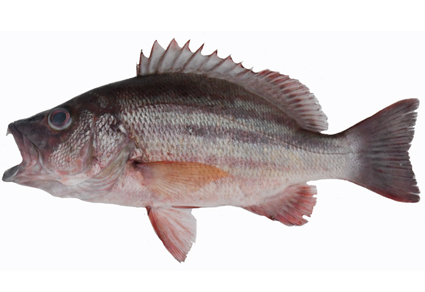

Abstract
The present study provides evidence of Lutjanus arakan Hasan, Durand & Iwatsuki 2025 from Indian waters, based on a specimen collected from the Gopalpur coast, Odisha. The combination of distinct colouration, meristic counts, and genetic simillarities provides strong evidence supporting the recognition of Lutjanus arakan from the Indian Ocean.
References
- Allen, G.R. (1985) Snappers of the World: An Annotated and Illustrated Catalogue of Lutjanid Species Known to Date. FAO Fisheries Synopsis No. 125. Vol. 6. Food and Agriculture Organization of the United Nations, Rome, 208 pp.
- Allen, G.R. & Talbot, J.H. (1985) Review of the snappers of the genus Lutjanus (Pisces: Lutjanidae) from the Indo-Pacific with the description of a new species. Indo-Pacific Fishes, 11, 1–87, pls. 1–10.
- Anderson, W.D., Jr. & Allen, G.R. (2001) Lutjanidae snappers (jobfishes). In: Carpenter, K.E. & Niem, V.H. (Eds.), FAO Species Identification Guide for Fishery Purposes. The Living Marine Resources of the Western Central Pacific. Vol. 5. Bony Fishes Part 3 (Menidae to Pomacentridae). Food and Agriculture Organization of the United Nations, Rome, pp. 2840–2918.
- Barman, R.P. (2017) A monograph on the snappers (Pisces: Perciformes: Lutjanidae) of India. Memoirs of the Zoological Survey of India, 22 (4), 1–87.
- Fricke, R., Eschmeyer, W.N. & van der Laan, R. (2025) Eschmeyer's catalog of fishes: genera, species, references. Available from: http://researcharchive.calacademy.org/research/ichthyology/catalog/fishcatmain.asp (accessed 9 May 2025)
- Hall, T.A. (1999) BioEdit: a user-friendly biological sequence alignment editor and analysis program for Windows 95/98/NT. Nucleic Acids Symposium Series, 41, 95–98.
- Hasan, M.E., Durand, J.-D. & Iwatsuki, Y. (2025) Lutjanus arakan, a new species of snapper (Teleostei: Lutjanidae) from the Bay of Bengal, Bangladesh, previously confused with L. lemniscatus. Journal of the Ocean Science Foundation, 45, 7–35. https://doi.org/10.5281/zenodo.18073876
- Hashim, M., Smitha, B.R. & Kumar, K.V.A. (2025) A dead zone on the north-western Bay of Bengal's continental margin and its alarming impact on the distribution of demersal fishes. Continental Shelf Research, 285, 105398. https://doi.org/10.1016/j.csr.2024.105398
- Heemstra, P.C. & Heemstra, E. (2022) Family Lutjanidae: snappers. In: Heemstra, P.C., Heemstra, E., Ebert, D.A., Holleman, W. & Randall, J.E. (Eds.), Coastal Fishes of the Western Indian Ocean. Vol. 3. South African Institute for Aquatic Biodiversity, Makhanda, pp. 227–251.
- Katoh, K., Rozewicki, J. & Yamada, K.D. (2019) MAFFT online service: multiple sequence alignment, interactive sequence choice and visualization. Briefings in Bioinformatics, 20 (4), 1160–1166. https://doi.org/10.1093/bib/bbx108
- Kosygin, L., Mohapatra, A., Bineesh, K.K., Sharma, I., Jadhav, S.S. & Khynriam, D. (2024) Fauna of India checklist: Pisces. Online Version 1.0. Zoological Survey India, Kolkata. Available from: https://zsi.gov.in/uploads/documents/checklist/english/117_PISCES.pdf (accessed 15 May 2025) https://doi.org/10.26515/Fauna/1/2023/Choradata:Pisces
- Lowe-McConnell, R.H. (1987) Demersal fish studies. In: Lowe-McConnell, R.H. (Ed.), Ecological Studies in Tropical Fish Communities. Cambridge University Press, Cambridge, pp. 212–225. https://doi.org/10.1017/CBO9780511721892.010
- Mohapatra, A., Ho, H.-C., Acharya, S., Ray, D. & Mishra, S.S. (2022) A new congrid eel, Rhynchoconger smithi sp. nov. (Anguilliformes: Congridae), from the Bay of Bengal, India. Journal of Fish Biology, 100 (6), 1335–1344. https://doi.org/10.1111/jfb.15031
- Nylander, J.A.A. (2004) MrModeltest v. 2. Evolutionary Biology Centre, Uppsala University, Uppsala. Available from: https://github.com/nylander/MrModeltest2.git (accessed 15 May 2025)
- Rambaut, A. (2012) FigTree v. 1.4.0. Molecular evolution, phylogenetics and epidemiology. Institute of Evolutionary Biology, University of Edinburgh, Edinburgh. Available from: http://tree.bio.ed.ac.uk/software/Figtree/ (accessed 15 May 2025)
- Ratnasingham, S., Wei, C., Chan, D., Agda, J., Agda, J., Ballesteros-Mejia, L., Ait Boutou, H., El Bastami, Z.M., Ma, E., Manjunath, R., Rea, D., Ho, C., Telfer, A., McKeowan, J., Rahulan, M., Steinke, C., Dorsheimer, J., Milton, M. & Hebert, P.D.N. (2024) BOLD v4: a centralized bioinformatics platform for DNA-based biodiversity data. In: DeSalle, R. (Ed.), DNA Barcoding: Methods and Protocols. Humana Press, New York, New York, pp. 403–441. https://doi.org/10.1007/978-1-0716-3581-0_26
- Ronquist, F., Teslenko, M., van der Mark, P., Ayres, D.L., Darling, A., Höhna, S., Larget, B., Liu, L., Suchard, M.A. & Huelsenbeck, J.P. (2012) MrBayes 3.2: efficient Bayesian phylogenetic inference and model choice across a large model space. Systematic Biology, 61 (3), 539–542. https://doi.org/10.1093/sysbio/sys029
- Saha, S., Chakraborty, S., Sehrin, S., Al-Masud, A., Habib, K.A. & Baki, M.A. (2018) New records of two Lutjanus species (Teleostei: Perciformes: Lutjanidae) with re-description of six lutjanids from Saint Martin’s Island of the Bay of Bengal, Bangladesh. Bangladesh Journal of Zoology, 46 (2), 239–253. https://doi.org/10.3329/bjz.v46i2.39056
- Shetye, S.R., Gouveia, A.D., Shankar, D., Shenoi, S.S.C., Vinayachandran, P.N., Sundar, D., Michael, G.S. & Nampoothiri, G. (1996) Hydrography and circulation in the western Bay of Bengal during the northeast monsoon. Journal of Geophysical Research: Oceans, 101 (C6), 14011–14025. https://doi.org/10.1029/95JC03307
- Ward, R.D., Zemlak, T.S., Innes, B.H., Last, P.R. & Hebert, P.D.N. (2005) DNA barcoding Australia’s fish species. Philosophical Transactions of the Royal Society B: Biological Sciences, 360 (1462), 1847–1857. https://doi.org/10.1098/rstb.2005.1716