

Abstract
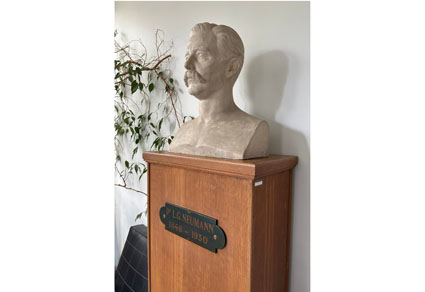
The École National Vétérinaire de Toulouse (ENVT) holds the Neumann’s collection of parasites. The depository, created by Louis Georges Neumann at the end of the 19th century, contains a large number of ixodid specimens and primary types, all listed in an accession book by Neumann himself. In an effort to enhance the visibility and accessibility of this collection for the scientific community, the curatorial personnel of the collection recently transferred all accession data to an electronic database and began inventorying the specimens that are still available. This offered us with an opportunity to examine all remaining primary types of Ixodidae in the collection and write this catalogue.
References
- Aragão, H.B. & Fonseca, F. (1953) Notas de ixodologia. V. A propósito da validade de algumas espécies do gênero Amblyomma do continente Americano (Acari: Ixodidae). Memórias do Instituto Oswaldo Cruz, 51, 485–492. https://doi.org/10.1590/S0074-02761953000100014
- Barros-Battesti, D.M., Arzua, M. & Bechara, G.H. (2006) Carrapatos de importância médico-veterinária da região neotropical: um guia ilustrado para identificação de espécies. Integrated Consortium on Ticks and Tick-borne Diseases-ICTTD/Butantan, São Paulo, 223 pp.
- Beati, L., Keirans, J.E., Durden, L.A. & Opiang, M.D. (2008) Bothriocroton oudemansi (Neumann, 1910) n. comb. (Acari: Ixodida: Ixodidae), an ectoparasite of the western long–beaked echidna in Papua New Guinea: redescription of the male and first description of the female and nymph. Systematic Parasitology, 69, 185–200. https://doi.org/10.1007/s11230-007-9115-5
- Birula, A. (1895) Ixodidae novi vel parum cogniti Musei Zoologici Academiae Caesareae Scientiarum Petropolitanae. I. Izvestiya Imperatorskoy Akademii Nauk, Series 5, 2 (4), 353–364.
- Camicas, J.L., Hervy, J.P., Adam, F. & Morel, P.C. (1998) Les tiques du monde. Nomenclature, stades décrits, hôtes, répartition (Acarida, Ixodida). Orstom, Paris, 233 pp.
- Dönitz, W. (1905) Die Zecken des Rindes als Krankheitsüberträger. Sitzungsberichten der Gesellschaft naturforschender Freunde zu Berlin, 4, 105–134.
- Estrada-Peña, A., Venzal, J.M. & Guglielmone, A.A. (2002) Amblyomma dubitatum Neumann: description of nymph and redescription of adults, together with the description of the immature stages of A. triste Koch. Acarologia, 42, 323–333. [https://www1.montpellier.inrae.fr/CBGP/acarologia/article.php?id=81]
- Filippova, N.A. (2008) Type specimens of argasid and ixodid ticks (Ixodoidea: Argasidae, Ixodidae) in the collection of the Zoological Institute, Russian Academy of Sciences (St. Petersburg). Entomological Review, 88, 1002–1001. [original version in Russian, Entomologicheskoe Obozrenie, 87, 939–951] https://doi.org/10.1134/S0013873808080149
- Guglielmone, A.A. & Nava, S. (2014) Names for Ixodidae (Acari: Ixodoidea): valid, synonyms, incertae sedis, nomina dubia, nomina nuda, lapsus, incorrect and suppressed names – with notes on confusions and misidentifications. Zootaxa, 3767 (1), 1–256.
- https://doi.org/10.11646/zootaxa.3767.1.1
- Guglielmone, A.A., Nava, S., González-Acuña, D., Mangold, A.J. & Robbins, R.J. (2007) Additional observations on the morphology and hosts of Ixodes stilesi Neumann, 1911 (Acari: Ixodidae). Systematic and Applied Acarology, 12, 135–139. https://doi.org/10.11158/saa.12.2.7
- Guglielmone, A.A., Robbins, R.G., Apanaskevich, D.A., Petney, T.N., Estrada-Peña, A. & Horak, I.G. (2014) The hard ticks of the world (Acari: Ixodida: Ixodidae). Springer, Dordrecht, Heidelberg, New York and London, 738 pp. https://doi.org/10.1007/978-94-007-7497-1
- Guglielmone, A.A., Nava, S. & Robbins, R.G. (2021) Neotropical hard ticks (Acari: Ixodida: Ixodidae) A critical analysis of their taxonomy, distribution, and host relationships. Springer Nature Switzerland AG, Cham, 486 pp. https://doi.org/10.1007/978-3-030-72353-8
- Hoffmann A (1946) Amblyomma boneti n. sp. de México. Revista del Instituto de Salubridad y Enfermedades Tropicales, 7, 207–220.
- Hoogstraal, H., Roberts, F.H.S., Kohls, G.M. & Tipton, V.J. (1968) Review of Haemaphysalis (Kaiseriana) longicornis Neumann (resurrected) of Australia, New Zealand, New Caledonia, Fiji, Japan, Korea, and northeastern China and USSR, and its parthenogenetic and bisexual populations (Ixodoidea, Ixodidae). Journal of Parasitology, 54, 1197–1213. https://doi.org/10.2307/3276992
- Horak, I.G., Heyne, H., Williams, R., Gallivan, G.J., Spickett, A.M., Bezuidenhout, J.D. & Estrada-Peña, A. (2018) The ixodid ticks (Acari: Ixodidae) of Southern Africa. Springer, Cham, 676 pp. https://doi.org/10.1007/978-3-319-70642-9
- International Commission on Zoological Nomenclature (2000) International Code of Zoological Nomenclature. 4th Edition. The International Trust for Zoological Nomenclature, London, xxix + 306 pp. https://doi.org/10.5962/bhl.title.50608
- Kaufman, T.S. (1972) A revision of the genus Aponomma Neumann, 1899 (Acarina: Ixodidae). Ph.D. Dissertation, University of Maryland, College Park, Maryland, 390 pp.
- Keirans, J.E. (1985) George Henry Falkiner Nuttall and the Nuttall tick catalogue. United States Department of Agriculture, Agricultural Research Service, Miscellaneous Publication. No. 1438. U.S. Department of Agriculture, Agricultural Research Service, Washington, D.C., 1785 pp. https://doi.org/10.5962/bhl.title.65326
- Keirans, J.E. & Clifford, C.M. (1984) A checklist of types of Ixodoidea (Acari) in the collection of the Rocky Mountain Laboratories. Journal of Medical Entomology, 21, 310–320. https://doi.org/10.1093/jmedent/21.3.310
- Keirans, J.E. & Hillyard, P.D. (2001) A catalogue of the type specimens of Ixodida (Acari: Argasidae, Ixodidae) deposited in The Natural History Museum, London. Occasional Papers on Systematic Entomology, 13, 1–74.
- Koch, C.L. (1844) Systematische Übersicht über die Ordnung der Zecken. Archiv für Naturgeschichte, 10, 217–239. https://doi.org/10.5962/bhl.part.29560
- Kohls, G.M. (1956) The identity of Ixodes boliviensis Neumann, 1904 and Ixodes bicornis Neumann, 1906. Proceedings of the Entomological Society of Washington, 58, 232–233.
- Labruna, M.B., Keirans, J.E., Camargo, L.M.A., Ribeiro, A.F., Soares, R.M. & Camargo, E.P. (2005) Amblyomma latepunctatum, a valid tick species (Acari: Ixodidae) long misidentified with both Amblyomma incisum and Amblyomma scalpturatum. Journal of Parasitology, 91, 527–541. https://doi.org/10.1645/GE-446R
- Labruna, M.B., Onofrio, V.C., Barros-Battesti, D.M., Gianizella, S.L., Venzal, J.M. & Guglielmone, A.A. (2020) Synonymy of Ixodes aragaoi with Ixodes fuscipes, and reinstatement of Ixodes spinosus (Acari: Ixodidae). Ticks and Tick–borne Diseases, 11 (101349), 1–9. https://doi.org/10.1016/j.ttbdis.2019.101349
- Lavarra, L. (1904) Sopra una nuova specie di Haemaphysalis. Bolletino della Società Zoologica Italiana, 5, 255–258.
- Lucas, H. (1852) Ixodes variegatus, Lucas. Bulletin de la Société Entomologique de France, Série 2, 7, 88–89.
- Morel, P.C. (1957) Rhipicephalus boueti n. sp. (Acarina, Ixodidae) parasite des damans du Dahomey. Bulletin de la Société de Pathologie Exotique, 50, 696–700.
- Moritz, M. & Fischer, S.C. (1981) Die Typen der Arachniden-Sammlung des Zoologischen Museums Berlin. Mitteilungen aus dem Zoologische Museum in Berlin, 57, 341–364. https://doi.org/10.1002/mmnz.19810570205
- Nava, S., Beati, L., Labruna, M.B., Cáceres, A.G., Mangold, A.J. & Guglielmone, A.A. (2014) Reassessment of the taxonomic status of Amblyomma cajennense (Fabricius, 1787) with the description of three new species, Amblyomma tonelliae n. sp., Amblyomma interandinum n. sp. and Amblyomma patinoi n. sp., and reinstatement of Amblyomma mixtum Koch, 1844, and Amblyomma sculptum Berlese, 1888 (Ixodida: Ixodidae). Ticks and Tick-borne Diseases, 5, 252–276. https://doi.org/10.1016/j.ttbdis.2013.11.004
- Nava, S., Beati, L., Venzal, J.M., Durden, L.A., Bermudez, S.E., Tarragona, E.L., Mangold, A.J., Gleason, D., Mastropaolo, M. & Guglielmone, A.A. (2023) Description of two new species in the Ixodes ricinus complex from the New World (Acari: Ixodidae), and redescription of Ixodes affinis Neumann, 1899. Zootaxa, 5361 (1), 53–73. https://doi.org/10.11646/zootaxa.5361.1.2
- Neumann, L.G. (1897) Révision de la famille des ixodidés (2e mémoire). Mémoires de la Société Zoologique de France, 10, 324–420.
- https://doi.org/10.5962/t.173870
- Neumann, L.G. (1899) Révision de la famille des ixodidés (3e mémoire). Mémoires de la Société Zoologique de France, 12, 107–294. https://doi.org/10.5962/t.173870
- Neumann, L.G. (1901) Révision de la famille des ixodidés (4e mémoire). Mémoires de la Société Zoologique de France, 14, 249–372. https://doi.org/10.5962/t.173870
- Neumann, L.G. (1902) Notes sur les ixodidés. Archives de Parasitologie, 6, 109–128.
- Neumann, L.G. (1904) Notes sur les ixodidés. II. Archives de Parasitologie, 8, 444–464.
- Neumann, L.G. (1905) Notes sur les ixodidés. III. Archives de Parasitologie, 9, 225–241. [https://www.biodiversitylibrary.org/page/31446837]
- Neumann, L.G. (1906) Notes sur les Ixodidés. IV. Archives de Parasitologie, 10, 195–219.
- Neumann, L.G. (1907a) Ixodidae. In: Wissenschaftliche Ergebnisse der schwedischen zoologischen Expedition nach dem Kilimandjaro. Meru Deutsch-Ostafrikas 1905–1906, Prof. Y. Sjöstedt. Abteilung 20, Arachnoidea (2). P. Palmquists Aktiebolag, Stockholm, pp. 17–30.
- Neumann, L.G. (1907b) Note XVI. Ixodidé nouveau de l’Australie. Notes from the Leyden Museum, 28, 218–220.
- Neumann, L.G. (1908a) Notes sur les ixodidés. XI. Notes from the Leyden Museum, 30, 73–91.
- Neumann, L.G. (1908b) Description d’une nouvelle espèce d’ixodiné. Bulletin du Muséum National d’Histoire Naturelle de Paris, 14, 352–355. [https://www.biodiversitylibrary.org/page/5030793]
- Neumann, L.G. (1908c) A new species of tick from the Transvaal. Annals of the Transvaal Museum, 1, 170–172. [https://biostor.org/reference/278259]
- Neumann, L.G. (1909a) A new variety of Ixodes pilosus (Koch). Transactions of the Royal Society of South Africa, 1, 125. https://doi.org/10.1080/00359190909520030
- Neumann, L.G. (1910a) Sur quelques espèces d’Ixodidae nouvelles ou insuffisamment connues. Annales des Sciences Naturelles Zoologie, Série 9, 12, 161–176. [https://www.biodiversitylibrary.org/page/13286139]
- Neumann, L.G. (1910b) Description de deux nouvelles espèces d’Ixodinae. Tijdschrift voor Entomologie, 53, 11–17.
- Neumann, L.G. (1911a) Ixodidae. Das Tierreich, 26, 1–169. https://doi.org/10.5962/bhl.title.22339
- Neumann, L.G. (1911b) Note rectificative à propos de deux espèces d‘Ixodinae. Archives de Parasitologie, 14, 415.
- Neumann, L.G. (1913a) Un nouveau sous-genre et deux nouvelles espèces d’ixodidés. Bulletin de la Société Zoologique de France, 38, 147–151. [https://www.biodiversitylibrary.org/page/3047771]
- Neumann, L.G. (1913b) Pediculidae, Siphonaptera, Ixodidae. Entomologische Mitteilungen, Band 2 (Supplementa Entomologica No. 2), 134–137.
- Nuttall, G.H.F. & Warburton, C. (1911) Ticks. In: A monograph of the Ixodoidea. Part II. The Ixodidae. Section II. Genus I. Ixodes Latreille 1795. Cambridge University Press, London, pp. 133–293 + 346–348. https://doi.org/10.5962/bhl.title.24075
- Nuttall, G.H.F. & Warburton, C. (1915) Ticks. In: A monograph of the Ixodoidea. Part III. The Ixodidae. The genus Haemaphysalis. Cambridge University Press, London, pp. 349–550.
- Robbins, R.G., Nava, S., Ronai, I., Chong, K.L. & Guglielmone, A.A. (2025) Type specimens of the world’s hard tick species (Acari: Ixodida: Ixodidae): collection data and depositories for all valid names and the current status of invalid names. Zootaxa, 5606 (1), 1–287. https://doi.org/10.11646/zootaxa.5606.1.1
- Roberts, F.H.S. (1964) Further observations of the Australian species of Aponomma and Amblyomma with descriptions of the nymphs of Amblyomma moreliae (L. Koch) and Amb. loculosum Neumann (Acarina: Ixodidae). Australian Journal of Zoology, 12, 288–313. https://doi.org/10.1071/ZO9640288
- Robinson, L.E. (1926) Ticks. A monograph of the Ixodoidea. Part IV. The genus Amblyomma. Cambridge University Press, London, 302 pp. https://biostor.org/reference/127283
- Santos Dias, J.A.T. (1993) Contribuição para o estudo da sistemática e taxonomia das espécies do género Aponomma Neumann, 1899 (Acarina–Ixodoidea). Estudos, Ensaios e Documentos, 157, 1–204.
- Seeman, O. (2017) Megisthanus leviathanicus sp. nov. (Parasitiformes: Megisthanidae), the largest known Mesostigmata, a symbiont of the beetle Mastachilus australasicus (Coleoptera: Passalidae). International Journal of Acarology, 43, 263–285. https://doi.org/10.1080/01647954.2017.1293733
- Seeman, O. (2019) The megisthanid mites (Mesostigmata: Megisthanidae) of Australia. Zootaxa, 4563 (1), 1–40. https://doi.org/10.11646/zootaxa.4563.1.1
- Touratier, L. (1989) History of veterinary parasitology in France. Veterinary Parasitology, 33, 45–63. https://doi.org/10.1016/0304-4017(89)90092-7
- Trapido, H. (1965) Notes on critical Asian Haemaphysalis specimens in European museum collections, with designations of lectotypes and a neotype. Proceedings of the Entomological Society of Washington, 67, 152–165.
- Voltzit, O.V. (2007) A review of Neotropical Amblyomma species (Acari: Ixodidae). Acarina, 15, 3–134.
- Walker, J.B., Keirans, J.E. & Horak, I.G. (2000) The genus Rhipicephalus (Acari: Ixodidae): a guide to the brown ticks of the world. Cambridge University Press, Cambridge, 643 pp. https://doi.org/10.1017/CBO9780511661754
- Warburton, C. (1908) On some new and obscure species of the genus Haemaphysalis of the Ixodidae. Proceedings of the Cambridge Philosophical Society, 14, 508–519.
- Wassef, H.Y. & Hoogstraal, H. (1983) Dermacentor (Indocentor) compactus (Acari: Ixodoidea: Ixodidae): identity of male and female. Journal of Medical Entomology, 20, 648–652. https://doi.org/10.1093/jmedent/20.6.648
- Wassef, H.Y. & Hoogstraal, H. (1984) Dermacentor (Indocentor) auratus (Acari: Ixodoidea: Ixodidae): identity of male and female. Journal of Medical Entomology, 21, 169–173. https://doi.org/10.1093/jmedent/21.2.169
- Yamaguti, N., Tipton, V.J., Keegan, H.L. & Toshioka, S. (1971) Ticks of Japan, Korea, and the Ryukyu Islands. Brigham Young University, Science Bulletin, Biological Series, 15, 1–226. https://doi.org/10.5962/bhl.part.25691