
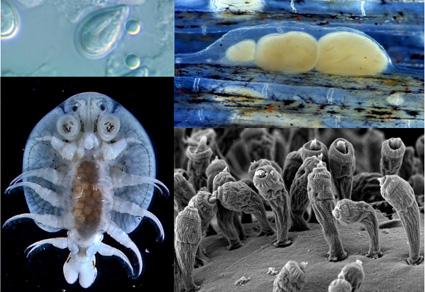

Abstract
This review addresses the current state of knowledge regarding freshwater fish parasites in the British Isles, highlighting the significant gap since Kennedy’s seminal 1974 work (Journal of Fish Biology 6: 613–644). Despite subsequent efforts by others to produce checklists in 1992 and 2016, comprehensive updates to parasite distribution patterns and species records have been limited. The paper emphasises the importance of accurate parasite checklists for understanding the status of and changes to endemic species baselines, climate change impacts, managing fish translocations, and identifying novel infections. Historical records, including paleoparasitological findings from archaeological deposits, provide valuable insights into parasite distribution patterns, though pre-1900s data requires careful interpretation due to taxonomic limitations. This study provides compiled parasite and host lists from published and unpublished records, creating a database that includes host species, parasite nomenclature, organ location, geographical distribution, and reference information. The current compilation details 339 named parasite species in 147 genera from 58 hosts (52 Protista, 3 Microsporidia, 54 Myxozoa, 83 “Monogenea” (79 Monopisthocotyla, 4 Polyopisthocotyla), 58 Digenea and Aspidogastrea, 33 Cestoda, 21 Nematoda, 7 Acanthocephala, 5 Hirudinea, 14 Copepoda, 4 Branchiura, and 5 Mollusca). A further 69 parasites identified to genus or class level have been reported, bringing the total number of parasites reported in the British Isles to 408. Several challenges are identified, including data transposition errors in previous works, sampling method inconsistencies, difficulties in accessing unpublished data, scant repositories to retrospectively evaluate findings, absence of molecular and taxonomic rigour, and the impact of anthropogenic activities on parasite distributions. As a result, any list may represent a significant underestimate of species presence and diversity. The review concludes by recommending future research directions, emphasising the need for combined molecular and morphological approaches, standardised documentation methods, and increased focus on under-represented taxa to enhance our understanding of freshwater fish parasites in the British Isles.
References
- Abdelhalim, A.I., Lewis, J.W. & Boxshall, G.A. (1993) The external morphology of adult female ergasilid copepods (Copepoda: Poecilostomatoida): A comparison between Ergasilus and Neoergasilus. Systematic Parasitology, 24 (1), 45–52. https://doi.org/10.1007/bf00006944
- Abolarin, M. (1966) Protozoan parasites of freshwater fish. MSc. University of Liverpool.
- Aderounmu, E. (1966) A comparative account of the parasite fauna of brown trout Salmo trutta L. from a lake and a hatchery. Parasitology, 56, 10P–11P.
- Aho, J.M. & Kennedy, C.R. (1984) Seasonal population dynamics of the nematode Cystidicoloides tenuissima (Zeder) from the River Swincombe, England. Journal of Fish Biology, 25 (4), 473–489. https://doi.org/10.1111/j.1095-8649.1984.tb04894.x
- Al-Atiya, S. (2016) Helminth infections of the European eel Anguilla anguilla in the United Kingdom. Ph.D. thesis, University of Salford, 278 pp.
- Aldoori, T. (1972) The ecology of roach (Rutilus rutilus) L.) in Humbie Reservoir. PhD. University of Edinburgh, 114 pp.
- Ali, N.M. (1984) Mast cells enter a teleost’s brain by Xth cranial nerve in response to Diplostomum phoxini (Trematoda). Experientia, 40 (2), 197–198. https://doi.org/10.1007/BF01963597
- Alston, S., Boxshall, G.A. & Lewis, J.W. (1993) A redescription of adult females of Ergasilus briani Markewitsch, 1933 (Copepoda: Poecilostomatoida). Systematic Parasitology, 24 (3), 217–227. https://doi.org/10.1007/bf00010534
- Alston, S. & Lewis, J. (1994) The ergasilid parasites (Copepoda: Poecilostomatoida) of British freshwater fish. In: Pike, A. & Lewis, J. (Eds.), Parasitic Diseases of Fish. Samara Publishing Ltd, pp. 171–188.
- Ambuali, A., Monaghan, S.J., McLean, K., Inglis, N.F., Bekaert, M., Wehner, S. & Bron, J.E. (2020) Identification of proteins from the secretory/excretory products (SEPs) of the branchiuran ectoparasite Argulus foliaceus (Linnaeus, 1758) reveals unique secreted proteins amongst haematophagous ecdysozoa. Parasites and Vectors, 13 (1), 88. https://doi.org/10.1186/s13071-020-3964-z
- Anandan, C. (2004) Morphological and genetic differentiation of the fish eye fluke Diplostomum spp. (Digenea, Diplostomatidae). Ph.D. University of Aberdeen, 227 pp.
- Anderson, R.M. (1971) A quantitative ecological study of the helminth parasites of the bream (Abramis brama (L.)). Ph.D. University of London, 233 pp.
- Andreou, D., Antognazza, C.M., Williams, C.F., Bradley, H., Reading, A.J., Hardouin, E.A., Stewart, J.R., Sheath, D., Galligar, A., Johnson, E. & Britton, J.R. (2020) Vicariance in a generalist fish parasite driven by climate and salinity tolerance of hosts. Parasitology, 147 (14), 1658–1664. https://doi.org/10.1017/S0031182020001663
- Andreou, D., Gozlan, R.E., Stone, D., Martin, P., Bateman, K. & Feist, S.W. (2011) Sphaerothecum destruens pathology in cyprinids. Diseases of Aquatic Organisms, 95 (2), 145–151. https://doi.org/10.3354/dao02356
- Andrews, C. (1979a) Host specificity of the parasite fauna of perch Perca fluviatilis L. from the British Isles, with special reference to a study at Llyn Tegid (Wales). Journal of Fish Biology, 15 (2), 195–209. https://doi.org/10.1111/j.1095-8649.1979.tb03583.x
- Andrews, C. (1979b) The occurrence of Henneguya psorospermica Thelohan, 1895 (Myxosporida) on perch, Perca fluviatilis L., from Llyn Tegid, Wales. Journal of Fish Diseases, 2, 27–33. https://doi.org/10.1111/j.1365-2761.1979.tb00136.x
- Andrews, C. (1981a) The occurrence of a trichodinid protozoan as an internal parasite of fish in the UK. Bulletin of the European Association of Fish Pathologists, 1, 17.
- Andrews, C. (1981b) The occurrence of Philometra ovata in the British Isles. Bulletin of the European Association of Fish Pathologists, 1, 28.
- Andrews, C. (1983) Fish parasitic Sanguinicola in the British Isles with special reference to Yorkshire. Bulletin of the European Association of Fish Pathologists, 3, 23.
- Andrews, C. & Bucke, D. (1982) Epidermal hyperplasia in a coarse fish population. Bulletin of the European Association of Fish Pathologists, 2, 29–31.
- Andrews, C. & Chubb, J.C. (1980) Observations on the development of Bunodera luciopercae (Müller, 1776) (Trematoda: Allocreadiidae) under field and laboratory conditions. Journal of Fish Diseases, 3 (6), 481–493. https://doi.org/10.1111/j.1365-2761.1980.tb00435.x
- Andrews, C. & Chubb, J.C. (1984) Helminth parasites from Yorkshire fishes. Bulletin of the European Association of Fish Pathologists, 4, 22–23.
- Andrews, C., Chubb, J.C., Coles, T. & Dearsley, A. (1981) The occurrence of Bothriocephalus acheilognathi Yamaguti, 1934 (B. gowkongensis) (Cestoda: Pseudophyllidea) in the British Isles. Journal of Fish Diseases, 4 (1), 89–93. https://doi.org/10.1111/j.1365-2761.1981.tb01113.x
- Andrews, P., Thomas, H. & Weber, H. (1980) The in vitro uptake of 14C-praziquantel by cestodes, trematodes, and a nematode. The Journal of Parasitology, 66 (6), 920–925. https://doi.org/10.2307/3280390
- Anon (2021) Argulus mongolianus. Environment Agency, Brampton, Cambridgeshire, 2 pp.
- Arme, C. (1972) Glugea anomala (Sporozoa: Microsporidia) in three-spined sticklebacks from Co. Tyrone. The Irish Naturalists’ Journal, 17 (7), 241–241.
- Arme, C. & Ingham, L. (1972) Proteocephalus sp. in rainbow trout, Salmo gairdneri: a new host record for the Palaearctic. The Irish Naturalists’ Journal, 241–242.
- Arme, C. & Owen, R.W. (1964) Massive infections of the three-spined stickleback with Schistocephalus solidus (Cestoda: Pseudophyllidae) and Glugea anomala (Sporozoa: Microsporidae). Parasitology, 54 (4), 10P–11P.
- Arme, C. & Owen, R.W. (1967) Infections of the three-spined stickleback, Gasterosteus aculeatus L., with the plerocercoid larvae of Schistocephalus solidus (Müller, 1776), with special reference to pathological effects. Parasitology, 57 (2), 301–314. https://doi.org/10.1017/s0031182000072103
- Arme, C. & Owen, R.W. (1968) Occurrence and pathology of Ligula intestinalis infections in British fishes. The Journal of Parasitology, 54 (2), 272–280. https://doi.org/10.2307/3276934
- Arthur, J.R., Margolis, L. & Arai, H.P. (1976) Parasites of fishes of Aishihik and Stevens Lakes, Yukon Territory, and potential consequences of their interlake transfer through a proposed water diversion for hydroelectrical purposes. Journal of the Fisheries Research Board of Canada, 33 (11), 2489–2499. https://doi.org/10.1139/f76-294
- Ashworth, J.H. & Bannerman, J.C.W. (1927) VIII.—On a Tetracotyle (T. phoxini) in the brain of the minnow. Earth and Environmental Science Transactions of The Royal Society of Edinburgh, 55 (1), 159–172. https://doi.org/10.1017/S008045680001629X
- Ashworth, S.T. & Kennedy, C.R. (1999) Density-dependent effects on Anguillicola crassus (Nematoda) within its European eel definitive host. Parasitology, 118 (3), 289–296. https://doi.org/10.1017/S0031182098003771
- Athanassopoulou, F. (1990) A study of Myxosporea spp in Rutilus rutilus L. (roach) with particular reference to Myxidium rhodei Leger, 1905 in the renal tissue. Ph.D. University of Stirling, 271 pp.
- Athanassopoulou, F. & Sommerville, C. (1993a) A comparative study of the myxosporeans Myxidium rhodei Leger, 1905 and Myxidium pfeifferi Auerbach, 1908 in roach, Rutilus rutilus L. Journal of Fish Diseases, 16 (1), 27–38. https://doi.org/10.1111/j.1365-2761.1993.tb00845.x
- Athanassopoulou, F. & Sommerville, C. (1993b) The significance of myxosporean infections in roach, Rutilus rutilus L., in different habitats. Journal of Fish Diseases, 16 (1), 39–51. https://doi.org/10.1111/j.1365-2761.1993.tb00846.x
- Atopkin, D. (2022) Molecular diversity of far-eastern trematodes of the genus Crepidsotomum (Allocreadiidae) by means of nuclear 28S rRNA and mitochondrial COI gene sequences. Genetics of Aquatic Organisms, 6 (3), GA510. https://doi.org/10.4194/GA510
- Aubrook, E. & Fryer, G. (1965) The parasitic copepod Tracheliastes polycolpus Nordmann in some Yorkshire rivers: the first British record. Naturalist, Hull, 893, 51–56.
- Awachie, J.B.E. (1963) The biology of intestinal helminth parasites of the fish of Afon Terrig, north Wales. University of Liverpool, 408 pp.
- Awachie, J.B.E. (1965) The ecology of Echinorhynchus truttae Schrank, 1788 (Acanthocephala) in a trout stream in North Wales. Parasitology, 55 (4), 747–762. https://doi.org/10.1017/s0031182000086315
- Awachie, J.B.E. (1966) Observations on Cyathocephalus truncatus Pallas, 1781 (Cestoda: Spathebothriidea) in its intermediate and definitive hosts in a trout stream, North Wales. Journal of Helminthology, 40 (1–2), 1–10. https://doi.org/10.1017/S0022149X00034039
- Awachie, J.B.E. (1968) On the bionomics of Crepidostomum metoecus (Braun, 1900) and Crepidostomum farionis (Müller, 1784) (Trematoda: Allocreadiidae). Parasitology, 58 (2), 307–324. https://doi.org/10.1017/S0031182000069341
- Awachie, J.B.E. & Chubb, J.C. (1964) Observations on the occurrence and distribution of Crepidostomum metoecus (Braun, 1900) in the British Isles. Parasitology, 54 (4), 1–16.
- Baird, W. (1850) The Natural History of the British Entomostraca. The Ray Society, London, 364 pp.
- Baker, H. (1764) Employment for the microscope: in two parts. R. and J. Dodsley, London, 514 pp.
- Baker, R., Bradley, C. & Mill, P. (2013) Robert Wynne Owen (1924-1985) and his parasitological collections at Leeds: 1. Microscope slides and fish parasites. The Naturalist, 138, 192–202.
- Bakke, T., Nilsen, K. & Shinn, A. (2004) Chaetotaxy applied to Norwegian Gyrodactylus salaris Malmberg, 1957 (Monogenea) clades and related species from salmonids. Folia Parasitologica, 51, 253–261. https://doi.org/10.14411/fp.2004.030
- Ball, S.J. (1983) Eimeria metchnikovi (Laveran, 1897) Reichenow, 1921 from the gudgeon, Gobio gobio L., in south-east England. Journal of Fish Diseases, 6 (2), 201–203. https://doi.org/10.1111/j.1365-2761.1983.tb00068.x
- Ball, S.J., Daszak, P. & Davies, A.J. (2012) Ultrastructural observations on Goussia metchnikovi (Laveran, 1897) in the spleen of gudgeon, Gobio gobio L. Acta Parasitologica, 57 (1), 20–25. https://doi.org/10.2478/s11686-012-0014-9
- Ball, S.J., Zacharek, D.A., Dearsley, A.F. & Moore, J.F. (1990) Gill disease of crucian carp Carassius carassius associated with an unidentified protozoan. Diseases of Aquatic Organisms, 8 (2), 151–153. https://doi.org/10.3354/dao008151
- Barber, I. (1995) Effects of helminth infections on the shoaling behaviour of small freshwater fishes. PhD. University of Glasgow, 231 pp.
- Barber, I. & Crompton, D.W.T. (1997a) The distribution of the metacercariae of Diplostomum phoxini in the brain of minnows, Phoxinus phoxinus. Folia Parasitologica, 44, 19–25.
- Barber, I. & Crompton, D.W.T. (1997b) The ecology of Diplostomum phoxini infections in two minnow (Phoxinus phoxinus) populations in Scotland. Journal of Helminthology, 71, 189–196. https://doi.org/10.1017/s0022149x0001590x
- Barber, I. & Huntingford, F.A. (1996) Parasite infection alters schooling behaviour: deviant positioning of helminth-infected minnows in conspecific groups. Proceedings of the Royal Society of London. Series B: Biological Sciences, 263 (1374), 1095–1102. https://doi.org/10.1098/rspb.1996.0161
- Barber, I., Huntingford, F.A. & Crompton, D.W.T. (1995) The effect of hunger and cestode parasitism on the shoaling decisions of small freshwater fish. Journal of Fish Biology, 47 (3), 524–536.
- Baron, P.J. & Appleton, T. (1977) Calcification in an ageing Ligula intestinalis (L.) plerocercoid from a bream (Abramis brama L.). Parasitology Research, 53 (2), 239–246. https://doi.org/10.1007/bf00380468
- Barry, J., McLeish, J., Dodd, J.A., Turnbull, J.F., Boylan, P. & Adams, C.E. (2014) Introduced parasite Anguillicola crassus infection significantly impedes swim bladder function in the European eel Anguilla anguilla (L.). Journal of Fish Diseases, 40, 1213–1222. https://doi.org/10.1111/jfd.12215
- Barry, J., Newton, M., Dodd, J.A., Evans, D., Newton, J. & Adams, C.E. (2017) The effect of foraging and ontogeny on the prevalence and intensity of the invasive parasite Anguillicola crassus in the European eel Anguilla anguilla. Journal of Fish Diseases, 40 (9), 1213–1222. https://doi.org/10.1111/jfd.12596
- Barry, J., Radinger, J., Connor, L., Coyne, J., Kelly, S. & Kelly, F.L. (2023) The vulnerability of Ireland’s freshwater fish to climate change. Fisheries Management and Ecology, 30 (2), 142–153. https://doi.org/10.1111/fme.12606
- Bastos Gomes, G., Jerry, D.R., Miller, T.L. & Hutson, K.S. (2017a) Current status of parasitic ciliates Chilodonella spp. (Phyllopharyngea: Chilodonellidae) in freshwater fish aquaculture. Journal of Fish Diseases, 40 (5), 703–715. https://doi.org/10.1111/jfd.12523
- Bastos Gomes, G., Miller, T.L., Vaughan, D.B., Jerry, D.R., McCowan, C., Bradley, T.L. & Hutson, K.S. (2017b) Evidence of multiple species of Chilodonella (Protozoa, Ciliophora) infecting Australian farmed freshwater fishes. Veterinary Parasitology, 237, 8–16. https://doi.org/10.1016/j.vetpar.2017.03.004
- Baylis, H.A. (1928) XLI.—Records of some parasitic worms from British vertebrates. Annals and Magazine of Natural History, 1 (3), 329–343. https://doi.org/10.1080/00222932808672790
- Baylis, H.A. (1939a) A larval trematode (‘Diplostomum volvens’) in the lens of the eye of a rainbow trout. Proceedings of the Linnean Society of London, 151 (2), 130–130. https://doi.org/10.1111/j.1095-8312.1939.tb00209.x
- Baylis, H.A. (1939b) XXXVIII.—Further records of parasitic worms from British vertebrates. Annals and Magazine of Natural History, 4 (23), 473–498. https://doi.org/10.1080/00222933908527013
- Baylis, M. (1934) XVII.—A little-known nematode parasite of the eel. Annals and Magazine of Natural History, 13, 235–240. https://doi.org/10.1080/00222933408654807
- Bazsalovicsová, E., Králová-Hromadová, I., Štefka, J., Scholz, T., Hanzelová, V., Vávrová, S., Szemes, T. & Kirk, R. (2011) Population study of Atractolytocestus huronensis (Cestoda: Caryophyllidea), an invasive parasite of common carp introduced to Europe: mitochondrial cox1 haplotypes and intragenomic ribosomal ITS2 variants. Parasitology Research, 109 (1), 125–131. https://doi.org/10.1007/s00436-010-2235-x
- Bean, C.W. & Kirkwood, R.C. (1997) First record of Ligula intestinalis from stone loach. Journal of Fish Biology, 50 (2), 455–456. https://doi.org/10.1111/j.1095-8649.1997.tb01374.x
- Bean, C.W. & Winfield, I.J. (1989) Biological and ecological effects of a Ligula intestinalis (L.) infestation of the gudgeon, Gobio gobio (L.), in Lough Neagh, Northern Ireland. Journal of Fish Biology, 34 (1), 135–147. https://doi.org/10.1111/j.1095-8649.1989.tb02963.x
- Becerra‐Jurado, G., Cruikshanks, R., O’Leary, C., Kelly, F., Poole, R. & Gargan, P. (2014) Distribution, prevalence and intensity of Anguillicola crassus (Nematoda) infection in Anguilla anguilla in the Republic of Ireland. Journal of Fish Biology, 84 (4), 1046–1062. https://doi.org/10.1111/jfb.12344
- Bell, A. (1995) Studies on the biosystematics and biology of strigeids (Digenea) parasitic in freshwater fish. PhD. University of Stirling, 402 pp.
- Bell, A.S. & Sommerville, C. (2002) Molecular evidence for the synonymy of two species of Apatemon Szidat, 1928, A. gracilis (Rudolphi, 1819) and A. annuligerum (von Nordmann, 1832) (Digenea: Strigeidae) parasitic as metacercariae in British fishes. Journal of Helminthology, 76 (3), 193–198. https://doi.org/10.1079/JOH2002120
- Bell, A.S., Sommerville, C. & Gibson, D.I. (1998) Karyological studies on three strigeid digeneans: Ichthyocotylurus erraticus (Rudolphi, 1809), I. variegatus (Creplin, 1825) and Apatemon gracilis (Rudolphi, 1819). Systematic Parasitology, 41 (3), 169–178. https://doi.org/10.1023/a:1006051403991
- Bell, A.S., Sommerville, C. & Gibson, D.I. (2002) Multivariate analyses of morphometrical features from Apatemon gracilis (Rudolphi, 1819) Szidat, 1928 and A. annuligerum (v. Nordmann, 1832) (Digenea: Strigeidae) metacercariae. Systematic Parasitology, 51 (2), 121–133. https://doi.org/10.1023/a:1014023101427
- Bell, A.S., Sommerville, C. & Tellervo Valtonen, E. (2001) A molecular phylogeny of the genus Ichthyocotylurus (Digenea, Strigeidae). International Journal for Parasitology, 31 (8), 833–842. https://doi.org/10.1016/s0020-7519(01)00181-3
- Bellingham, O. (1844a) XIV.—Catalogue of Irish Entozoa, with observations. Annals and Magazine of Natural History, 13 (82), 101–105. https://doi.org/10.1080/03745484409442577
- Bellingham, O. (1844b) XIX.—Catalogue of Irish Entozoa, with observations. Annals and Magazine of Natural History, 14 (90), 162–165. https://doi.org/10.1080/037454809496373
- Bellingham, O. (1844c) XLI.—Catalogue of Irish Entozoa, with observations. Annals and Magazine of Natural History, 13 (85), 335–340. https://doi.org/10.1080/03745484409442616
- Bellingham, O. (1844d) XLIX.—Catalogue of Irish Entozoa, with observations. Annals and Magazine of Natural History, 14 (93), 396–403. https://doi.org/10.1080/037454809495208
- Bellingham, O. (1844e) XLVII.—Catalogue of Irish Entozoa, with observations. Annals and Magazine of Natural History, 13 (86), 422–430. https://doi.org/10.1080/03745484409442626
- Bellingham, O. (1844f) XXII.—Catalogue of Irish Entozoa, with observations. Annals and Magazine of Natural History, 13 (83), 167–174. https://doi.org/10.1080/03745484409442589
- Bellingham, O. (1844g) XXX.—Catalogue of Irish Entozoa, with observations. Annals and Magazine of Natural History, 14 (91), 251–256. https://doi.org/10.1080/037454809495166
- Bellingham, O. (1844h) XXXII.—Catalogue of Irish Entozoa, with observations. Annals and Magazine of Natural History, 13 (84), 254–260. https://doi.org/10.1080/03745484409442603
- Bellingham, O. (1844i) XXXVIII.—Catalogue of Irish Entozoa, with observations. Annals and Magazine of Natural History, 14 (92), 317–323. https://doi.org/10.1080/037454809495184
- Bellingham, O. (1845) LVI.—Catalogue of Irish Entozoa, with observations. Annals and Magazine of Natural History, 14 (94), 471–479. https://doi.org/10.1080/037454809495229
- Berrie, A.D. (1960a) The influence of various definitive hosts on the development of Diplostomum phoxini (Strigeida, Trematoda). Journal of Helminthology, 34 (3–4), 205–210. https://doi.org/10.1017/S0022149X00021131
- Berrie, A.D. (1960b) Two Diplostomulum larvae (Strigeida, Trematoda) in the eyes of sticklebacks (Gasterosteus aculeatus L.). Journal of Helminthology, 34 (3–4), 211–216. https://doi.org/10.1017/S0022149X00021143
- Berrie, A.D. & Boize, B.J. (1985) The fish hosts of Unio glochidia in the River Thames. Internationale Vereinigung für Theoretische und Angewandte Limnologie: Verhandlungen, 22 (4), 2712–2716. https://doi.org/10.1080/03680770.1983.11897758
- Betterton, C. (1974) Studies on the host specificity of the eyefluke, Diplostomum spathaceum, in brown and rainbow trout. Parasitology, 69 (1), 11–29. https://doi.org/10.1017/s003118200004614x
- Beyer, K. (2008) Ecological implications of introducing Leucaspius delineatus (Heckel, 1843) and Pseudorasbora parva (Temminck and Schlegel, 1842) into inland waters in England. PhD Thesis. University of Hull, 418 pp.
- Beyer, K., Kochanowska, D., Longshaw, M., Feist, S.W. & Gozlan, R.E. (2005) A potential role for invasive sunbleak in the further dissemination of a non-native parasite. Journal of Fish Biology, 67 (6), 1730–1733. https://doi.org/10.1111/j.1095-8649.2005.00859.x
- Bibby, M.C. (1972) Population biology of the helminth parasites of Phoxinus phoxinus (L.), the minnow, in a Cardiganshire lake. Journal of Fish Biology, 4 (2), 289–300. https://doi.org/10.1111/j.1095-8649.1972.tb05677.x
- Bibby, M.C. & Rees, G. (1971) The ultrastructure of the epidermis and associated structures in the metacercaria cercaria and sporocyst of Diplostomum phoxini (Faust, 1918). Zeitschrift für Parasitenkunde, 37 (3), 169–186. https://doi.org/10.1007/BF00259497
- Bielecki, A., Cios, S., Cichocka, J.M. & Pakulnicka, J. (2012) Piscicola siddalli n. sp., a leech species from the United Kingdom (Clitellata: Hirudinida: Piscicolidae). Comparative Parasitology, 79 (2), 219–230. https://doi.org/10.1654/4511.1
- Birk, S., Chapman, D., Carvalho, L., Spears, B.M., Andersen, H.E., Argillier, C., Auer, S., Baattrup-Pedersen, A., Banin, L., Beklioğlu, M., Bondar-Kunze, E., Borja, A., Branco, P., Bucak, T., Buijse, A.D., Cardoso, A.C., Couture, R.-M., Cremona, F., de Zwart, D., Feld, C.K., Ferreira, M.T., Feuchtmayr, H., Gessner, M.O., Gieswein, A., Globevnik, L., Graeber, D., Graf, W., Gutiérrez-Cánovas, C., Hanganu, J., Işkın, U., Järvinen, M., Jeppesen, E., Kotamäki, N., Kuijper, M., Lemm, J.U., Lu, S., Solheim, A.L., Mischke, U., Moe, S.J., Nõges, P., Nõges, T., Ormerod, S.J., Panagopoulos, Y., Phillips, G., Posthuma, L., Pouso, S., Prudhomme, C., Rankinen, K., Rasmussen, J.J., Richardson, J., Sagouis, A., Santos, J.M., Schäfer, R.B., Schinegger, R., Schmutz, S., Schneider, S.C., Schülting, L., Segurado, P., Stefanidis, K., Sures, B., Thackeray, S.J., Turunen, J., Uyarra, M.C., Venohr, M., von der Ohe, P.C. & Willby, N. & Hering, D. (2020) Impacts of multiple stressors on freshwater biota across spatial scales and ecosystems. Nature Ecology & Evolution, 4 (8), 1060–1068. https://doi.org/10.1038/s41559-020-1216-4
- Black, T. (1978) Acanthocephala anguillae (Muller, 1780) from bronze bream Abramis brama for the first time in Britain and Ireland together with some additional records of intestinal parasites in A. brama. The Irish Naturalists’ Journal, 19 (7), 251–251.
- Blair, D. (1974a) Life-cycle studies on strigeoid trematodes. Ph.D. University of Glasgow, 251 pp.
- Blair, D. (1974b) Strigeoid trematodes parasitizing British freshwater fish. Transactions of the Royal Society of Tropical Medicine and Hygiene, 68 (4), 274.
- Blair, D. (1974c) The life-cycles of Apatemon spp. (Trematoda: Strigeidae) with metacercariae in fishes. Parasitology, 69 (2), xv–xvi.
- Blair, D. (1976) Observations on the life-cycle of the strigeoid trematode, Apatemon (Apatemon) gracilis (Rudolphi, 1819) Szidat, 1928. Journal of Helminthology, 50 (2), 125–32. https://doi.org/10.1017/s0022149x00027607
- Blair, D. (1977) A key to the cercariae of British strigeoids (Digenea) for which the life-cycles are known, and notes on the characters used. Journal of Helminthology, 51, 155–166. https://doi.org/10.1017/s0022149x00007434
- Bombarová, M., Marec, F., Nguyen, P. & Špakulová, M. (2007) Divergent location of ribosomal genes in chromosomes of fish thorny-headed worms, Pomphorhynchus laevis and Pomphorhynchus tereticollis (Acanthocephala). Genetica, 131 (2), 141–149. https://doi.org/10.1007/s10709-006-9124-3
- Borba, V.H., Machado-Silva, J.R., Bailly, M.L. & Iñiguez, A.M. (2019) Worldwide paleodistribution of capillariid parasites: Paleoparasitology, current status of phylogeny and taxonomic perspectives. PLOS ONE, 14 (4), e0216150. https://doi.org/10.1371/journal.pone.0216150
- Bosi, G., Shinn, A.P., Giari, L., Simoni, E., Pironi, F. & Dezfuli, B.S. (2005) Changes in the neuromodulators of the diffuse endocrine system of the alimentary canal of farmed rainbow trout, Oncorhynchus mykiss (Walbaum), naturally infected with Eubothrium crassum (Cestoda). Journal of Fish Diseases, 28 (12), 703–711. https://doi.org/10.1111/j.1365-2761.2005.00674.x
- Bower-Shore, C. (1940) An investigation of the common fish louse, Argulus foliaceus (Linn.). Parasitology, 32 (4), 361–371. https://doi.org/10.1017/s0031182000015869
- Boxshall, G.A. & Frear, P.A. (1990) Tracheliastes maculatus (Kollar, 1836) (Crustacea: Lernaeopodidae) a new species for Britain. Journal of Fish Biology, 37 (3), 489–491. https://doi.org/10.1111/j.1095-8649.1990.tb05878.x
- Brabec, J., Waeschenbach, A., Scholz, T., Littlewood, D.T.J. & Kuchta, R. (2015) Molecular phylogeny of the Bothriocephalidea (Cestoda): molecular data challenge morphological classification. International Journal for Parasitology, 45 (12), 761–771. https://doi.org/10.1016/j.ijpara.2015.05.006
- Bradley, C.L. (1860) On the occurrence of Gyrodactylus elegans on sticklebacks in the Hampstead Ponds, January 1860. Journal of the Proceedings of the Linnean Society of London. Zoology, 5 (18), 209–210. https://doi.org/10.1111/j.1096-3642.1860.tb00094.x
- Brady, A. (1989) Studies on the taxonomy and the biology of Diplostomum species (Digenea). University of Stirling, 277 pp.
- Brattey, J. (1988) Life history and population biology of adult Acanthocephalus lucii (Acanthocephala: Echinorhynchidae). The Journal of Parasitology, 74 (1), 72–80. https://doi.org/10.2307/3282480
- Brewster, B. (2016) Aquatic Parasite Information - a database on parasites of freshwater and brackish fish in the United Kingdom. Ph.D. Kingston University, London, 255 pp.
- Brooker, A., Grano-Maldonado, M., Irving, S., Bron, J.E., Longshaw, M. & Shinn, A.P. (2011) The effect of octopaminergic compounds on the behaviour and transmission of Gyrodactylus. Parasites & Vectors, 4 (1), 207. https://doi.org/10.1186/1756-3305-4-207
- Brown, A.F. (1987) Anatomical variability and secondary sexual characteristics in Pomphorhynchus laevis (Müller, 1776) (Acanthocephala). Systematic Parasitology, 9 (3), 213–219. https://doi.org/10.1007/BF00010856
- Brown, A.F. (1989) Seasonal dynamics of the acanthocephalan Pomphorhynchus laevis (Müller, 1776) in its intermediate and preferred definitive hosts. Journal of Fish Biology, 34 (2), 183–194. https://doi.org/10.1111/j.1095-8649.1989.tb03301.x
- Brown, A.F., Chubb, J.C. & Veltkamp, C.J. (1986) A key to the species of Acanthocephala parasitic in British freshwater fishes. Journal of Fish Biology, 28, 327–334. https://doi.org/10.1111/j.1095-8649.1986.tb05169.x
- Brown, A.W. (1899) Memoirs: On Tetracotyle petromyzontis, a parasite of the brain of Ammocœtes. Journal of Cell Science, s2-41 (164), 489–498. https://doi.org/10.1242/jcs.s2-41.164.489
- Brown, F.J. (1927) On Crepidostomum farionis O. F. Müll. (= Stephanophiala laureata Zeder), a distome parasite of the trout and grayling. I. The life history. Parasitology, 19 (1), 86–99. https://doi.org/10.1017/S0031182000005552
- Bruno, D.W. (2001) Dermocystidium sp in Scottish Atlantic salmon, Salmo salar: Evidence for impact on fish in marine fish farms. Bulletin of the European Association of Fish Pathologists, 21 (5), 209–213.
- Bucke, D. (1971) The anatomy and histology of the alimentary tract of the carnivorous fish the pike Esox lucius L. Journal of Fish Biology, 3 (4), 421–431. https://doi.org/10.1111/j.1095-8649.1971.tb05914.x
- Bucke, D. & Andrews, C. (1985) Vertebral anomalies in chub, Leuciscus (Squalius) cephalus L. Bulletin of the European Association of Fish Pathologists, 5, 3–5.
- Bucke, D., Cawley, G.D., Craig, J.F., Pickering, A.D. & Willoughby, L.G. (1979) Further studies of an epizootic of perch Perca fluviatilis L., of uncertain aetiology. Journal of Fish Diseases, 2 (4), 297–311. https://doi.org/10.1111/j.1365-2761.1979.tb00172.x
- Bucke, D., Feist, S.W. & Clifton-Hadley, R.S. (1991) The occurrence of proliferative kidney disease (PKD) in cultured and wild fish: further investigations. Journal of Fish Diseases, 14, 583–588. https://doi.org/10.1111/j.1365-2761.1991.tb00614.x
- Buckley, B.R. & Morrice, C.P. (1976) Some observations on host selectivity and the preferred location of Argulus foliaceus L. on four fish species. Aquaculture Research, 7 (2), 34–37. https://doi.org/10.1111/j.1365-2109.1976.tb00182.x
- Burrough, R.J. (1978) The population biology of two species of eyefluke, Diplostomum spathaceum and Tylodelphys clavata, in roach and rudd. Journal of Fish Biology, 13, 19–32. https://doi.org/10.1111/j.1095-8649.1978.tb03409.x
- Burrough, R.J. & Kennedy, C.R. (1979) The occurrence and natural alleviation of stunting in a population of roach, Rutilus rutilus (L.). Journal of Fish Biology, 15 (1), 93–109. https://doi.org/10.1111/j.1095-8649.1979.tb03574.x
- Bwathondi, P.O.J. (1976) Studies on the growth, diet and metazoan parasites of brown trout (Salmo trutta L.) in two areas of north east Scotland. Ph.D. University of Aberdeen, 204 pp.
- Byrne, C.J., Grey, C., Holland, C. & Poole, R. (2000) Parasite community similarity between four Irish lakes. Journal of Helminthology, 74 (4), 301–305. https://doi.org/10.1017/s0022149x00000445
- Byrne, C.J., Holland, C.V., Kennedy, C.R. & Poole, W.R. (2003) Interspecific interactions between Acanthocephala in the intestine of brown trout: are they more frequent in Ireland? Parasitology, 127 (4), 399–409. https://doi.org/10.1017/s0031182003003846
- Byrne, C.J., Holland, C.V., Poole, R. & Kennedy, C.R. (2002) Comparison of the macroparasite communities of wild and stocked brown trout (Salmo trutta L.) in the west of Ireland. Parasitology, 124 (4), 435–445. https://doi.org/10.1017/S0031182001001330
- Byrne, C.J., Holland, C.V., Walsh, E., Mulligan, C., Kennedy, C.R. & Poole, W.R. (2004) Utilization of brown trout Salmo trutta by Acanthocephalus clavula in an Irish lake: is this evidence of a host shift? Journal of Helminthology, 78 (3), 201–206. https://doi.org/10.1079/joh2003233
- Cable, J., Harris, P.D., Tinsley, R.C. & Lazarus, C.M. (1999) Phylogenetic analysis of Gyrodactylus spp. (Platyhelminthes: Monogenea) using ribosomal DNA sequences. Canadian Journal of Zoology, 77 (9), 1439–1449. https://doi.org/10.1139/z99-069
- Caira, J. & Jensen, K. (2017) Planetary Biodiversity Inventory (2008-2017): Tapeworms from vertebrate bowels of the Earth. The University of Kansas Museum of Natural History Special Publication 25, 463 pp.
- Callaghan, R. & McCarthy, T. (1996) Metazoan parasite assemblages of eels in the Dunkelin catchment, western Ireland. Archives of Polish Fisheries, 4, 147–174.
- Campbell, A.D. (1971) The occurrence of Argulus (Crustacea: Branchiura) in Scotland. Journal of Fish Biology, 3 (2), 145–146. https://doi.org/10.1111/j.1095-8649.1971.tb03657.x
- Campbell, A.D. (1974) The parasites of fish in Loch Leven. Proceedings of the Royal Society of Edinburgh, 74, 347–364. https://doi.org/10.1017/s0080455x00012509
- Campbell, R.A. (1973) Studies on the biology of the life cycle of Cotylurus flabelliformis (Trematoda: Strigeidae). Transactions of the American Microscopical Society, 92 (4), 629–640. https://doi.org/10.2307/3225273
- Campbell, R.N. (1979) Ferox trout, Salmo trutta L., and charr, Salvelinus alpinus (L.), in Scottish lochs. Journal of Fish Biology, 14 (1), 1–29. https://doi.org/10.1111/j.1095-8649.1979.tb03491.x
- Canning, E.U., Cox, F.E.G., Croll, N.A. & Lyons, K.M. (1973) The natural history of Slapton Ley Nature Reserve: VI. Studies on the parasites. Field Studies, 3, 681–718.
- Carlsson, J., Cross, T.F., McGinnity, P., Prodöhl, P.A. & McDevitt, A.D. (2014) The use of genetics to infer the origins of the terrestrial and freshwater elements of the Irish fauna. The Irish Naturalists’ Journal, 33, 8–27.
- Carphin, J. (1895) Argulus foliaceus in the Edinburgh district. Annals of Scottish Natural History, 4 (16), 255.
- Chaloner, J. (1912) On the cestode parasites of trout with special reference to the plerocercoid disease of trout from Loch Morar. Report of the British Association for the Advancement of Science, 82, 507–509.
- Chappell, L.H. (1967a) On the occurrence of blood flukes (Sanguinicolidae: Trematoda) in British freshwater fish. Journal of Natural History, 1 (2), 163–167. https://doi.org/10.1080/00222936700770151
- Chappell, L.H. (1967b) Ecological and experimental studies on the parasites of freshwater fishes in northern England. Ph.D. University of Leeds.
- Chappell, L.H. (1969a) Competitive exclusion between two intestinal parasites of the three-spined stickleback, Gasterosteus aculeatus L. The Journal of Parasitology, 55 (4), 775–778. https://doi.org/10.2307/3277217
- Chappell, L.H. (1969b) The parasites of the three-spined stickleback Gasterosteus aculeatus L. from a Yorkshire pond. Journal of Fish Biology, 1 (2), 137–152. https://doi.org/10.1111/j.1095-8649.1969.tb03848.x
- Chappell, L.H. & Owen, R.W. (1969) A reference list of parasite species recorded in freshwater fish from Great Britain and Ireland. Journal of Natural History, 3 (2), 197–216. https://doi.org/10.1080/00222936900770191
- Chubb, J. (1965) Mass occurrence of Pomphorhynchus laevis (Muller, 1997), Monticelli 1905 (Acanthocephala) in the chub Squalius cephalus (L) from the river Avon, Hampshire. Parasitology, 55, 5P.
- Chubb, J., Kirk, R. & Welby, I. (1996) Caryophyllaeid tapeworm Atractolytocestus huronensis, Anthony, 1958 (= Markevitschia sagittata, Kulakovskaya & Akhmerov, 1965) in carp Cyprinus carpio L. in the British Isles - another translocation. British Society for Parasitology, University of Wales, Bangor, p. 66.
- Chubb, J.C. (1963a) On the characterization of the parasite fauna of the fish of Llyn Tegid. Proceedings of the Zoological Society of London, 141, 609–621. https://doi.org/10.1111/j.1469-7998.1963.tb06102.x
- Chubb, J.C. (1963b) Seasonal occurrence and maturation of Triaenophorus nodulosus (Pallas, 1781) (Cestoda: Pseudophyllidea) in the pike Esox lucius L. of Llyn Tegid. Parasitology, 53 (3–4), 419–433. https://doi.org/10.1017/S003118200007387X
- Chubb, J.C. (1964a) A preliminary comparison of the specific composition of the parasite fauna of the fish of Llyn Padarn, Caernarvonshire and oligotrophic lake, and Llyn Tegid (Bala Lake), Merionethshire, a late oligotrophic or early mesotrophic lake. Wiadomości Parazytologiczne, 10 (4–5), 499–510.
- Chubb, J.C. (1964b) Occurrence of Echinorhynchus clavula (Dujardin, 1845) nec Hamann, 1892 (Acanthocephala) in the Fish of Llyn Tegid (Bala Lake), Merionethshire. The Journal of Parasitology, 50 (1), 52–59. https://doi.org/10.2307/3276027
- Chubb, J.C. (1970a) The parasite fauna of British freshwater fish. Symposia of the British Society for Parasitology, 8, 119–144.
- Chubb, J.C. (1970b) The parasites of the three-spined stickleback Gasterosteus aculeatus (L.) in an oligotrophic lake, Llyn Padarn, North Wales. Journal of Parasitology, 56, 56.
- Chubb, J.C. (1973) Influence of parasites on freshwater fishes in Britain. Internationale Vereinigung für Theoretische und Angewandte Limnologie: Verhandlungen, 18, 1628–1632.
- Chubb, J.C. (1980) Bothriocephalus acheilognathi Yamaguti, 1934 (Cestoda: Pseudophyllidea) in the British Isles. Part I. Identification and taxonomy. Parasitology, 81, xlvi.
- Chubb, J.C. (2004) Echinorhynchus salmonis Müller, 1784 absent in Britain and Ireland: Re-identification of museum specimens. Folia Parasitologica, 51 (1), 72–74. https://doi.org/10.14411/fp.2004.011
- Chubb, J.C., Awachie, J.B.E. & Kennedy, C.R. (1964) Evidence for a dynamic equilibrium in the incidence of Cestoda and Acanthocephala in the intestines of freshwater fish. Nature, 203 (4948), 986–987. https://doi.org/10.1038/203986b0
- Chubb, J.C., Pool, D.W. & Veltkamp, C.J. (1987) A key to the species of cestodes (tapeworms) parasitic in British and Irish freshwater fishes. Journal of Fish Biology, 31 (4), 517–543. https://doi.org/10.1111/j.1095-8649.1987.tb05256.x
- Chubb, J.C., Valtonen, E.T., McGeorge, J. & Helle, E. (1995) Characterisation of the external features of Schistocephalus solidus (Mueller, 1776) (Cestoda) from different geographical regions and an assessment of the status of the Baltic ringed seal Phoca hispida botnica (Gmelin) as a definitive host. Systematic Parasitology, 32 (2), 113–123. https://doi.org/10.1007/bf00009510
- Chubb, J.C. & Yeomans, W.E. (1995) Khawia sinensis Hsü, 1935 (Cestoda: Caryophyllidea), a tapeworm new to the British Isles: a threat to carp fisheries? Fisheries Management and Ecology, 2 (4), 263–277. https://doi.org/10.1111/j.1365-2400.1995.tb00118.x
- Clarke, A.S. (1954) Studies on the life cycle of the pseudophyllidean cestode Schistocephalus solidus. Proceedings of the Zoological Society of London, 124 (2), 257–302. https://doi.org/10.1111/j.1469-7998.1954.tb07782.x
- Clifton-Hadley, R.S., Bucke, D. & Richards, R.H. (1987a) A study of the sequential clinical and pathological changes during proliferative kidney disease in rainbow trout, Salmo gairdneri Richardson. Journal of Fish Diseases, 10, 335–352.
- Clifton-Hadley, R.S., Richards, R.H. & Bucke, D. (1987b) Further consideration of the haematology of proliferative kidney disease (PKD) in rainbow trout, Salmo gairdneri Richardson. Journal of Fish Diseases, 10, 435–444.
- Cobbold, T.S. (1862) Note on Gyrodactylus elegans. Journal of Cell Science, s2-2 (5), 35–39. https://doi.org/10.1242/jcs.s2-2.5.35
- Conneely, J.J. & McCarthy, T.K. (1984) The metazoan parasites of freshwater fishes in the Corrib catchment area, Ireland. Journal of Fish Biology, 24 (4), 363–375. https://doi.org/10.1111/j.1095-8649.1984.tb04809.x
- Conneely, J.J. & McCarthy, T.K. (1986) Ecological factors influencing the composition of the parasite fauna of the European eel, Anguilla anguilla (L.), in Ireland. Journal of Fish Biology, 28 (2), 207–219. https://doi.org/10.1111/j.1095-8649.1986.tb05159.x
- Conneely, J.J. & McCarthy, T.K. (1988) The metazoan parasites of trout (Salmo trutta L.) in western Ireland. Polskie Archiwum Hydrobiologii, 35 (3), 443–460.
- Copland, J.W. (1956) Notes on the food and parasites of pike (Esox lucius) in Loch Lomond. Glasgow Naturalist, 17, 230–235.
- Copland, J.W. (1981) Occurrence and distribution of Myxidium giardi Cepede, 1906 in wild and cultured European eels, Anguilla anguilla L., in England. Journal of Fish Diseases, 4 (3), 231–242. https://doi.org/10.1111/j.1365-2761.1981.tb01130.x
- Copland, J.W. (1982) Myxobolus dermatobia (Ishii, 1915) infection of wild eels, Anguilla anguilla L., in England. Journal of Fish Diseases, 5 (6), 549–552. https://doi.org/10.1111/j.1365-2761.1982.tb00516.x
- Copland, W. (1957) IX. The parasites of Loch Lomond fishes. In: Studies on Loch Lomond I. pp. 128–133.
- Copley, L. & McCarthy, T.K. (2001) The first record of the monogenean gill fluke Pseudodactylogyrus bini (Kikuchi 1929) in Ireland, with observations on other ectoparasites of river Erne eels. Irish Naturalists’ Journal, 26 (11), 405–413.
- Copley, L. & McCarthy, T.K. (2005) Some observations on endoparasites of eels, Anguilla anguilla (L.), from two lakes in the River Erne catchment. The Irish Naturalists’ Journal, 28 (1), 31–34.
- Copp, G., Carter, M., England, J., Court, A., Square, B. & Britton, J. (2006) Reoccurrence of the white sucker Catostomus commersonii in the River Gade (Hertfordshire). The London Naturalist, 85, 115–119.
- Copp, G., Stakėnas, S. & Cucherousset, J. (2010) Aliens versus the natives: Interactions between introduced pumpkinseed and indigenous brown trout in small streams of southern England. American Fisheries Society Symposium, 73, 347–370. https://doi.org/10.47886/9781934874141.ch17
- Copp, G.H. & Wade, M. (2006) Water transfers and the composition of fishes in Abberton Reservoir (Essex), with particular reference to the appearance of spined loach Cobitis taenia. Essex Naturalist, 23, 137–142.
- Corbett, M.P. (1955) Occurrence of two species of Crepidostomum in brown trout (Salmo trutta L.) from north-east Ireland, with special reference to Crepidostomum metoecus Braun 1900. Parasitology, 45 (1–2), 186–188. https://doi.org/10.1017/S0031182000027554
- Crawshaw, M.T. & Sweeting, R.A. (1986) Myxobolus koi Kudo, 1919: A new record for Britain. Journal of Fish Diseases, 9 (5), 465–467. https://doi.org/10.1111/j.1365-2761.1986.tb01041.x
- Creighton, R.N. (1893) Crustacea from Upper Lough Erne and Lough Corrib. The Irish Naturalist, 2 (1), 24–24.
- Cribb, T.H., Bray, R.A., Littlewood, D.T.J., Pichelin, S. & Herniou, E.A. (2001) The Digenea. In: Littlewood, D.T.J. & Bray, R.A. (Eds.), Interrelationships of the Platyhelminthes. Taylor & Francis, London, pp. 168–185.
- Crowden, A.E. & Broom, D.M. (1980) Effects of the eyefluke, Diplostomum spathaceum, on the behaviour of dace (Leuciscus leuciscus). Animal Behaviour, 28 (1), 287–294. https://doi.org/10.1016/s0003-3472(80)80031-5
- Cunningham, C.O., McGillivray, D.M. & MacKenzie, K. (1995a) Phylogenetic analysis of Gyrodactylus salaris Malmberg, 1957 based on the small subunit (18S) ribosomal RNA gene. Molecular and Biochemical Parasitology, 71 (1), 139–142. https://doi.org/10.1016/0166-6851(95)00043-z
- Cunningham, C.O., McGillivray, D.M., MacKenzie, K. & Melvin, W.T. (1995b) Discrimination between Gyrodactylus salaris, G. derjavini and G. truttae (Platyhelminthes: Monogenea) using restriction fragment length polymorphisms and an oligonucleotide probe within the small subunit ribosomal RNA gene. Parasitology, 111 (1), 87–94. https://doi.org/10.1017/s0031182000064635
- Cunningham, C.O., McGillivray, D.M., MacKenzie, K. & Melvin, W.T. (1995c) Identification of Gyrodactylus (Monogenea) species parasitizing salmonid fish using DNA probes. Journal of Fish Diseases, 18 (6), 539–544. https://doi.org/10.1111/j.1365-2761.1995.tb00358.x
- Cunningham, C.O., Mo, T.A., Collins, C.M., Buchmann, K., Thiery, R., Blanc, G. & Lautraite, A. (2001) Redescription of Gyrodactylus teuchis Lautraite, Blanc, Thiery, Daniel & Vigneulle, 1999 (Monogenea: Gyrodactylidae); a species identified by ribosomal RNA sequence. Systematic Parasitology, 48 (2), 141–150. https://doi.org/10.1023/a:1006407428666
- Cunningham, E.J., Tierney, J.F. & Huntingford, F.A. (1994) Effects of the cestode Schistocephalus solidus on food intake and foraging decisions in the three-spined stickleback Gasterosteus aculeatus. Ethology, 97 (1–2), 65–75. https://doi.org/10.1111/j.1439-0310.1994.tb01029.x
- Daniels, D. (1982) Studies on Discocotyle sagittata (Leuckart, 1842) and Dermocystidium vejdovskyi Jirovec, 1939 on the Gills of the Gwyniad Coregonus lavaretus (L., 1758) of Llyn Tegid. In: Proceedings of the British Society for Parasitology. Portsmouth Polytechnic, p. xxvi.
- Dartnall, H.J.G. (1972) Variations in the parasite fauna of the three-spined stickleback related to salinity and other parameters. Ph.D. University of London, 267 pp.
- Dartnall, H.J.G. (1973) Parasites of the nine-spined stickleback Pungitius pungitius (L). Journal of Fish Biology, 55 (4), 505–509. https://doi.org/10.1111/j.1095-8649.1973.tb04480.x
- Dartnall, H.J.G., Lewis, D. & Walkey, M. (1973) Notes on sticklebacks from the Norfolk Broads. Transactions of the Norfolk and Norwich Naturalists’ Society, 22, 266–267.
- Dartnall, H.J.G. & Walkey, M. (1979) The distribution of glochidia of the Swan mussel, Anodonta cygnea (Mollusca) on the three-spined stickleback Gasterosteus aculeatus (Pisces). Journal of Zoology, 189 (1), 31–37. https://doi.org/10.1111/j.1469-7998.1979.tb03951.x
- Davies, A., Mastri, C., Ariyanayagam, M., Sappal, G. & Wilkins, T. (1992) Simple methods for culturing and preserving Trypanosoma granulosum Laveran and Mesnil from European eels (Anguilla anguilla L.). Bulletin of the European Association of Fish Pathologists, 12, 8–10.
- Davies, A.J., Mastri, C., Thorborn, D.E. & Mackintosh, D. (1995) Experiments with growth of the eel trypanosome, Trypanosoma granulosum Laveran & Mesnil, 1902, in semi-defined and defined media. Journal of Fish Diseases, 18 (6), 599–608. https://doi.org/10.1111/j.1365-2761.1995.tb00364.x
- Davies, E. (1934) On the anatomy of the trematode Petasiger exaeretus Dietz 1909, from the intestine of Phalacrocorax carbo. Parasitology, 26 (1), 133–137. https://doi.org/10.1017/S0031182000023428
- Davies, E. (1967) Studies on the parasite fauna of the fish of the River Lugg (A tributary of the River Wye, Herefordshire). PhD. University of Liverpool, 450 pp.
- Davies, E.H. (1968) Myxosporidian parasites from the fish of the River Lugg. Journal of Protozoology, 15 (3), 471–480. https://doi.org/10.1111/j.1550-7408.1968.tb02159.x
- Dawes, B. (1947) The Trematoda of British Fishes. Ray Society, 364 pp.
- Dawes, B. (1952) Trematode life-cycle enacted in a London pond. Nature, 170 (4315), 72–73. https://doi.org/10.1038/170072a0
- De Roij, J. & Maccoll, A.D.C. (2012) Consistent differences in macroparasite community composition among populations of three-spined sticklebacks, Gasterosteus aculeatus L. Parasitology, 139 (11), 1478–1491. https://doi.org/10.1017/s0031182012000789
- Denham, K.L. (1983) Aspects of the ecology and histopathology of Myxosporea parasitic in freshwater fish. Ph.D. Polytechnic of Central London.
- Denham, K.L. & Long, J. (1999) Occurrence of Gyrodactylus thymalli Zitnan, 1960 on grayling, Thymallus thymallus (L.), in England. Journal of Fish Diseases, 22 (3), 247–252. https://doi.org/10.1046/j.1365-2761.1999.00166.x
- Dezfuli, B.S., Giari, L. & Shinn, A.P. (2007a) The role of rodlet cells in the inflammatory response in Phoxinus phoxinus brains infected with Diplostomum. Fish & Shellfish Immunology, 23 (2), 300–304. https://doi.org/10.1016/j.fsi.2006.11.003
- Dezfuli, B.S., Giari, L., Simoni, E., Shinn, A.P. & Bosi, G. (2004) Immunohistochemistry, histopathology and ultrastructure of Gasterosteus aculeatus tissues infected with Glugea anomala. Diseases of Aquatic Organisms, 58 (2–3), 193–202. https://doi.org/10.3354/dao058193
- Dezfuli, B.S., Giari, L., Simoni, E., Shinn, A.P., Manera, M. & Bosi, G. (2005) Histopathology, ultrastructure and immunohistochemistry of Coregonus lavaretus hearts naturally infected with Ichthyocotylurus erraticus (Trematoda). Diseases of Aquatic Organisms, 66 (3), 245–254. https://doi.org/10.3354/dao066245
- Dezfuli, B.S., Pironi, F., Simoni, E., Shinn, A.P. & Giari, L. (2007b) Selected pathological, immunohistochemical and ultrastructural changes associated with an infection by Diphyllobothrium dendriticum (Nitzsch, 1824) (Cestoda) plerocercoids in Coregonus lavaretus (L.) (Coregonidae). Journal of Fish Diseases, 30 (8), 471–482. https://doi.org/10.1111/j.1365-2761.2007.00833.x
- Doherty, D. & McCarthy, T.K. (2000) The metazoan parasites, diets and general biology of arctic char, Salvelinus alpinus L., in two Irish lakes. SIL Proceedings, 1922-2010, 27 (2), 1056–1061. https://doi.org/10.1080/03680770.1998.11901400
- Doherty, D., O’Maoiléidigh, N. & McCarthy, T.K. (2004) The biology, ecology and future conservation of twaite shad (Alosa fallax Lacépède), allis shad (Alosa alosa L.) and Killarney shad (Alosa fallax killarnensis Tate Regan) in Ireland. Biology and Environment: Proceedings of the Royal Irish Academy, 104B (3), 93–102. https://doi.org/10.1353/bae.2004.0023
- Dolezel, M. & Crompton, D.W.T. (2000) Platyhelminth infections in powan, Coregonus lavaretus (L.), from Loch Eck and Loch Lomond, Scotland. Helminthologia, 37, 147–152.
- Donoghue, S. (1986) Thersitina gasterostei (Pagenstecher, 1861) (Copepoda : Ergasilidae) infecting the stickleback Pungitius pungitius L. at Chalk Marshes, Gravesend, Kent. Annales de Parasitologie Humaine et Comparée, 61 (6), 673–682. https://doi.org/10.1051/parasite/1986616673
- Dorucu, M. (1996) Ecology of helminth infections in salmonid fish. PhD. University of Glasgow, 231 pp.
- Dorucu, M., Adams, C.E., Huntingford, F.A. & Crompton, D.W.T. (1995a) How fish-helminth associations arise: an example from Arctic charr in Loch Rannoch. Journal of Fish Biology, 47 (6), 1038–1043. https://doi.org/10.1111/j.1095-8649.1995.tb06027.x
- Dorucu, M., Crompton, D.W.T., Huntingford, F.A. & Walters, D.E. (1995b) The ecology of endoparasitic helminth infections of brown trout (Salmo trutta) and rainbow trout (Oncorhynchus mykiss) in Scotland. Folia Parasitologica, 42 (1), 29–35.
- Duguid, J.B. & Sheppard, E.M. (1944) A Diphyllobothrium epidemic in trout. The Journal of Pathology and Bacteriology, 56 (1), 73–80. https://doi.org/10.1002/path.1700560110
- Dunkerly, J.S. (1913) Part 61–62. Flagellata and Ciliata. Proceedings of the Royal Irish Academy. Section C: Archaeology, Celtic Studies, History, Linguistics, Literature, 31, 61–62.1.
- Dunkerly, J.S. (1914) Dermocystidium pusula Pérez, parasitic on Trutta fario. Zool.Anz., 44, 179–182.
- Eiras, J., Saraiva, A., Cruz, C., Santos, M. & Fiala, I. (2011) Synopsis of the species of Myxidium Butschli, 1882 (Myxozoa: Myxosporea: Bivalvulida). Systematic Parasitology, 80 (2), 81–116. https://doi.org/10.1007/s11230-011-9315-x
- Elkan, E. (1962) Dermocystidium gasterostei n. sp., a parasite of Gasterosteus aculeatus L. and Gasterosteus pungitius L. Nature, 196 (4858), 958–960. https://doi.org/10.1038/196958a0
- Elliott, J. & Dobson, M. (2015) Freshwater leeches of Britain and Ireland. 108 pp.
- Elliott, J. & Mann, K. (1979) A key to the British freshwater leeches. 72 pp.
- Ellis, A.E., McVicar, A.H. & Munro, A.L.S. (1985) Proliferative kidney disease in brown trout, Salmo trutta L., and Atlantic salmon, Salmo salar L., parr: histopathological and epidemiological observations. Journal of Fish Diseases, 8 (2), 197–208. https://doi.org/10.1111/j.1365-2761.1985.tb01215.x
- El-Naggar, M.M., Tinsley, R.C. & Cable, J. (2021) Ultrastructural observations on the oncomiracidium epidermis and adult tegument of Discocotyle sagittata, a monogenean gill parasite of salmonids. Parasitology Research, 120 (3), 899–910. https://doi.org/10.1007/s00436-020-07045-z
- Elsheikha, H. & Beech, A. (2017) Hitching rides on fish: crustaceans revealed in a pond in south Wales. Vet Times. Available from: www.vettimes.co.uk
- Elson, K.G.R. (1969) Whirling Disease in trout. Nature, 223 (5209), 968. https://doi.org/10.1038/223968a0
- El-Toumi, F. & McCarthy, T.K. (1990) Tylodelphys podicipina Kozicka and Niewiadomska (Digenea: Diplostomatidae), new to Ireland. The Irish Naturalists’ Journal, 23 (8), 341–341.
- Erasmus, D.A. (1962a) Distribution of certain strigeid trematodes in Great Britain. Nature, 195 (4843), 828–829. https://doi.org/10.1038/195828b0
- Erasmus, D.A. (1962b) Studies on the adult and metacercaria of Holostephanus lühei Szidat, 1936. Parasitology, 52 (3–4), 353–374. https://doi.org/10.1017/S0031182000027207
- Ergens, R. & Yukhimenko, S.S. (1990) Gyrodactylus somnaensis sp. n. (Monogenea: Gyrodactylidae), a new fish parasite from the basin of the River Amur. Folia Parasitologica, 37 (4), 313–314.
- Esch, G.W., Kennedy, C.R., Bush, A.O. & Aho, J.M. (1988) Patterns of helminth communities in freshwater fish in Great Britain: Alternative strategies for colonization. Parasitology, 96 (3), 519–532. https://doi.org/10.1017/s003118200008015x
- Esposito, A., Denys, G.P.J., Foata, J. & Quilichini, Y. (2024) Unclear host taxonomy hinders parasite studies: An up-to-date checklist of the protozoan and metazoan parasites of Phoxinus minnows (Teleostei: Leuciscidae). Journal of Fish Biology, 105 (6), 1501–1539. https://doi.org/10.1111/jfb.15894
- Etheridge, E.C., Bean, C.W., Maitland, P.S., Ballantyne, S. & Adams, C.E. (2008) Discontinuous infraspecific variation in ecological and morphological traits has consequences for conservation of powan (Coregonus lavaretus) in Scotland. Advances in Limnology, 63, 505–517. https://doi.org/10.1127/advlim/63/2012/505
- Evans, D.W. & Matthews, M.A. (1999) Anguillicola crassus (Nematoda, Dracunculoidea); first documented record of this swimbladder parasite of eels in Ireland. Journal of Fish Biology, 55 (3), 665–668. https://doi.org/10.1111/j.1095-8649.1999.tb00707.x
- Evans, D.W. & Matthews, M.A. (2000) First record of Argulus foliaceus on the European eel in the British Isles. Journal of Fish Biology, 57 (2), 529–530. https://doi.org/10.1111/j.1095-8649.2000.tb02191.x
- Evans, D.W., Matthews, M.A. & McClintock, C.A. (2001a) First record of Pomphorhynchus laevis (Acanthocephala) in fishes from Northern Ireland. Journal of Fish Biology, 59 (1), 166–168. https://doi.org/10.1111/j.1095-8649.2001.tb02346.x
- Evans, D.W., Matthews, M.A. & McClintock, C.A. (2001b) The spread of the eel swimbladder nematode Anguillicola crassus through the Erne system, Ireland. Journal of Fish Biology, 59 (5), 1416–1420. https://doi.org/10.1111/j.1095-8649.2001.tb00204.x
- Evans, N.A. (1977a) The occurrence of Sphaerostoma bramae (Digenea: Allocreadiidae) in the roach from the Worcester-Birmingham canal. Journal of Helminthology, 51 (3), 189–196. https://doi.org/10.1017/s0022149x00007483
- Evans, N.A. (1977b) The site preferences of two digeneans, Asymphylodora kubanicum and Sphaerostoma bramae, in the intestine of the roach. Journal of Helminthology, 51 (3), 197–204. https://doi.org/10.1017/s0022149x00007495
- Evans, N.A. (1978) The occurrence and life history of Asymphylodora kubanicum (Platyhelminthes: Digenea: Monorchidae) in the Worcester-Birmingham canal, with special reference to the feeding habits of the definitive host, Rutilus rutilus. Journal of Zoology, 184 (2), 143–153. https://doi.org/10.1111/j.1469-7998.1978.tb03271.x
- Faherty, K. & McCarthy, T.K. (2006) Parasites of brown trout Salmo trutta and perch Perca fluviatilis in Lough Atorick, a small upland lake in the River Shannon system. The Irish Naturalists’ Journal, 28 (6), 256–258.
- Faltýnková, A., Gibson, D.I. & Kostadinova, A. (2008) A revision of Petasiger Dietz, 1909 (Digenea: Echinostomatidae) and a key to its species. Systematic Parasitology, 71 (1), 1–40. https://doi.org/10.1007/s11230-008-9146-6
- Faltýnková, A., Kudlai, O., Pantoja, C., Yakovleva, G. & Lebedeva, D. (2022) Another plea for ‘best practice’ in molecular approaches to trematode systematics: Diplostomum sp. clade Q identified as Diplostomum baeri Dubois, 1937 in Europe. Parasitology, 149 (4), 503–518. https://doi.org/10.1017/S0031182021002092
- Fantham, H.B. & Porter, A. (1914) Some minute animal parasites. Methuen & Co Ltd, London.
- Faulkner, M. (1989) The application of sodium dodecyl sulphate-polyacrylamide gel electrophoresis to the taxonomic identification of the total body protein band profiles of Diplostomum spp. metacercariae (Digenea), parasites of fish eyes. Electrophoresis, 10 (4), 260–264. https://doi.org/10.1002/elps.1150100408
- Faulkner, M., Halton, D.W. & Montgomery, W.I. (1989) Sexual, seasonal and tissue variation in the encystment of Cotylurus variegatus metacercariae in perch, Perca fluviatilis. International Journal for Parasitology, 19 (3), 285–290. https://doi.org/10.1016/0020-7519(89)90139-2
- Feist, S.W. (1993) Inter-relationships of myxosporeans, including PKX with certain freshwater fish. University of Plymouth, 180 pp.
- Feist, S.W. & Bucke, D. (1993) Proliferative kidney disease in wild salmonids. Fisheries Research, 17, 51–58. https://doi.org/10.1016/0165-7836(93)90006-s
- Feist, S.W., Chilmonczyk, S. & Pike, A.W. (1991) Structure and development of Sphaerospora elegans Thelohan 1892 (Myxozoa: Myxosporea) in the sticklebacks Gasterosteus aculeatus L. and Pungitius pungitius L. (Gasterosteidae). European Journal of Protistology, 27 (3), 269–277. https://doi.org/10.1016/s0932-4739(11)80064-7
- Feist, S.W. & Longshaw, M. (2008) Histopathology of fish parasite infections - importance for populations. Journal of Fish Biology, 73, 2143–2160. https://doi.org/10.1111/j.1095-8649.2008.02060.x
- Feist, S.W., Longshaw, M., Hurrell, R.H. & Mander, B. (2004) Observations of Dermocystidium sp. infections in bullheads, Cottus gobio L., from a river in southern England. Journal of Fish Diseases, 27 (4), 225–231. https://doi.org/10.1111/j.1365-2761.2004.00535.x
- Feist, S.W., Peeler, E.J., Gardiner, R., Smith, E. & Longshaw, M. (2002) Proliferative kidney disease and renal myxosporidiosis in juvenile salmonids from rivers in England and Wales. Journal of Fish Diseases, 25 (8), 451–458. https://doi.org/10.1046/j.1365-2761.2002.00361.x
- Ferguson, H.W. (1979) Scanning and transmission electron microscopical observations on Hexamita salmonis (Moore, 1922) related to mortalities in rainbow trout fry Salmo gairdneri Richardson. Journal of Fish Diseases, 2 (1), 57–67. https://doi.org/10.1111/j.1365-2761.1979.tb00140.x
- Ferguson, H.W. & Adair, B.M. (1977) Protozoa associated with proliferative kidney disease in rainbow trout (Salmo gairdneri). The Veterinary Record, 100 (8), 158–159. https://doi.org/10.1136/vr.100.8.158
- Ferguson, H.W. & Needham, E.A. (1978) Proliferative kidney disease in rainbow trout Salmo gairdneri Richardson. Journal of Fish Diseases, 1 (1), 91–108. https://doi.org/10.1111/j.1365-2761.1978.tb00008.x
- Field, J.S. & Irwin, S.W.B. (1995) Life-cycle description and comparison of Diplostomum spathaceum (Rudolphi, 1819) and D. pseudobaeri (Razmaskin & Andrejak, 1978) from rainbow trout (Oncorhynchus mykiss Walbaum) maintained in identical hosts. Parasitology Research, 81, 505–517. https://doi.org/10.1007/BF00931794
- Fitzgerald, R. & Mulcahy, M.F. (1983) Parasites of salmon Salmo salar L. and trout Salmo trutta L. in the River Shournagh. Irish Fisheries Investigations, 23, 24–31.
- Flockhart, H. (1979) Ligula intestinalis (L. 1758) - in vitro and in vivo studies. PhD. University of London, 192 pp.
- Fowler, M.C. (1985) The present status of grass carp (Ctenopharyngodon idella) for the control of aquatic weeds in England and Wales. Proceedings of the VI International Symposium on th eBiology and Control of Weeds, 537–542.
- Fraser, P.G. (1960) The occurrence of Diphyllobothrium in trout, with special reference to an outbreak in the west of England. Journal of Helminthology, 34 (1–2), 59–72. https://doi.org/10.1017/S0022149X00020356
- Freeman, M.A. & Kristmundsson, Á. (2018) Studies of Myxidium giardi Cépède, 1906 infections in Icelandic eels identifies a genetically diverse clade of myxosporeans that represents the Paramyxidium n. g. (Myxosporea: Myxidiidae). Parasites & Vectors, 11 (1), 551. https://doi.org/10.1186/s13071-018-3087-y
- Friend, G.F. (1939) Gill parasites of brown trout in Scotland. Scottish Naturalist, 239, 123–126.
- Friend, G.F. (1942) XV.—The life-history and ecology of the salmon gill-maggot Salmincola salmonea (Copepod Crustacean). Transactions of The Royal Society of Edinburgh, 50 (2), 503–541. https://doi.org/10.1017/S0080456800008826
- Froese, R. & Pauly, D. (2024) FishBase. World Wide Web electronic publication, version (07/2025). Available from: www.fishbase.org
- Frost, W.E. (1946) Observations on the food of eels (Anguilla anguilla) from the Windermere catchment area. Journal of Animal Ecology, 15 (1), 43–53. https://doi.org/10.2307/1624
- Fryer, G. (1968) The parasitic copepod Lernaea cyprinacea L. in Britain. Journal of Natural History, 2 (4), 531–533. https://doi.org/10.1080/00222936800771021
- Fryer, G. (1969a) The parasitic copepod Ergasilus sieboldi Nordmann, new to Britain. Naturalist, Hull, 909, 49–51.
- Fryer, G. (1969b) The parasitic copepod Lernea cyprinacea L. in Yorkshire. Naturalist, Hull, 909, 48.
- Fryer, G. (1969c) The parasitic copepods Achtheres percarum Nordmann and Salmincola gordoni Gurney in Yorkshire. The Naturalist, 910, 77–81.
- Fryer, G. (1981) The copepod Salmincola edwardsii as a parasite of Salvelinus alpinus in Britain, and a consideration of the so-called relict fauna of Ennerdale Water. Journal of Zoology, 193, 253–268. https://doi.org/10.1111/j.1469-7998.1981.tb03443.x
- Fryer, G. (1982) The parasitic Copepoda and Branchiura of British freshwater fishes. A handbook and key. Freshwater Biological Association, Ambleside, 87 pp.
- Fryer, G. (1983) The Salmincola (Crustacea: Copepoda) of the trout: recent observations and some learnings from the notes of the late G. F. Friend. Scottish Naturalist, 1983, 91–102.
- Fryer, G. & Andrews, C. (1983) The parasitic copepod Ergasilus briani Markewitsch in Yorkshire: An addition to the British fauna. Naturalist, 108 (964), 7–10.
- Gandhi, S., Locatelli, L. & Feist, S. (1995) Occurrence of Loma sp. (Microsporidia) in farmed rainbow trout (Oncorhynchus mykiss) at a site in south west England. Bulletin of the European Association of Fish Pathologists, 15, 58–60.
- Garcia-Vasquez, A., Shinn, A.P. & Bron, J.E. (2012) Development of a light microscopy stain for the sclerites of Gyrodactylus von Nordmann, 1832 (Monogenea) and related genera. Parasitology Research, 110 (5), 1639–1648.
- Gaten, E. (1987) Aggregation of the eye fluke Diplostomum spathaceum (Digenea: Diplostomatidae) in the lenses of various species of fish. Journal of Fish Diseases, 10 (1), 69–74. https://doi.org/10.1111/j.1365-2761.1987.tb00721.x
- Gault, N.F.S., Kilpatrick, D.J. & Stewart, M.T. (2002) Biological control of the fish louse in a rainbow trout fishery. Journal of Fish Biology, 60 (1), 226–237. https://doi.org/10.1111/j.1095-8649.2002.tb02400.x
- Gaze, W. (1995) Studies on the biosystematics of trichodinid ciliates parasitic on British freshwater fish. PhD. University of Stirling, 255 pp.
- Gaze, W.H. & Wootten, R. (1998) Ectoparasitic species of the genus Trichodina (Ciliophora: Peritrichida) parasitising British freshwater fish. Folia Parasitologica, 45, 177–190.
- Gaze, W.H. & Wootten, R. (1999) An SEM study of adhesive disc skeletal structures isolated from trichodinids (Ciliophora: Peritrichida) of the genera Trichodina Ehrenberg, 1838 and Paratrichodina Lom, 1963. Systematic Parasitology, 43 (3), 167–174. https://doi.org/10.1023/a:1006149318264
- Gee, A.S. (1978) The distribution and growth of coarse fish in gravel-pit lakes in south-east England. Freshwater Biology, 8 (4), 385–394. https://doi.org/10.1111/j.1365-2427.1978.tb01459.x
- Gemmell, D.K. (1971) Some aspects of the biology of the tapeworms Proteocephalus spp. and Schistocephalus solidus (Müller). University of Glasgow, 238 pp.
- Gemmill, J. (1910) A specimen of Ligula simplicissima, Rudolphi; with notes on the life-history of the Ligulinae. The Glasgow Naturalist, 2, 6–12.
- Georgieva, S., Soldanova, M., Perez-del-Olmo, A., Dangel, D.R., Sitko, J., Sures, B. & Kostadinova, A. (2013) Molecular prospecting for European Diplostomum (Digenea: Diplostomidae) reveals cryptic diversity. International Journal for Parasitology, 43 (1), 57–72. https://doi.org/10.1016/j.ijpara.2012.10.019
- Gibson, D.I. (1993) Monobothrium wageneri: another imported tapeworm established in wild British freshwater fishes? Journal of Fish Biology, 43 (2), 281–285. https://doi.org/10.1006/jfbi.1993.1127
- Gibson, W.C., Lom, J., Pecková, H., Ferris, V.R. & Hamilton, P.B. (2005) Phylogenetic analysis of freshwater fish trypanosomes from Europe using ssu rRNA gene sequences and random amplification of polymorphic DNA. Parasitology, 130 (4), 405–412. https://doi.org/10.1017/S0031182004006778
- Giles, N. (1981) Predation effects upon the behaviour and ecology of Scottish Gasterosteus aculeatus L. populations. PhD. University of Glasgow, 250 pp.
- Giles, N. (1983) Behavioural effects of the parasite Schistocephalus solidus (Cestoda) on an intermediate host, the three-spined stickleback, Gasterosteus aculeatus L. Animal Behaviour, 31 (4), 1192–1194. https://doi.org/10.1016/S0003-3472(83)80025-6
- Goldspink, C.R. (1981) A note on the growth-rate and year-class strength of bream, Abramis brama (L.), in three eutrophic lakes, England. Journal of Fish Biology, 19 (6), 665–673. https://doi.org/10.1111/j.1095-8649.1981.tb03832.x
- Grano-Maldonado, M.I., Bron, J.E., Longshaw, M. & Shinn, A.P. (2011) The accidental transfer of Gyrodactylus (Monogenea) during short duration fish transportation. Fish Pathology, 46 (3), 71–79. https://doi.org/10.3147/jsfp.46.71
- Grennan, J. & McCarthy, T.K. (2013) Observations on European eel (Anguilla anguilla) populations in two small Irish lakes. The Irish Naturalists’ Journal, 33 (1), 35–42.
- Gresson, R.A.R. (1958) The gametogenesis of the digenetic trematode Sphaerostoma bramae (Müller) Lühe. Parasitology, 48 (3–4), 293–302. https://doi.org/10.1017/S0031182000021260
- Gresson, R.A.R. & Corbett, M.P. (1954) A morphological study of a fish tapeworm, Proteocephalus pollanicola. Parasitology, 44 (1–2), 34–49. https://doi.org/10.1017/S0031182000018758
- Gresson, R.A.R. (1952) A new species of Proteocephalus from Coregonus pallan Thompson. Irish Naturalists’ Journal, 10 (12), 308–309.
- Gresty, K.A., Boxshall, G.A. & Nagasawa, K. (1993) The fine structure and function of the cephalic appendages of the branchiuran parasite, Argulus japonicus Thiele. Philosophical Transactions of the Royal Society of London. Series B: Biological Sciences, 339 (1287), 119–135. https://doi.org/10.1098/rstb.1993.0009
- Gulliver, G. (1870) On certain points in the anatomy and economy of the lampreys. Proceedings of the Zooological Society of London, 38, 844–850.
- Gurney, R. (1933) British Freshwater Copepoda. Volume II. The Ray Society, London, 384 pp.
- Gurney, R. (1948) The British species of fish-louse of the genus Argulus. Proceedings of the Zoological Society of London, 118 (3), 553–558. https://doi.org/10.1111/j.1096-3642.1948.tb00394.x
- Haen, P.J. & Ryan, B. (1967) Diplostomulum spathaceum (Rudolphi), a helminth new to Ireland. The Irish Naturalists’ Journal, 15 (9), 270–271.
- Hanajavanit, C., Bermingham, M. & Mulcahy, M.F. (2008) Epidemiology of squamous cell carcinomas in rudd Scardinius erythrophthalmus from SE Ireland. Diseases of Aquatic Organisms, 80 (2), 145–156. https://doi.org/10.3354/dao01909
- Hansen, H., Bakke, T.A. & Bachmann, L. (2007) Mitochondrial haplotype diversity of Gyrodactylus thymalli (Platyhelminthes; Monogenea): extended geographic sampling in United Kingdom, Poland, and Norway reveals further lineages. Parasitology Research, 100 (6), 1389–1394. https://doi.org/10.1007/s00436-006-0423-5
- Hanzelová, V., Kuchta, R., Scholz, T. & Shinn, A.P. (2005) Morphometric analysis of four species of Eubothrium (Cestoda: Pseudophyllidea) parasites of salmonid fish: An interspecific and intraspecific comparison. Parasitology International, 54 (3), 207–214. https://doi.org/10.1016/j.parint.2005.05.001
- Haram, O.J. (1968) A prelimary investigation of the biology of the gwyniad (Coregonus sp.) of Llyn Tegid. Ph.D. University of Liverpool, 257 pp.
- Harding, J.P. & Gervers, F.W.K. (1956) Occurrence of Achtheres percarum Nordmann in English waters. Nature, 177 (4510), 664–665. https://doi.org/10.1038/177664a0
- Harris, J.R. & Hickey, M.D. (1945) Occurrence of the Diphyllobothriidae in Ireland. Nature, 447–8.
- Harris, M. (2020) The life cycle of the parasite Pomphorhynchus tereticollis in reference to 0+ cyprinids and the intermediate host Gammarus spp in the UK. M.Sc. Bournemouth University, 58 pp.
- Harris, M.T. & Wheeler, A. (1974) Ligula infestation of bleak Alburnus alburnus (L.) in the tidal Thames. Journal of Fish Biology, 6 (2), 181–188. https://doi.org/10.1111/j.1095-8649.1974.tb04535.x
- Harris, P. (1982) Seasonal changes in ectoparasite abundance in natural stickleback populations. In: Proceedings of the British Society for Parasitology. Portsmouth Polytechnic.
- Harris, P. & Cable, J. (2002) The distribution and ecology of Gyrodactylus species on sticklebacks in the UK. Bulletin of the Scandinavian Society for Parasitology, 12–13, 14.
- Harris, P.D. (1985) Species of Gyrodactylus von Nordmann, 1832 (Monogenea: Gyrodactylidae) from freshwater fishes in southern England, with a description of Gyrodactylus rogatensis sp. nov. from the bullhead Cottus gobio L. Journal of Natural History, 19 (4), 791–809. https://doi.org/10.1080/00222938500770491
- Harris, P.D. (1998a) Ecological and genetic evidence for clonal reproduction in Gyrodactylus gasterostei Glaser, 1974. International Journal for Parasitology, 28 (10), 1595–1607. https://doi.org/10.1016/s0020-7519(98)00086-1
- Harris, P.D. (1998b) Extreme morphological variation between related individuals of Gyrodactylus pungitii Malmberg, 1964 (Monogenea). Systematic Parasitology, 39 (2), 137–140. https://doi.org/10.1023/a:1005966126926
- Harrison, A.J., Gault, N.F.S. & Dick, J.T.A. (2006) Seasonal and vertical patterns of egg-laying by the freshwater fish louse Argulus foliaceus (Crustacea: Branchiura). Diseases of Aquatic Organisms, 68 (2), 167–173. https://doi.org/10.3354/dao068167
- Harrod, C. & Griffiths, D. (2005a) Ichthyocotylurus erraticus (Digenea: Strigeidae): factors affecting infection intensity and the effects of infection on pollan (Coregonus autumnalis), a glacial relict fish. Parasitology, 131 (4), 511–519. https://doi.org/10.1017/S0031182005007985
- Harrod, C. & Griffiths, D. (2005b) Parasitism, space constraints, and gonad asymmetry in the pollan (Coregonus autumnalis). Canadian Journal of Fisheries and Aquatic Sciences, 62 (12), 2796–2801. https://doi.org/10.1139/f05-175
- Hartvigsen, R. & Kennedy, C.R. (1993) Patterns in the composition and richness of helminth communities in brown trout, Salmo trutta, in a group of reservoirs. Journal of Fish Biology, 43 (4), 603–615. https://doi.org/10.1006/jfbi.1993.1163
- Hastie, L.C. & Young, M.R. (2001) Freshwater pearl mussel (Margaritifera margaritifera) glochidiosis in wild and farmed salmonid stocks in Scotland. Hydrobiologia, 445, 109–119. https://doi.org/10.1023/a:1017588222480
- Hawking, F. (1957) Trypanosomes of English freshwater fish. Transactions of The Royal Society of Tropical Medicine and Hygiene, 51 (4), 375–376. https://doi.org/10.1016/0035-9203(57)90135-9
- Hawkins, C.J., Caffrey, J.M., Stuart, P. & Lawton, C. (2010) Biliary parasite Pseudamphistomum truncatum (Opistorchiidae) in American mink (Mustela vison) and Eurasian otter (Lutra lutra) in Ireland. Parasitology Research, 107 (4), 993–997. https://doi.org/10.1007/s00436-010-1951-6
- Hayes, L., Robinson, G., Chalmers, R.M., Ormerod, S.J., Paziewska-Harris, A., Chadwick, E.A., Durance, I. & Cable, J. (2023) The occurrence and zoonotic potential of Cryptosporidium species in freshwater biota. Parasites & Vectors, 16 (1), 209. https://doi.org/10.1186/s13071-023-05827-9
- Healy, A. (1953) Trout in Lough Rea, Co. Galway. Scientific Proceedings of the Royal Dublin Society, 26 (9), 157–164.
- Healy, A. (1954) Perch (Perca fluviatilis L.) in three Irish lakes. Scientific Proceedings of the Royal Dublin Society, 26 (23), 397–410.
- Hesse, A.J. (1923) Description of Capillaria leucisci, n. sp., found in the Intestine of Leuciscus phoxinus Linn. Journal of Helminthology, 1 (2), 65–70. https://doi.org/10.1017/S0022149X00002753
- Hickey, M.D. & Harris, J.R. (1947) Progress of the Diphyllobothrium epizootic at Poulaphouca Reservoir, Co. Wicklow, Ireland. Journal of Helminthology, 22 (1), 13–28. https://doi.org/10.1017/s0022149x00032119
- Hine, P. (1970) Studies on the parasites of some freshwater fish. PhD. University of Exeter.
- Hine, P.M. & Kennedy, C.R. (1974) Observations on the distribution, specificity and pathogenicity of the acanthocephalan Pomphorhynchus laevis (Müller). Journal of Fish Biology, 6 (4), 521–535. https://doi.org/10.1111/j.1095-8649.1974.tb04569.x
- Hockley, A.R. (1937) An investigation of holostomiasis in Avon coarse fish. Annual Report, Avon Biological Research, 1937 (4), 103–106.
- Hockley, F.A., Williams, C.F., Reading, A.J., Taylor, N.G.H. & Cable, J. (2011) Parasite fauna of introduced pumpkinseed fish Lepomis gibbosus: first British record of Onchocleidus dispar (Monogenea). Diseases of Aquatic Organisms, 97 (1), 65–73. https://doi.org/10.3354/dao02402
- Holland, C.V. & Kennedy, C.R. (1997) A checklist of parasitic helminth and crustacean species recorded in freshwater fish from Ireland. Proceedings of the Royal Irish Academy - Section B Biology and Environment, 97, 225–243.
- Holzer, A.S., Sommerville, C. & Wootten, R. (2004) Molecular relationships and phylogeny in a community of myxosporeans and actinosporeans based on their 18S rDNA sequences. International Journal for Parasitology, 34, 1099–1111. https://doi.org/10.1016/j.ijpara.2004.06.002
- Holzer, A., Sommerville, C. & Wootten, R. (2006a) Molecular identity, phylogeny and life cycle of Chloromyxum schurovi Shul’man & Ieshko 2003. Parasitology Research, 99, 90–96. https://doi.org/10.1007/s00436-005-0057-z
- Holzer, A.S., Sommerville, C. & Wootten, R. (2006b) Molecular studies on the seasonal occurrence and development of five myxozoans in farmed Salmo trutta L. Parasitology, 132 (2), 193–205. https://doi.org/10.1017/s0031182005008917
- Hoole, D. & Arme, C. (1982) Ultrastructural studies on the cellular response of roach, Rutilus rutilus L., to the plerocercoid larva of the pseudophyllidean cestode, Ligula intestinalis. Journal of Fish Diseases, 5 (2), 131–144. https://doi.org/10.1111/j.1365-2761.1982.tb00466.x
- Hopkins, C.A. (1959) Seasonal variations in the incidence and development of the cestode Proteocephalus filicollis (Rud. 1810) in Gasterosteus aculeatus (L. 1766). Parasitology, 49 (3–4), 529–542. https://doi.org/10.1017/S0031182000027074
- Hopkins, C.A. & Smyth, J.D. (1951) Notes on the morphology and life history of Schistocephalus solidus (Cestoda: Diphyllobothriidae. Parasitology, 41 (3–4), 283–291. https://doi.org/10.1017/s0031182000084134
- Houghton, G. (1987) The immune response in carp, Cyprinus carpio L. to Ichthyophthirius multifiliis, Fouquet 1876. Ph.D. Plymouth Polytechnic, 419 pp.
- Houghton, W. (1862a) On the occurrence of Gyrodactylus elegans in Shropshire. The Annals and Magazine of Natural History; Zoology, Botany, and Geology, 10, 77–77.
- Houghton, W. (1862b) Original Communications: On the Parasitic Nature of the Fry of Anodonta Cygnea. Journal of Cell Science, s2-2 (7), 162–168. https://doi.org/10.1242/jcs.s2-2.7.162
- Hunt, R. (2021) Argulus infections in fisheries: status, control, and future prospects. Ph.D. Cardiff University, 147 pp.
- Hunt, R., Cable, J. & Ellison, A. (2022) Daily patterns in parasite processes: Diel variation in fish louse transcriptomes. International Journal for Parasitology, 52 (8), 509–518. https://doi.org/10.1016/j.ijpara.2022.04.001
- Hussein, S.A. (1983) The biology of the freshwater eel (Anguilla anguilla L.) in four tributaries of the River Tweed, Scotland. Ph.D. University of Edinburgh, 390 pp.
- Igoe, F. & Hammar, J. (2004) The Arctic char Salvelinus alpinus (L.) species complex in Ireland: A secretive and threatened ice age relict. Biology and Environment: Proceedings of the Royal Irish Academy, 104B (3), 73–92. https://doi.org/10.1353/bae.2004.0030
- Ingham, L. & Arme, C. (1973) Intestinal helminths in rainbow trout, Salmo gairdneri (Richardson): Absence of effect on nutrient absorption and fish growth. Journal of Fish Biology, 5 (3), 309–313. https://doi.org/10.1111/j.1095-8649.1973.tb04460.x
- Iqbal, N. (1984) Studies on Sanguinicola inermis Plehn, 1905 from cultured carp (Cyprinus carpio L.) in Britain. Ph.D. University of Stirling, 259 pp.
- Iqbal, Z. (1998) Aspects of the biology of the cestode Proteocephalus filicollis (Rudolphi) from Gasterosteus aculeatus L.. Ph.D. University of Stirling, 282 pp.
- Jankowski, A. (1985) Life cycle and taxonomy of genera of the groups Scyphidia, Heteropolaria, Zoothamnium and Cothurnia (Class: Peritricha). Proc. Zool. Inst. USSR Akad. Sci., 129, 74–100.
- Jankowski, A.V. (1980) Conspectus of a new classification of the phylum Ciliophora. Trudy Zoologicheskogo Instituta, Leningrad (Printsipy postroeniya makrosistemy odnokletochnykh zhivotnykh), 94, 103–121.
- Jayasri, M. & Hoffman, G.L. (1982) Review of Myxidium (Protozoa: Myxozoa: Myxosporea). Protozoological Abstracts, 6 (4), 61–91.
- Kabata, Z. (1969) Revision of the genus Salmincola Wilson, 1915 (Copepoda: Lernaeopodidae). Journal of the Fisheries Board of Canada, 26 (11), 2987–3041. https://doi.org/10.1139/f69-285
- Kane, M.B. (1966) Parasites of Irish fishes. Scientific Proceedings of the Royal Dublin Society, 1 (18), 205–220.
- Kearn, G.C. (1966) The adhesive mechanism of the monogenean parasite Tetraonchus monenteron from the gills of the pike (Esox lucius). Parasitology, 56 (3), 505–510. https://doi.org/10.1017/S0031182000068980
- Kearn, G.C. (1968) The development of the adhesive organs of some diplectanid, tetraonchid and dactylogyrid gill parasites (Monogenea). Parasitology, 58 (1), 149–163. https://doi.org/10.1017/s0031182000073509
- Kearn, G.C. & Gowing, R. (1989) Glands and sensilla associated with the haptor of the gill-parasitic monogenean Tetraonchus monenteron. International Journal for Parasitology, 19 (6), 673–679. https://doi.org/10.1016/0020-7519(89)90046-5
- Kennedy, C.R. (1966) The helminth parasites of some Irish freshwater fish. The Irish Naturalists’ Journal, 15 (7), 196–199.
- Kennedy, C.R. (1969a) Seasonal incidence and development of the cestode Caryophyllaeus laticeps (Pallas) in the River Avon. Parasitology, 59 (4), 783–794. https://doi.org/10.1017/s0031182000070323
- Kennedy, C.R. (1969b) The occurrence of Eubothrium crassum (Cestoda: Pseudophyllidea) in salmon Salmo salar and trout S. trutta of the River Exe. Journal of Zoology, 157 (1), 1–9. https://doi.org/10.1111/j.1469-7998.1969.tb01684.x
- Kennedy, C.R. (1972) Parasite communities in freshwater ecosystems. In: Essays in Hydrobiology. University of Exeter, pp. 53–68.
- Kennedy, C.R. (1974) A checklist of British and Irish freshwater fish parasites with notes on their distribution. Journal of Fish Biology, 6 (5), 613–644. https://doi.org/10.1111/j.1095-8649.1974.tb05104.x
- Kennedy, C.R. (1975a) The distribution of some crustacean fish parasites in Britain in relation to the introduction and movement of freshwater fish. Journal of the Institute of Fisheries Management, 6 (2), 36–41. https://doi.org/10.1111/j.1365-2109.1975.tb00155.x
- Kennedy, C.R. (1975b) The natural history of Slapton Ley nature reserve. VIII. The parasites of fish, with special reference to their use as a source of information about the aquatic community. Field Studies, 4, 177–189.
- Kennedy, C.R. (1975c) Ecological Animal Parasitology. Blackwell Scientific Publications, Oxford, 163pp.
- Kennedy, C.R. (1978a) An analysis of the metazoan parasitocoenoses of brown trout Salmo trutta from British lakes. Journal of Fish Biology, 13 (2), 255–263. https://doi.org/10.1111/j.1095-8649.1978.tb03433.x
- Kennedy, C.R. (1978b) The biology, specificity and habitat of the species of Eubothrium (Cestoda: Pseudophyllidea), with reference to their use as biological tags: A review. Journal of Fish Biology, 12 (5), 393–410. https://doi.org/10.1111/j.1095-8649.1978.tb04183.x
- Kennedy, C.R. (1981) Long term studies on the population biology of two species of eyefluke, Diplostomum gasterostei and Tylodelphys clavata (Digenea: Diplostomatidae), concurrently infecting the eyes of perch, Perca fluviatilis. Journal of Fish Biology, 19 (2), 221–236. https://doi.org/10.1111/j.1095-8649.1981.tb05826.x
- Kennedy, C.R. (1984a) The dynamics of a declining population of the acanthocephalan Acanthocephalus clavula in eels Anguilla anguilla in a small river. Journal of Fish Biology, 25 (6), 665–677. https://doi.org/10.1111/j.1095-8649.1984.tb04913.x
- Kennedy, C.R. (1984b) The use of frequency distributions in an attempt to detect host mortality induced by infections of diplostomatid metacercariae. Parasitology, 89, 209–220. https://doi.org/10.1017/s0031182000001244
- Kennedy, C.R. (1985) Site segregation by species of Acanthocephala in fish, with special reference to eels, Anguilla anguilla. Parasitology, 90 (2), 375–390. https://doi.org/10.1017/S0031182000051076
- Kennedy, C.R. (1990) Helminth communities in freshwater fish; structured communities or stochastic assemblages? In: Parasite communities: patterns and processes. pp. 131–156. https://doi.org/10.1007/978-94-009-0837-6_6
- Kennedy, C.R. (1993) The dynamics of intestinal helminth communities in eels Anguilla anguilla in a small stream: long-term changes in richness and structure. Parasitology, 107 (1), 71–78. https://doi.org/10.1017/S0031182000079427
- Kennedy, C.R. (1996a) Colonization and establishment of Pomphorhynchus laevis (Acanthocephala) in an isolated English river. Journal of Helminthology, 70, 27–31. https://doi.org/10.1017/s0022149x00015091
- Kennedy, C.R. (1996b) Establishment, survival and site selection of the cestode Eubothrium crassum in brown trout, Salmo trutta. Parasitology, 112 (3), 347–355. https://doi.org/10.1017/S0031182000065872
- Kennedy, C.R. (1997) Long-term and seasonal changes in composition and richness of intestinal helminth communities in eels Anguilla anguilla of an isolated English river. Folia Parasitologica, 44, 267–273.
- Kennedy, C.R. (1999) Post-cyclic transmission in Pomphorhynchus laevis (Acanthocephala). Folia Parasitologica, 46, 111–116.
- Kennedy, C.R. (2001a) Interspecific interactions between larval digeneans in the eyes of perch, Perca fluviatilis. Parasitology, 122 (7), 13–22. https://doi.org/10.1017/s0031182000016851
- Kennedy, C.R. (2001b) Metapopulation and community dynamics of helminth parasites of eels Anguilla anguilla in the River Exe system. Parasitology, 122 (6), 689–698. https://doi.org/10.1017/s0031182001007879
- Kennedy, C.R. (2012a) Can a specialist parasite species of a widespread and common host species be rare? The case of Spinitectus inermis (Nematoda: Cystidicolidae) in eels Anguilla anguilla. Folia Parasitologica, 59 (2), 131–138. https://doi.org/10.14411/fp.2012.018
- Kennedy, C.R. (2012b) Ecology of the Acanthocephala. Cambridge University Press; Reprint edition, 260 pp.
- Kennedy, C.R., Bates, R.M. & Brown, A.F. (1989) Discontinuous distributions of the fish acanthocephalans Pomphorhynchus laevis and Acanthocephalus anguillae in Britain and Ireland: An hypothesis. Journal of Fish Biology, 34 (4), 607–619. https://doi.org/10.1111/j.1095-8649.1989.tb03339.x
- Kennedy, C.R., Broughton, P.F. & Hine, P.M. (1978) The status of brown and rainbow trout, Salmo trutta and S. gairdneri as hosts of the acanthocephalan, Pomphorhynchus laevis. Journal of Fish Biology, 13 (2), 265–275. https://doi.org/10.1111/j.1095-8649.1978.tb03434.x
- Kennedy, C.R. & Burrough, R.J. (1978) Parasites of trout and perch in Malham Tarn. Field Studies, 4, 617–629.
- Kennedy, C.R. & Burrough, R.J. (1981) The establishment and subsequent history of a population of Ligula intestinalis in roach Rutilis rutilis (L.). Journal of Fish Biology, 19 (1), 105–126. https://doi.org/10.1111/j.1095-8649.1981.tb05815.x
- Kennedy, C.R. & Di Cave, D. (2013) Gyrodactylus anguillae (Monogenea): The story of an appearance and a disappearance. Folia Parasitologica, 45 (1), 77–78.
- Kennedy, C.R. & Fitch, D.J. (1990) Colonization, larval survival and epidemiology of the nematode Anguillicola crassus, parasitic in the eel, Anguilla anguilla, in Britain. Journal of Fish Biology, 36 (2), 117–131. https://doi.org/10.1111/j.1095-8649.1990.tb05588.x
- Kennedy, C.R., Hartvigsen, R. & Halvorsen, O. (1991) The importance of fish stocking in the dissemination of parasites throughout a group of reservoirs. Journal of Fish Biology, 38 (4), 541–552. https://doi.org/10.1111/j.1095-8649.1991.tb03141.x
- Kennedy, C.R. & Hine, P.M. (1969) Population biology of the cestode Proteocephalus torulosus (Batsch) in dace Leuciscus leuciscus (L.) of the River Avon. Journal of Fish Biology, 1 (3), 209–219. https://doi.org/10.1111/j.1095-8649.1969.tb03854.x
- Kennedy, C.R., Laffoley, D.d’A, Bishop, G., Jones, P. & Taylor, M. (1986) Communities of parasites of freshwater fish of Jersey, Channel Islands. Journal of Fish Biology, 29 (2), 215–226. https://doi.org/10.1111/j.1095-8649.1986.tb04939.x
- Kennedy, C.R. & Lie, S.F. (1976) The distribution and pathogenicity of larvae of Eustrongylides (Nematoda) in brown trout Salmo trutta L. in Fernworthy Reservoir, Devon. Journal of Fish Biology, 8 (4), 293–302. https://doi.org/10.1111/j.1095-8649.1976.tb03952.x
- Kennedy, C.R. & Lord, D. (1982) Habitat specificity of the acanthocephalan Acanthocephalus clavula (Dujardin, 1845) in eels Anguilla anguilla (L). Journal of Helminthology, 56 (2), 121–129. https://doi.org/10.1017/s0022149x00034349
- Kennedy, C.R. & Moriarty, C. (1987) Co-existence of congeneric species of Acanthocephala: Acanthocephalus lucii and A. anguillae in eels Anguilla anguilla in Ireland. Parasitology, 95 (2), 301–310. https://doi.org/10.1017/S0031182000057759
- Kennedy, C.R. & Moriarty, C. (2002) Long-term stability in the richness and structure of helminth communities in eels, Anguilla anguilla, in Lough Derg, River Shannon, Ireland. Journal of Helminthology, 76 (4), 315–322. https://doi.org/10.1079/joh2002140
- Kennedy, C.R., Nie, P., Kaspers, J. & Paulisse, J. (1992) Are eels (Anguilla anguilla L.) planktonic feeders? Evidence from parasite communities. Journal of Fish Biology, 41 (4), 567–580. https://doi.org/10.1111/j.1095-8649.1992.tb02684.x
- Kennedy, C.R. & Rumpus, A. (1977) Long-term changes in the size of the Pomphorhynchus laevis (Acanthocephala) population in the River Avon. Journal of Fish Biology, 10 (1), 35–42. https://doi.org/10.1111/j.1095-8649.1977.tb04039.x
- Kennedy, C.R., Shears, P.C. & Shears, J.A. (2001) Long-term dynamics of Ligula intestinalis and roach Rutilus rutilus: a study of three epizootic cycles over thirty-one years. Parasitology, 123 (3), 257–269. https://doi.org/10.1017/S0031182001008538
- Kennedy, M. & Fitzmaurice, P. (1968) The biology of the bream Abramis brama (L) in Irish waters. Proceedings of the Royal Irish Academy. Section B: Biological, Geological, and Chemical Science, 67, 95–157.
- Kennedy, M. & Fitzmaurice, P. (1970) The biology of the tench Tinca tinca (L.) in Irish waters. Proceedings of the Royal Irish Academy. Section B: Biological, Geological, and Chemical Science, 69, 31–82.
- Kennedy, M. & Fitzmaurice, P. (1971) Growth and food of brown trout Salmo trutta (L.) in Irish waters. Proceedings of the Royal Irish Academy. Section B: Biological, Geological, and Chemical Science, 71, 269–352.
- Kennedy, M. & Fitzmaurice, P. (1972) Some aspects of the biology of gudgeon Gobio gobio (L.) in Irish waters. Journal of Fish Biology, 4 (3), 425–440. https://doi.org/10.1111/j.1095-8649.1972.tb05690.x
- Kennedy, M. & Fitzmaurice, P. (1974) Biology of the Rudd Scardinius erythrophthalmus (L) in Irish Waters. Proceedings of the Royal Irish Academy. Section B: Biological, Geological, and Chemical Science, 74, 245–303.
- Kerr, T. (1948) The pituitary in normal and parasitized roach Leuciscus rutilus Flem.). Journal of Cell Science, s3-89 (6), 129–137. https://doi.org/10.1242/jcs.s3-89.6.129
- Kett, S.M. & Kirk, R.S. (1999) A survey of the fish population in Buckingham Palace Garden Lake. The Natural History of Buckingham Palace Garden, London, Part 1 Supplement to The London Naturalist, 78, 49–59.
- Khalaf, S. (1998) Parasite epidemiological and pollution/parasite interaction studies on sticklebacks (Gasterosteus aculeatus L.) from the River Wandle. PhD. Kings College London.
- Khatun, A. (1973) Ecological studies on the parasites of the three-spined stickleback Gasterosteus aculeatus L.. PhD. University of London, 336 pp.
- King, T.A., Harris, P.D. & Cable, J. (2008) Long-term Gyrodactylus lomi infection on isolated juvenile chub, Leuciscus cephalus. Journal of Parasitology, 94, 1426–1427. https://doi.org/10.1645/ge-1630.1
- Kirk, R. (2000a) Checklist of metazoan parasites from British freshwater fish. Environment Agency, Brampton, Cambridgeshire, 99pp.
- Kirk, R. (2000b) Checklist of protozoans from British freshwater fish. Environment Agency, Brampton, Cambridgeshire, 36pp.
- Kirk, R. & Lewis, J. (1992a) Determination of the freshwater fish parasite threat to UK fisheries from single European market changes in 1992. Royal Holloway and Bedford New College, Egham, Surrey, 106pp.
- Kirk, R.S. (2003) The impact of Anguillicola crassus on European eels. Fisheries Management and Ecology, 10 (6), 385–394. https://doi.org/10.1111/j.1365-2400.2003.00355.x
- Kirk, R.S. & Lewis, J.W. (1992b) The laboratory maintenance of Sanguinicola inermis Plehn, 1905 (Digenea: Sanguinicolidae). Parasitology, 104 (1), 121–127. https://doi.org/10.1017/S0031182000060868
- Kirk, R.S. & Lewis, J.W. (1994) The distribution and host range of species of the blood fluke Sanguinicola in British freshwater fish. Journal of Helminthology, 68 (4), 315–318. https://doi.org/10.1017/s0022149x00001553
- Kisura, T. (1966) The parasite fauna of the fish of the Shropshire Union Canal, Cheshire. PhD. University of Liverpool, 344 pp.
- Králová-Hromadová, I., Scholz, T., Shinn, A.P., Cunningham, C.O., Wootten, R., Hanzelová, V. & Sommerville, C. (2003) A molecular study of Eubothrium rugosum (Batsch, 1786) (Cestoda: Pseudophyllidea) using ITS rDNA sequences, with notes on the distribution and intraspecific sequence variation of Eubothrium crassum (Bloch, 1779). Parasitology Research, 89 (6), 473–479. https://doi.org/10.1007/s00436-002-0779-0
- Kuchta, R., Shinn, A.P., Hanzelova, V. & Scholz, T. (2006) A comparative study of the egg morphology in four species of Eubothrium (Cestoda: Pseudophyllidea) with comments on their early development. Invertebrate Biology, 125 (1), 1–8. https://doi.org/10.1111/j.1744-7410.2006.00034.x
- Lacey, S.M. (1986) Some studies on parasites of the alimentary tract of the European eel Anguilla anguilla (L.). Ph.D. University of Hull, 459pp.
- Lacey, S.M. & Williams, I.C. (1983) Epieimeria anguillae (Léger & Hollande, 1922) Dyková & Lom, 1981 (Apicomplexa: Eucoccidia) in the European eel, Anguilla anguilla (L.). Journal of Fish Biology, 23 (5), 605–609. https://doi.org/10.1111/j.1095-8649.1983.tb02940.x
- Lacey, S.M., Williams, I.C. & Carpenter, A.C. (1982) A note on the occurrence of the digenetic trematode Sphaerostoma bramae (Müller) in the intestine of the European eel, Anguilla anguilla (L.). Journal of Fish Biology, 20 (5), 593–596. https://doi.org/10.1111/j.1095-8649.1982.tb03957.x
- Lal, M.B. (1953) A new trematode metacercaria from the eyes of trout. Nature, 171 (4342), 130–131. https://doi.org/10.1038/171130a0
- Landeryou, T. (2019) Molecular assessment of parasite infection within socioeconomically important UK salmonid populations. PhD. Middlesex University, 226pp.
- Landeryou, T., Kett, S.M., Ropiquet, A., Wildeboer, D. & Lawton, S.P. (2020) Characterization of the complete mitochondrial genome of Diplostomum baeri. Parasitology International, 79, 102166. https://doi.org/10.1016/j.parint.2020.102166
- Landsberg, J.H. (1982) Infection strategies of fish ectoparasites. Ph.D. University of London, 315 pp.
- Lassiere, O.L. (1989) The ecology of Neoechinorhynchus rutili (Acanthocephala) in Scottish freshwater lochs. PhD. University of Glasgow, 448pp.
- Lassiere, O.L. & Crompton, D.W. (1988) Evidence for post-cyclic transmission in the life-history of Neoechinorhynchus rutili (Acanthocephala). Parasitology, 97 (2), 339–343. https://doi.org/10.1017/s0031182000058534
- Lebedeva, D.I., Chrisanfova, G.G., Ieshko, E.P., Guliaev, A.S., Yakovleva, G.A., Mendsaikhan, B. & Semyenova, S.K. (2021) Morphological and molecular differentiation of Diplostomum spp. metacercariae from brain of minnows (Phoxinus phoxinus L.) in four populations of northern Europe and East Asia. Infection, Genetics and Evolution, 92, 104911. https://doi.org/10.1016/j.meegid.2021.104911
- Lebedeva, D.I., Popov, I.Y., Yakovleva, G.A., Zaicev, D.O., Bugmyrin, S.V. & Makhrov, A.A. (2022) No strict host specificity: Brain metacercariae Diplostomum petromyzifluviatilis Müller (Diesing, 1850) are conspecific with Diplostomum sp. Lineage 4 of Blasco-Costa et al. (2014). Parasitology International, 91, 102654. https://doi.org/10.1016/j.parint.2022.102654
- Ledger, M.L., Grimshaw, E., Fairey, M., Whelton, H.L., Bull, I.D., Ballantyne, R., Knight, M. & Mitchell, P.D. (2019) Intestinal parasites at the Late Bronze Age settlement of Must Farm, in the fens of East Anglia, UK (9th century B.C.E.). Parasitology, 146 (12), 1583–1594. https://doi.org/10.1017/S0031182019001021
- Lee, R.L.G. (1977) The Serpentine fish and their parasites. The London Naturalist, 56, 57–70.
- Lee, R.S. (1990) The development of the blood fluke Sanguinicola inermis (Digenea: Sanguinicolidae) in the common carp (Cyprinus carpio). Ph.D. Royal Holloway, University of London, 509pp.
- Leigh-Sharpe, W.H. (1933) Argulus rothschildi n.sp., a parasitic branchiurid of Abramis brama. Parasitology, 24 (4), 552–557. https://doi.org/10.1017/S0031182000020941
- Letch, C.A. (1979) Host restriction, morphology and isoenzymes among trypanosomes of some British freshwater fishes. Parasitology, 79 (1), 107–117. https://doi.org/10.1017/S0031182000052008
- Letch, C.A. (1980) The life-cycle of Trypanosoma cobitis Mitrophanow 1883. Parasitology, 80 (1), 163–169. https://doi.org/10.1017/S0031182000000627
- Letch, C.A. & Ball, S.J. (1979) Prevalence of Trypanosoma cobitis Mitrophanow, 1883 in fishes from the River Lee. Parasitology, 79 (1), 119–124. https://doi.org/10.1017/S003118200005201X
- Lewisch, E., Solymos, V., Waldner, K., van der Vloedt, L., Harl, J., Bakran-Lebl, K., El-Matbouli, M. & Fuehrer, H. (2020) Acanthocephalan parasites collected from Austrian fishes: molecular barcoding and pathological observations. Diseases of Aquatic Organisms, 139, 103–111. https://doi.org/10.3354/dao03471
- Li, M., Wang, R., Bastos Gomes, G., Zou, H., Li, W., Wu, S., Wang, G. & Ponce-Gordo, F. (2018) Epidemiology and identification of two species of Chilodonella affecting farmed fishes in China. Veterinary Parasitology, 264, 8–17. https://doi.org/10.1016/J.VETPAR.2018.10.009
- Lisnerová, M., Bartošová-Sojková, P., Lövy, A., Blabolil, P. & Fiala, I. (2024) Evidence of striking morphological similarity and tissue tropism of phylogenetically distant myxozoan genera: Myxidium and Paramyxidium in the kidney of the European eel. Folia Parasitologica, 71, 013. https://doi.org/10.14411/fp.2024.013
- Llewellyn, J. & Owen, I.L. (1960) The attachment of the monogenean Discocotyle sagittata Leuckart to the gills of Salmo trutta L. Parasitology, 50 (1–2), 51–60. https://doi.org/10.1017/S003118200002518X
- Lom, J. & Dyková, I. (1992) Protozoan parasites of fishes. Developments in Aquaculture and Fisheries Science, 26, 1–315.
- Lom, J., Feist, S.W., Dyková, I. & Kepr, T. (1989) Brain myxoboliasis of bullhead, Cottus gobio L., due to Myxobolus jiroveci sp. nov.: light and electron microscope observations. Journal of Fish Diseases, 12 (1), 15–27. https://doi.org/10.1111/j.1365-2761.1989.tb01235.x
- Lom, J., Pike, A.W. & Dyková, I. (1991a) Myxobolus sandrae Reuss, 1906, the agent of vertebral column deformities of perch Perca fluviatilis in northeast Scotland. Diseases of Aquatic Organisms, 12 (1), 49–53.
- Lom, J., Pike, A.W. & Feist, S.W. (1991b) Myxosporean vegetative stages in the choroidal rete mirabile of Gasterosteus aculeatus infected with Myxobilatus gasterostei and Sphaerospora elegans. Diseases of Aquatic Organisms, 11 (1), 67–72.
- Longshaw, M., Frear, P. & Feist, S.W. (2003) Myxobolus buckei sp. n. (Myxozoa), a new pathogenic parasite from the spinal column of three cyprinid fishes from the United Kingdom. Folia Parasitologica, 50 (4), 251–262. https://doi.org/10.14411/fp.2003.043
- Longshaw, M., Frear, P.A. & Feist, S.W. (2005) Descriptions, development and pathogenicity of myxozoan (Myxozoa: Myxosporea) parasites of juvenile cyprinids (Pisces: Cyprinidae). Journal of Fish Diseases, 28 (8), 489–508. https://doi.org/10.1111/j.1365-2761.2005.00656.x
- Lyndon, A.R. & Kennedy, C.R. (2001) Colonisation and extinction in relation to competition and resource partitioning in acanthocephalans of freshwater fishes of the British Isles. Folia Parasitologica, 48 (1), 37–46. https://doi.org/10.14411/fp.2001.007
- Lyndon, A.R. & Pieters, N. (2005) First record of the eel swimbladder parasite Anguillicola crassus (Nematoda) from Scotland. Bulletin of the European Association of Fish Pathologists, 25, 82–85.
- Lyons, K.M. (1970) Fine structure of the outer epidermis of the viviparous monogenean Gyrodactylus sp from the skin of Gasterosteus aculeatus. Journal of Parasitology, 56 (6), 1110–1117. https://doi.org/10.2307/3277554
- MacKenzie, K. & Kalavati, C. (1995) Species in the genus Myxidium Buetschli, 1882 (Myxosporea: Bivalvulida) parasitizing the gall bladders of gadid fish in the Northeast Atlantic. Journal of Natural History, 29 (4), 851–863. https://doi.org/10.1080/00222939500770291
- MacNab, V., Katsiadaki, I. & Barber, I. (2009) Reproductive potential of Schistocephalus solidus-infected male three-spined stickleback Gasterosteus aculeatus from two U.K. populations. Journal of Fish Biology, 75, 2095–2107. https://doi.org/10.1111/j.1095-8649.2009.02411.x
- Maitland, P. (1967) Echo sounding observations on the Lochmaben vendace, Coregonus vandesius Richardson. Transactions of the Dumfriesshire and Galloway Natural History and Antiquarian Society, 44, 29–46.
- Maitland, P.S. & Lyle, A.A. (2013) Ex situ and in situ approaches, including assisted reproduction, for the conservation of native species of charr (Salmonidae) and whitefish (Coregonidae) in Scotland. International Zoo Yearbook, 47 (1), 129–139. https://doi.org/10.1111/j.1748-1090.2012.00192.x
- Maitland, P.S., May, L., Jones, D.H. & Doughty, C.R. (1991) Ecology and conservation of arctic charr, Salvelinus alpinus (L.), in Loch Doon, an acidifying loch in Southwest Scotland. Biological Conservation, 55 (2), 167–197. https://doi.org/10.1016/0006-3207(91)90055-E
- Maitland, P.S. & Price, C.E. (1969) Urocleidus principalis (Mizelle, 1936), a North American Monogenetic Trematode New to the British Isles, Probably Introduced with the Largemouth Bass Micropterus salmoides (Lacépède, 1802). Journal of Fish Biology, 1 (1), 17–18. https://doi.org/10.1111/j.1095-8649.1969.tb03839.x
- Malmberg, G. (1970) The excretory systems and the marginal hooks as a basis for the systematics of Gyrodactylus (Trematoda, Monogenea). Archiv for Zoologi, 2 (23), 1–235.
- Malmberg, G., Collins, C.M., Cunningham, C.O. & Jalali, B.J. (2007) Gyrodactylus derjavinoides sp nov (Monogenea, Platyhelminthes) on Salmo trutta trutta L. and G-derjavini Mikailov, 1975 on S-t. caspius Kessler, two different species of Gyrodactylus - combined morphological and molecular investigations. Acta Parasitologica Polonica, 52 (2), 89–103. https://doi.org/10.2478/s11686-007-0016-1
- Marin de Mateo, M., McGeorge, J., Morris, D. & Kent, M.L. (1996) Comparative studies of PKX and Sphaerospora spp. from salmonids using lectin and monoclonal antibody staining techniques. Journal of Fish Diseases, 19 (1), 55–63.
- Markowski, S. (1966) The diet and infection of fishes in Cavendish Dock, Barrow-in-Furness. Journal of Zoology, 150 (2), 183–197. https://doi.org/10.1111/j.1469-7998.1966.tb03003.x
- Martin, M.F. (1932) 37. On the morphology and classification of Argulus (Crustacea). Proceedings of the Zoological Society of London, 102 (3), 771–806. https://doi.org/10.1111/j.1096-3642.1932.tb01097.x
- Masud, N., Williams, C., James, J. & Cable, J. (2024) Infectivity of an emerging fish parasite Gyrodactylus sprostonae in juvenile carp (Cyprinus carpio). Aquaculture, Fish and Fisheries, 4 (3), e170. https://doi.org/10.1002/aff2.170
- McCarthy, D.H. (1974) Occurrence of Hematozoa in Atlantic salmon (Salmo salar) smolts and adults in an English River. Journal of the Fisheries Research Board of Canada, 31 (11), 1790–1792. https://doi.org/10.1139/f74-228
- McCarthy, E. & McCarthy, T.K. (2004) Parasites of brown trout Salmo trutta in Dunlewy Lough, Co Donegal. The Irish Naturalists’ Journal, 27 (12), 486–487.
- McCarthy, T., Creed, K., Naughton, O., Cullen, P. & Copley, L. (2009) The metazoan parasites of eels in Ireland: Zoogeographical, ecological and fishery management perspectives. American Fisheries Society Symposium, 58, 175–187.
- McCarthy, T., Morrissey, M., Creed, K., Conneely, J. & Lenihan, E. (2019) Parasite assemblages of European eel in Irish freshwater, mixohaline and marine habitats. In: Eels - Biology, Monitoring, Management, Culture and Exploitation. 5M Publishing, pp. 293–304. https://doi.org/10.1079/9781800629097.0019
- McCarthy, T.K. (1975) Observations on the distribution of the freshwater leeches (Hirudinea) of Ireland. Proceedings of the Royal Irish Academy. Section B: Biological, Geological, and Chemical Science, 75, 401–451.
- McCarthy, T.K. & Rita, S.D. (1991) The occurrence of the monogenean Pseudodactylogyrus anguillae (Yin and Sproston) on migrating silver eels in western Ireland. The Irish Naturalists’ Journal, 23 (12), 473–477.
- McCloughlin, T. & Irwin, S. (1991) The occurrence of eye flukes in fish from the Erne catchment area. Irish Naturalists Journal, 23, 409–414.
- McGeorge, J., Sommerville, C. & Wootten, R. (1994) Light and electron microscope observations on extrasporogonic and sporogonic stages of a myxosporean parasite of the genus Sphaerospora Thelohan, 1892 from Atlantic salmon, Salmo salar L., in Scotland. Journal of Fish Diseases, 17 (3), 227–238. https://doi.org/10.1111/j.1365-2761.1994.tb00218.x
- McGeorge, J., Sommerville, C. & Wootten, R. (1996a) Epizootiology of Sphaerospora truttae (Myxozoa: Myxosporea) infections of Atlantic salmon Salmo salar at freshwater smolt producing hatcheries in Scotland. Diseases of Aquatic Organisms, 26 (1), 33–41. https://doi.org/10.3354/dao026033
- McGeorge, J., Sommerville, C. & Wootten, R. (1996b) Transmission experiments to determine the relationship between Sphaerospora sp. from Atlantic salmon, Salmo salar, and Sphaerospora truttae: A revised species description for S. truttae. Folia Parasitologica, 43 (2), 107–116. https://doi.org/10.3354/dao026033
- McGuigan, J.B. & Sommerville, C. (1985) Studies on the effects of cage culture of fish on the parasite fauna in a lowland freshwater loch in the west of Scotland. Zeitschrift für Parasitenkunde, 71 (5), 673–682. https://doi.org/10.1007/BF00925600
- McKeown, C.A. & Irwin, S.W. (1995) The life cycle stages of three Diplostomum species maintained in the laboratory. International Journal for Parasitology, 25, 897–906. https://doi.org/10.1016/0020-7519(94)00217-C
- McKeown, C.A. & Irwin, S.W.B. (1997) Accumulation of Diplostomum spp. (Digenea: Diplostomatidae) metacercariae in the eyes of 0+ and 1+ roach (Rutilus rutilus). International Journal for Parasitology, 27 (4), 377–380. https://doi.org/10.1016/s0020-7519(96)00204-4
- McLeish, J. (2017) Non native bullhead in south east Scotland. Molecular and morphological identification and parasite links with native fauna. Ph.D. Edinburgh Napier University, 202pp.
- McManus, D.P. (1985) Enzyme analyses of natural populations of Schistocephalus solidus and Ligula intestinalis. Journal of Helminthology, 59 (4), 323–332. https://doi.org/10.1017/S0022149X00025906
- McVicar, A.H. & Wootten, R. (1980) Disease in farmed juvenile Atlantic salmon caused by Dermocystidium sp. In: Ahne, W. (Ed.), Fish Diseases. Vol.1 Springer-Verlag, Berlin, pp. 165–173. https://doi.org/10.1007/978-3-642-67854-7_27
- Meakins, R.H. & Walkey, M. (1975) The effects of parasitism by the plerocercoid of Schistocephalus solidus Muller 1776 (Pseudophyllidea) on the respiration of the three-spined stickleback Gasterosteus aculeatus L. Journal of Fish Biology, 7 (6), 817–824. https://doi.org/10.1111/j.1095-8649.1975.tb04652.x
- Meggitt, F.J. (1914) The structure and life-history of a tapeworm (Ichthyotaenia filicollis Rud.) parasitic in the stickleback. Proceedings of the Zoological Society of London, 1, 113–138.
- Mellors, P. & Owen, R. (1980) Some observations on the biology of a gastrosome digenetic fluke (Rhipidocotyle campanula Duj., 1845) of fish in the R. Aire, Yorkshire. Parasitology, 81, xlviii.
- Millane, M., Walsh, L., Roche, W.K. & Gargan, P.G. (2019) Unprecedented widespread occurrence of pink salmon Oncorhynchus gorbuscha in Ireland in 2017. Journal of Fish Biology, 95 (2), 651–654. https://doi.org/10.1111/jfb.13994
- Minchin, D. (2021) Records of Argulus foliaceus (Branchiura: Crustacea) from Irish inland waters. The Irish Naturalists’ Journal, 38, 33–38.
- Minchin, E. (1909) Observations on the flagellates parasitic in the blood of freshwater fishes. Proceedings of the Zoological Society of London, B 202, 29–50.
- Minchin, E.A. (1908) Memoirs: Investigations on the development of trypanosomes in setse-flies and other Diptera. Quarterly journal of microscopical science, 52, 159–260. https://doi.org/10.1242/jcs.s2-52.206.159
- Mishra, T. (1966) Monogenetic gill parasites of fish from the Shropshire Union Canal, Cheshire. Parasitology, 56, 12P.
- Mishra, T.N. & Chubb, J.C. (1969) The parasite fauna of the fish of the Shropshire Union Canal, Cheshire. Journal of Zoology, 157, 213–224. https://doi.org/10.1111/j.1469-7998.1969.tb01698.x
- Mitchell, J.S., Halton, D.W. & Smyth, J.D. (1978) Observations on the in vitro culture of Cotylurus erraticus (Trematoda: Strigeidae). International Journal for Parasitology, 8 (5), 389–397. https://doi.org/10.1016/0020-7519(78)90037-1
- Molloy, S., Holland, C. & O’Regan, M. (1995a) Population biology of Pomphorhynchus laevis in brown trout from two lakes in the west of Ireland. Journal of Helminthology, 69 (3), 229–235. https://doi.org/10.1017/s0022149x00014188
- Molloy, S., Holland, C. & Poole, R. (1993) Helminth parasites of brown and sea trout Salmo trutta L. from the west coast of Ireland. Proceedings of the Royal Irish Academy - Section B Biology and Environment, 93B, 137–142.
- Molloy, S., Holland, C. & Poole, R. (1995b) Metazoan parasite community structure in brown trout from two lakes in western Ireland. Journal of Helminthology, 69 (3), 237–242. https://doi.org/10.1017/S0022149X0001419X
- Moody, J. & Gaten, E. (1982) The population dynamics of eyeflukes Diplostomum spathaceum and Tylodelphys clavata (Digenea: Diplostomatidae) in rainbow and brown trout in Rutland Water: 1974–1978. Hydrobiologia, 88 (1), 207–209. https://doi.org/10.1007/BF00008315
- Moravec, F. (1975) Reconstruction of the nematode genus Rhabdochona Raillet, 1916 with a review of the species parasitic in fishes of Europe and Asia. Studie CSAV, 8, 1–104.
- Moravec, F. (2013) Parasitic nematodes of freshwater fishes of Europe. Academia, Prague, 601 pp.
- Morley, N. & Winfield, I. (2014) Perch and their parasites provide further insights into the complex food web of Windermere. FBA News, 64, 8–9.
- Morley, N.J., Campbell, C. & Lewis, J.W. (2008) The occurrence and distribution of Dermocystidium percae (Mesomycetozoea) in perch (Perca fluviatilis) in the lower Thames Valley, UK. Journal of Applied Ichthyology, 24 (5), 629–631. https://doi.org/10.1111/j.1439-0426.2008.01109.x
- Morley, N.J., Costa, H.H. & Lewis, J.W. (2010) Effects of a chemically polluted discharge on the relationship between fecundity and parasitic infections in the chub (Leuciscus cephalus) from a river in Southern England. Archives of Environmental Contamination and Toxicology, 58 (3), 783–792. https://doi.org/10.1007/s00244-009-9386-8
- Morley, N.J. & Lewis, J.W. (2010) Consequences of an outbreak of columnaris disease (Flavobacterium columnare) to the helminth fauna of perch (Perca fluviatilis) in the Queen Mary reservoir, south-east England. Journal of Helminthology, 84 (2), 186–192. https://doi.org/10.1017/s0022149x09990459
- Morley, N.J. & Lewis, J.W. (2017) Influence of Triaenophorus nodulosus plerocercoids (Cestoda: Pseudophyllidea) on the occurrence of intestinal helminths in the perch (Perca fluviatilis). Journal of Helminthology, 91 (6), 711–717. https://doi.org/10.1017/S0022149X16000870
- Morley, N.J. & Lewis, J.W. (2019) Influence of Ligula intestinalis plerocercoids (Cestoda: Diphyllobothriidea) on the occurrence of eyeflukes in roach (Rutilus rutilus) from a lake in south-east England. Journal of Helminthology, 93 (1), 66–70. https://doi.org/10.1017/S0022149X17001213
- Morley, N.J. & Lewis, J.W. (2020) Influence of an extreme climatic event on bilateral asymmetry and occurrence of eye flukes in perch (Perca fluviatilis) and roach (Rutilus rutilus) from a lake in southeast England. Journal of Helminthology, 94, e57. https://doi.org/10.1017/S0022149X19000506
- Morris, D.J., Longshaw, M. & Adams, A. (2003) California golden trout Oncorhynchus mykiss aguabonita are susceptible to Proliferative Kidney Disease. Journal of Aquatic Animal Health, 15 (2), 184–187. https://doi.org/10.1577/h03-003
- Morrissey, M. & McCarthy, T.K. (2007) The occurrence of Anguillicola crassus (Kuwahar, Nimi, and Hagaki, 1974), an introduced nematode, in an unexploited western irish eel population. Biology and Environment: Proceedings of the Royal Irish Academy, 107B (1), 13–18. https://doi.org/10.1353/bae.2007.0023
- Morrissey, M. & McCarthy, T.K. (2008) A first record of the parasitic nematode Daniconema anguillae Moravec et Køie, 1987 (Spirurida, Dracunculoidea: Daniconematidae) from European eels (Anguilla anguilla) in Ireland. The Irish Naturalists’ Journal, 29, 99–101.
- Mugridge, R.E.R., Stallybrass, H.G. & Hollman, A. (1982) Neoergasilus japonicus (Crustacea Ergasilidae). A parasitic copepod new to Britain. Journal of Zoology (London), 197, 551–557. https://doi.org/10.1111/jzo.1982.197.4.551
- Mulcahy, M. & Kennedy, C. (1970) Eubothrium crassum (Bloch) (Cestoda: Pseudophyllidea) in salmon parr. Irish Naturalists’ Journal, 16, 312–313.
- Munro, M.A., Reid, A. & Whitfield, P.J. (1990) Genomic divergence in the ecologically differentiated English freshwater and marine strains of Pomphorhynchus laevis (Acanthocephala: Palaeacanthocephala): a preliminary investigation. Parasitology, 101 (3), 451–454. https://doi.org/10.1017/S0031182000060650
- Naldoni, J., Adriano, E.A., Hartigan, A., Sayer, C. & Okamura, B. (2019) Malacosporean myxozoans exploit a diversity of fish hosts. Parasitology, 146 (7), 968–978. https://doi.org/10.1017/s0031182019000246
- Nash, G., Southgate, P., Richards, R.H. & Sochon, E. (1989) A systemic protozoal disease of cultured salmonids. Journal of Fish Diseases, 12 (2), 157–173. https://doi.org/10.1111/j.1365-2761.1989.tb00288.x
- Needham, E.A. (1970) Protozoa parasitic in fish. Ph.D. University of London, 228pp.
- Newbold, L.R., Hockley, F.A., Williams, C.F., Cable, J., Reading, A.J., Auchterlonie, N. & Kemp, P.S. (2015) Relationship between European eel Anguilla anguilla infection with non-native parasites and swimming behaviour on encountering accelerating flow. Journal of Fish Biology, 86 (5), 1519–1533. https://doi.org/10.1111/jfb.12659
- Nicholas, W.L. & Jones, J.W. (1959) Henneguya tegidiensis sp. nov. (Myxosporidia) from the freshwater fish Coregonus clupeoides pennantii (the gwyniad). Parasitology, 49, 1–5. https://doi.org/10.1017/s0031182000026664
- Nicoll, W. (1924) A reference list of the trematode parasites of British freshwater fishes. Parasitology, 16 (2), 127–144. https://doi.org/10.1017/S0031182000019971
- Nie, P. & Kennedy, C.R. (1991a) Occurrence and seasonal dynamics of Pseudodactylogyrus anguillae (Yin & Sproston) (Monogenea) in eel, Anguilla anguilla (L.), in England. Journal of Fish Biology, 39 (6), 897–900. https://doi.org/10.1111/j.1095-8649.1991.tb04419.x
- Nie, P. & Kennedy, C.R. (1991b) Population biology of Proteocephalus macrocephalus (Creplin) in the European eel, Anguilla anguilla (Linnaeus), in two small rivers. Journal of Fish Biology, 38 (6), 921–927. https://doi.org/10.1111/j.1095-8649.1991.tb03631.x
- Nie, P. & Kennedy, C.R. (1991c) Seasonal population dynamics of Paraquimperia tenerrima (Linstow) (Nematoda) in the European eel Anguilla anguilla (Linnaeus) in three localities of southwest England. Journal of Fish Biology, 39 (3), 441–449. https://doi.org/10.1111/j.1095-8649.1991.tb04375.x
- Nie, P. & Kennedy, C.R. (1991d) The population biology of Camallanus lacustris (Zoega) in eels, Anguilla anguilla (Linnaeus), and their status as its host. Journal of Fish Biology, 38 (5), 653–661. https://doi.org/10.1111/j.1095-8649.1991.tb03154.x
- Nie, P. & Kennedy, C.R. (1992a) Occurrence of Phyllodistomum folium (Olfers) (Digenea) in the eel, Anguilla anguilla (Linnaeus), in a small river. Journal of Fish Biology, 40 (3), 469–470. https://doi.org/10.1111/j.1095-8649.1992.tb02592.x
- Nie, P. & Kennedy, C.R. (1992b) Populations of Bothriocephalus claviceps (Goeze) (Cestoda) in the European eel, Anguilla anguilla (L.), in three localities in southwest England. Journal of Fish Biology, 41 (4), 521–531. https://doi.org/10.1111/j.1095-8649.1992.tb02680.x
- Nishihira, T. & Urabe, M. (2020) Morphological and molecular studies of Eudiplozoon nipponicum (Goto, 1891) and Eudiplozoon kamegaii sp. n. (Monogenea; Diplozoidae). Folia Parasitologica, 67, 018. https://doi.org/10.14411/fp.2020.018
- Nkwengulila, G. (1995) Epidemiology and taxonomy of Diplostomum species (Trematoda: Diplostomatidae) infecting fish of Llyn Tegid, North Wales and the Ruvu Basin, Tanzania. Ph.D. University of Liverpool, 323pp.
- Noia, M.D., Poole, R., Kaufmann, J., Waters, C., Adams, C., McGinnity, P. & Llewellyn, M. (2022) Towards an in situ non-lethal rapid test to accurately detect the presence of the nematode parasite, Anguillicoloides crassus, in European eel, Anguilla anguilla. Parasitology, 149 (5), 605–611. https://doi.org/10.1017/S0031182021002146
- Northcott, S.J., Lyndon, A.R. & Campbell, A.D. (1997) An outbreak of freshwater fish lice, Argulus foliaceus L., seriously affecting a Scottish stillwater fishery. Fisheries Management and Ecology, 4 (1), 73–75. https://doi.org/10.1046/j.1365-2400.1997.00087.x
- Norton, J., Lewis, J.W. & Rollinson, D. (2003) Parasite infracommunity diversity in eels: a reflection of local component community diversity. Parasitology, 127, 475–482. https://doi.org/10.1017/s0031182003003937
- Norton, J., Lewis, J.W. & Rollinson, D. (2004a) Temporal and spatial patterns of nestedness in eel macroparasite communities. Parasitology, 129 (2), 203–211. https://doi.org/10.1017/s0031182004005517
- Norton, J., Rollinson, D. & Lewis, J.W. (2004b) Patterns of infracommunity species richness in eels, Anguilla anguilla. Journal of Helminthology, 78 (2), 141–146. https://doi.org/10.1079/joh2003222
- Norton, J., Rollinson, D. & Lewis, J.W. (2005) Epidemiology of Anguillicola crassus in the European eel (Anguilla anguilla) from two rivers in southern England. Parasitology, 130 (6), 679–686. https://doi.org/10.1017/S0031182004007139
- Nunn, A.D., Ainsworth, R.F., Qu, Y., Keller, V.D.J., Bachiller-Jareno, N., Antoniou, V., Eastman, M., Rizzo, C., Peirson, G., Eley, F., Johnson, A.C. & Cowx, I.G. (2025) Responses of fish to nationwide improvements in the water quality of a densely populated and heavily modified country over four decades. Water Research, 274, 123163. https://doi.org/10.1016/j.watres.2025.123163
- Nunn, A.D., Noble, R.A.A., Harvey, J.P. & Cowx, I.G. (2008) The diets and parasites of larval and 0+juvenile twaite shad in the lower reaches and estuaries of the rivers Wye, Usk and Towy, UK. Hydrobiologia, 614 (1), 209–218. https://doi.org/10.1007/s10750-008-9507-9
- Ogawa, K., Delgahapitiya, K.P., Furuta, T. & Wakabayashi, H. (1992) Histological studies on the host response to Myxobolus artus Akhmerov, 1960 (Myxozoa: Myxobolidae) infection in the skeletal muscle of carp, Cyprinus carpio L. Journal of Fish Biology, 41 (3), 363–371. https://doi.org/10.1111/j.1095-8649.1992.tb02665.x
- Ogawa, K. & Egusa, S. (1978) Seven species of Gyrodactylus (Monogenea: Gyrodactylidae) from Plecoglossus altivelis (Plecoglossidae), Cyprinus carpio (Cyprinidae) and Anguilla spp. (Anguillidae). Bulletin of the Japanese Society of Scientific Fisheries, 44, 613–618. https://doi.org/10.2331/suisan.44.613
- Okaka, C.E. (1984) Studies on the biology of Cyathocephalus truncatus (Pallas, 1781) (Cestoda: Spathebothridea) in its fish and crustacean hosts. PhD. University of Leeds.
- Okaka, C.E. & Koura, E.A. (2000) The ecology of endohelminth parasites of fish in the Driffield Trout Stream, Yorkshire, England. Journal of Aquatic Sciences, 15 (1), 41–46. https://doi.org/10.4314/jas.v15i1.19986
- Olson, P., Littlewood, D., Griffiths, D., Kennedy, C. & Arme, C. (2002) Evidence for the co-existence of separate strains or species of Ligula in Lough Neagh, Northern Ireland. Journal of Helminthology, 76, 171–174. https://doi.org/10.1079/JOH2001101
- Olson, P.D., Cribb, T.H., Tkach, V.V., Bray, R.A. & Littlewood, D.T.J. (2003) Phylogeny and classification of the Digenea (Platyhelminthes: Trematoda). International Journal of Parasitology, 33, 733–755. https://doi.org/10.1016/s0020-7519(03)00049-3
- O’Mahony, E.M., Bradley, D.G., Kennedy, C.R. & Holland, C.V. (2004a) Evidence for the hypothesis of strain formation in Pomphorhynchus laevis (Acanthocephala): an investigation using mitochondrial DNA sequences. Parasitology, 129 (3), 341–347. https://doi.org/10.1017/S0031182004005748
- O’Mahony, E.M., Kennedy, C.R. & Holland, C.V. (2004b) Comparison of morphological characters in Irish and English populations of the acanthocephalan Pomphorhynchus laevis (Müller, 1776). Systematic Parasitology, 59 (2), 147–157. https://doi.org/10.1023/B:SYPA.0000044431.21210.f3
- Orr, T. (1967) Parasites of freshwater fish in the Glasgow area. Part I. Observations on the occurrence of the plerocercoid stage of Ligula intestinalis. Glasgow Naturalist, 18, 503–504.
- Orr, T.S.C. (1966) Spawning Behaviour of Rudd, Scardinius erythrophthalmus infested with Plerocercoids of Ligula intestinalis. Nature, 212 (5063), 736–736. https://doi.org/10.1038/212736a0
- Orr, T.S.C. (1968) Distribution and Specificity of the Plerocercoid of Ligula intestinalis (L) in the Northamptonshire Area. Journal of Helminthology, 42 (1–2), 117–124. https://doi.org/10.1017/S0022149X00027267
- Owen, I.L. (1963a) The attachment of the monogenean Diplozoon paradoxum to the gills of Rutilus rutilus L. I. Micro-habitat and adhesive attitude. Parasitology, 53 (3–4), 455–461. https://doi.org/10.1017/s003118200007390x
- Owen, I.L. (1963b) The attachment of the monogenean Diplozoon paradoxum to the gills of Rutilus rutilus L. II. Structure and mechanism of the adhesive apparatus. Parasitology, 53 (3–4), 463–468. https://doi.org/10.1017/s0031182000073911
- Owen, R. & Arme, C. (1965) Some observations on the distribution of Ligula plerocercoids in British freshwater fishes. Parasitology, 55, 6P.
- Palandačić, A., Naseka, A., Ramler, D. & Ahnelt, H. (2017) Contrasting morphology with molecular data: an approach to revision of species complexes based on the example of European Phoxinus (Cyprinidae). BMC Evolutionary Biology, 17 (1), 184. https://doi.org/10.1186/s12862-017-1032-x
- Paladini, G., Shinn, A.P., Taylor, N.G.H., Bron, J.E. & Hansen, H. (2021) Geographical distribution of Gyrodactylus salaris Malmberg, 1957 (Monogenea, Gyrodactylidae). Parasites & Vectors, 14 (1), 34. https://doi.org/10.1186/s13071-020-04504-5
- Paley, R.K., Andreou, D., Bateman, K.S. & Feist, S.W. (2012) Isolation and culture of Sphaerothecum destruens from Sunbleak (Leucaspius delineatus) in the UK and pathogenicity experiments in Atlantic salmon (Salmo salar). Parasitology, 139 (7), 904–914. https://doi.org/10.1017/s0031182012000030
- Paling, J.E. (1965) The population dynamics of the monogenean gill parasite Discocotyle sagittata Leuckart on Windermere trout, Salmo trutta, L. Parasitology, 55 (4), 667–694. https://doi.org/10.1017/S0031182000086236
- Peeler, E.J., Feist, S.W., Longshaw, M., Thrush, M.A. & St-Hilaire, S. (2008) An assessment of the variation in the prevalence of renal myxosporidiosis and hepatitis in wild brown trout, Salmo trutta L., within and between rivers in South-West England. Journal of Fish Diseases, 31 (10), 719–728. https://doi.org/10.1111/j.1365-2761.2008.00942.x
- Pegg, J. (2015) Ecological consequences of non-native parasites for native UK fishes. Ph.D. Bournemouth University, 284pp.
- Pegg, J., Andreou, D., Williams, C.F. & Britton, J.R. (2015a) Head morphology and piscivory of European eels, Anguilla anguilla, predict their probability of infection by the invasive parasitic nematode Anguillicoloides crassus. Freshwater Biology, 60 (10), 1977–1987. https://doi.org/10.1111/fwb.12624
- Pegg, J., Andreou, D., Williams, C.F. & Britton, J.R. (2015b) Temporal changes in growth, condition and trophic niche in juvenile Cyprinus carpio infected with a non-native parasite. Parasitology, 142 (13), 1579–87. https://doi.org/10.1017/S0031182015001237
- Pegg, J., Andreou, D., Williams, C.F. & Britton, J.R. (2017) Consistent patterns of trophic niche specialization in host populations infected with a non-native copepod parasite. Parasitology, 144 (7), 945–953. https://doi.org/10.1017/S0031182017000075
- Pegg, J., Williams, C.F., Cucherousset, J. & Britton, J.R. (2011) What are the consequences of infection by the introduced parasite Philometroides sanguineus for threatened crucian carp Carassius carassius populations in England? Ecology of Freshwater Fish, 20 (4), 598–604. https://doi.org/10.1111/j.1600-0633.2011.00509.x
- Pennycuick, L. (1971a) Frequency distributions of parasites in a population of three-spined sticklebacks, Gasterosteus aculeatus L., with particular reference to the negative binomial distribution. Parasitology, 63 (3), 389–406. https://doi.org/10.1017/s0031182000079920
- Pennycuick, L. (1971b) Seasonal variations in the parasite infections in a population of three-spined sticklebacks, Gasterosteus aculeatus L. Parasitology, 63 (3), 373–388. https://doi.org/10.1017/S0031182000079919
- Perri, A.R., Power, R.C., Stuijts, I., Heinrich, S., Talamo, S., Hamilton-Dyer, S. & Roberts, C. (2018) Detecting hidden diets and disease: Zoonotic parasites and fish consumption in Mesolithic Ireland. Journal of Archaeological Science, 97, 137–146. https://doi.org/10.1016/j.jas.2018.07.010
- Petkevičiūtė, R., Stunžėnas, V., Stanevičiūtė, G. & Zhokhov, A.E. (2015) European Phyllodistomum (Digenea, Gorgoderidae) and phylogenetic affinities of Cercaria duplicata based on rDNA and karyotypes. Zoologica Scripta, 44 (2), 191–202. https://doi.org/10.1111/zsc.12080
- Petrie, G.F. (1905) Observations relating to the structure and geographical distribution of certain Ttypanosomes. The Journal of Hygiene, 5 (2), 191–200.
- Pickering, A.D. & Christie, P. (1980) Sexual differences in the incidence and severity of ectoparasitic infestation of the brown trout, Salmo trutta L. Journal of Fish Biology, 16 (6), 669–683. https://doi.org/10.1111/j.1095-8649.1980.tb03746.x
- Picon-Camacho, S.M., Marcos-Lopez, M., Beljean, A., Debeaume, S. & Shinn, A.P. (2012a) In vitro assessment of the chemotherapeutic action of a specific hydrogen peroxide, peracetic, acetic, and peroctanoic acid-based formulation against the free-living stages of Ichthyophthirius multifiliis (Ciliophora). Parasitology Research, 110 (2), 1029–1032.
- Picon-Camacho, S.M., Taylor, N.G.H., Bron, J.E., Guo, F.C. & Shinn, A.P. (2012b) Effects of long duration, low dose bronopol exposure on the control of Ichthyophthirius multifiliis (Ciliophora), parasitising rainbow trout (Oncorhynchus mykiss Walbaum). Veterinary Parasitology, 186 (3–4), 237–244.
- Pike, A.W. (1967) Some stylet cercariae and a microphallid type in British freshwater molluscs. Parasitology, 57, 729–754. https://doi.org/10.1017/s0031182000073194
- Pike, A.W. (1968a) A note on the development of the metacercarial cyst of Holostephanus lühei Szidat, 1936. Journal of Helminthology, 42 (1–2), 125–130. https://doi.org/10.1017/S0022149X00027279
- Pike, A.W. (1968b) The distribution and incidence of larval trematodes in the freshwater fauna of the Wentloog level, South Wales. Journal of Zoology, 155 (3), 293–309. https://doi.org/10.1111/j.1469-7998.1968.tb03054.x
- Pilcher, M.W. & Moore, J.F. (1993) Distribution and prevalence of Anguillicola crassus in eels from the tidal Thames catchment. Journal of Fish Biology, 43 (3), 339–344. https://doi.org/10.1111/j.1095-8649.1993.tb00568.x
- Pippy, J.H.C. (1969a) Pomphorhynchus laevis (Zoega) Müller, 1776 (Acanthocephala) in Atlantic Salmon (Salmo salar) and Its Use as a Biological Tag. Journal of the Fisheries Board of Canada, 26, 909–919. https://doi.org/10.1139/f69-088
- Pippy, J.H.C. (1969b) Preliminary report on parasites as biological tags in Atlantic salmon (Salmo salar). I. Investigations 1966 to 1968. Technical Report of the Fisheries Board of Canada, 134, 44pp.
- Platten, M., McLoughlin, M. & Shinn, A.P. (1994) Distribution and identification of gyrodactylid species in fish farms and rivers of Northern Ireland. The Veterinary Record, 135 (17), 411. https://doi.org/10.1136/vr.135.17.411
- Pool, D.W. & Chubb, J.C. (1987) Dactylogyrus extensus Mueller and Van Cleave, 1932 and Dactylogyrus vastator Nybelin, 1924 on gills of common carp Cyprinus carpio L. Bulletin of the European Association of Fish Pathologists, 7, 15–16.
- Pottinger, T.G., Pickering, A.D. & Blackstock, N. (1984) Ectoparasite induced changes in epidermal mucification of the brown trout, Salmo trutta L. Journal of Fish Biology, 25 (1), 123–128. https://doi.org/10.1111/j.1095-8649.1984.tb04857.x
- Powell, A.M. (1966) A preliminary investigation of the biology and parasitic fauna of the char (Salvelinus alpinus perisii). Ph.D. University of Liverpool, 276pp.
- Poynton, S.L. (1986) Distribution of the flagellate Hexamita salmonis Moore, 1922 and the microsporidian Loma salmonae Putz, Hoffman and Dunbar, 1965 in brown trout, Salmo trutta L., and rainbow trout, Salmo gairdneri Richardson, in the River Itchen (U.K.) and three of its fish farms. Journal of Fish Biology, 29 (4), 417–429. https://doi.org/10.1111/j.1095-8649.1986.tb04957.x
- Poynton, S.L. & Bennett, C.E. (1985) Parasitic infections and their interactions in wild and cultured brown trout and cultured rainbow trout from the River Itchen, Hampshire. In: Ellis, A.E. (Ed.), Fish and Shellfish Pathology. Academic Press Inc., London, pp. 353–357.
- Poynton, S.L. & O’Rourke, N. (1982) Parasitic Infection in Brown Trout (Salmo trutta) and Rainbow Trout (Salmo gairdneri) in the Itchen Valley, Hampshire. In: Proceedings of the British Society for Parasitology. Portsmouth Polytechnic, p. xxvi.
- Pugachev, O.N., Gerasev, P.I., Gussev, A.V., Ergens, R. & Khotenowsky, I. (2009) Guide to Monogenoidea of freshwater fish of palaertic and Amur regions.
- Pérez, P. (1913) Dermocystidium pusula parasite de la peau des tritons. Archives de Zoologie Expérimentale et Générale, 52, 343–357.
- Qadri, S. (1952) Protozoal parasites of freshwater fish. Ph.D. University of London, 250pp.
- Qadri, S.S. (1962) New myxosporidia from some British freshwater fishes. Proceedings of the Zooological Society of London, 139, 329–335. https://doi.org/10.1111/j.1469-7998.1962.tb01832.x
- Rahim, M. (1981) Occurrence of helminth parasites of brown trout in the river Alyn, North Wales. Pakistan Journal of Zoology, 13, 169–177.
- Rahn, A.K., Eßer, E., Reher, S., Ihlow, F., MacColl, A.D.C. & Bakker, T.C.M. (2016a) Distribution of common stickleback parasites on North Uist, Scotland, in relation to ecology and host traits. Zoology, 119 (4), 395–402. https://doi.org/10.1016/j.zool.2016.05.009
- Rahn, A.K., Krassmann, J., Tsobanidis, K., MacColl, A.D.C. & Bakker, T.C.M. (2016b) Strong neutral genetic differentiation in a host, but not in its parasite. Infection, Genetics and Evolution, 44, 261–271. https://doi.org/10.1016/j.meegid.2016.07.011
- Rasheed, A. (1985) Taxonomy and biology of Diplozoidae. Ph.D. University of Liverpool, 200pp.
- Rawson, D. (1952) XCII.—The occurrence of parasitic worms in British freshwater fishes. Annals and Magazine of Natural History, 5 (58), 877–887. https://doi.org/10.1080/00222935208654365
- Rawson, D. (1957) The anatomy of Eubothrium crassum (Bloch) from the pyloric caeca and small intestine of Salmo trutta L. Journal of Helminthology, 31 (3), 103–120. https://doi.org/10.1017/s0022149x00004338
- Reading, A.J., Britton, J.R., Davies, G.D., Shinn, A.P. & Williams, C.F. (2012) Introduction and spread of non-native parasites with Silurus glanis L. (Teleostei: Siluridae) in UK fisheries. Journal of Helminthology, 86 (4), 510–513. https://doi.org/10.1017/S0022149X11000642
- Rees, A. (2020) The impact of introduced European catfish (Silurus glanis L.) in UK waters: a three pond study. Ph.D. University of Hertfordshire, 266pp.
- Rees, G. (1955) The adult and Diplostomulum stage (Diplostomulum phoxini (Faust)) of Diplostomum pelmatoides Dubois and an experimental demonstration of part of the life cycle. Parasitology, 45 (3–4), 295–312. https://doi.org/10.1017/S0031182000027670
- Rees, G. (1968) Macrolecithus papilliger sp.nov. (Digenea: Allocreadiidae, Stossich, 1904) from Phoxinus phoxinus (L.). Morphology, histochemistry and egg capsule formation. Parasitology, 58 (4), 855–878. https://doi.org/10.1017/S003118200006964X
- Reier, S., Sattmann, H., Schwaha, T., Harl, J., Konecny, R. & Haring, E. (2019) An integrative taxonomic approach to reveal the status of the genus Pomphorhynchus Monticelli, 1905 (Acanthocephala: Pomphorhynchidae) in Austria. International Journal for Parasitology: Parasites and Wildlife, 8, 145–155. https://doi.org/10.1016/j.ijppaw.2019.01.009
- Richards, K.S. & Arme, C. (1981) The effects of the plerocercoid larva of the pseudophyllidean cestode Ligula intestinalis on the musculature of bream (Abramis brama). Zeitschrift für Parasitenkunde, 65 (2), 207–215. https://doi.org/10.1007/BF00929186
- Richardson, S.D. (1990) Studies on the life-cycle of the digenetic trematode Rhipidocotyle campanula (Dujardin, 1845) (Gasterostomata : Bucephalidae) with particular reference to the larval stages. Ph.D. University of Leeds, 287pp.
- Ritchie, J. (1914) Proceedings of the Seventh Meeting of the Society. The Glasgow Naturalist, 6 (3–4), 97–98.
- Ritchie, J. (1915) A contribution to the parasitic fauna of the west of Scotland. Glasgow Naturalist, 7, 33–42.
- Ritchie, J. (1921) The epidemic among roach (Leuciscus rutilus L.) on the Forth and Clyde canal during the summer, 1916. The Glasgow Naturalist, 8 (5), 160–163.
- Rizvi, S.S.H. (1965) The parasite fauna of the fish of Rostherne Mere, Cheshire. PhD. University of Liverpool, 287pp.
- Roberts, R. & Elson, K. (1970) An outbreak of whirling disease in rainbow trout. Veterinary Record, 86, 258–259. https://doi.org/10.1136/vr.86.9.258
- Roberts, R.J., Leckie, J. & Slack, H.D. (1970) ‘Bald spot’ disease in powan Coregonus lavaretus (L.). Journal of Fish Biology, 2 (2), 103–105. https://doi.org/10.1111/j.1095-8649.1970.tb03263.x
- Robertson, J. (1953) The parasites of brown trout (Salmo trutta L.) and other freshwater fish. Scottish Home Department.
- Robertson, M. (1912) II. Transmission of flagellates living in the blood of certain freshwater fishes. Philosophical Transactions of the Royal Society of London. Series B, Containing Papers of a Biological Character, 202 (282–293), 29–50. https://doi.org/10.1098/rstb.1912.0002
- Robotham, P.W.J. & Thomas, J.S. (1982) Infection of the spined loach, Cobitis taenia (L.), by the digenean, Allocreadium transversale (Rud.). Journal of Fish Biology, 21 (6), 699–703. https://doi.org/10.1111/j.1095-8649.1982.tb02874.x
- Rochat, E.C., Paterson, R.A., Blasco-Costa, I., Power, M., Adams, C.E., Greer, R. & Knudsen, R. (2022) Temporal stability of polymorphic Arctic charr parasite communities reflects sustained divergent trophic niches. Ecology and Evolution, 12 (11), e9460. https://doi.org/10.1002/ece3.9460
- de Roij, J. (2011) Spatial variation in host-parasite interactions in the three-spined stickleback. Ph.D. University of Nottingham, 195pp.
- de Roij, J., Harris, P.D. & MacColl, A.D.C. (2011) Divergent resistance to a monogenean flatworm among three-spined stickleback populations. Functional Ecology, 25 (1), 217–226. https://doi.org/10.1111/j.1365-2435.2010.01775.x
- Rojanapaibul, A. (1977) The biology and the life history of Acanthocephalus clavula Dujardin, 1845 in Llyn Tegid (Bala Lake), north Wales. PhD. University of Liverpool, 324pp.
- de Rouffignac, C. (1985) Parasite egg survival and identification from Hibernia Wharf, Southwark. London Archeologist, 5, 103–105.
- Ruane, N., McCarthy, T.K. & Reilly, P. (1995) Antibody response to crustacean ectoparasites in rainbow trout, Oncorhynchus mykiss (Walbaum), immunized with Argulus foliaceus L. antigen extract. Journal of Fish Diseases, 18 (6), 529–537. https://doi.org/10.1111/j.1365-2761.1995.tb00357.x
- Ruane, N.M., Rodger, H.D., McCarthy, L.J., Swords, D., Dodge, M., Kerr, R.C., Henshilwood, K. & Stone, D.M. (2014) Genetic diversity and associated pathology of rhabdovirus infections in farmed and wild perch Perca fluviatilis in Ireland. Diseases of Aquatic Organisms, 112 (2), 121–130. https://doi.org/10.3354/dao02801
- Rubio-Godoy, M. (2008) Microhabitat selection of Discocotyle sagittata (Monogenea: Polyopisthocotylea) in farmed rainbow trout. Folia Parasitologica, 55, 270–276. https://doi.org/10.14411/fp.2008.035
- Ruggeri, P., Naldoni, J., Hartikainen, H. & Okamura, B. (2020) PCR-RFLP: a targeted method to reveal host specific malacosporean infection profiles (Cnidaria: Myxozoa: Malacosporea). Diseases of Aquatic Organisms, 141, 91–101. https://doi.org/10.3354/dao03525
- Rumpus, A.E. (1975) The helminth parasites of the bullhead Cottus gobio (L.) and the stone loach Noemacheilus barbatulus (L.) from the River Avon, Hampshire. Journal of Fish Biology, 7 (4), 469–483. https://doi.org/10.1111/j.1095-8649.1975.tb04622.x
- Rumpus, A.E. & Sweeting, R. (1982) The first recorded occurrence of Skrjabillanus tincae (Nematoda) in Great Britain. In: Proceedings of the British Society for Parasitology. Vol.85 Portsmouth Polytechnic, p. xxviii.
- Rushton, W. (1922) VII. Note on a trematode from rainbow trout. Journal of the Royal Microscopical Society, 42 (2), 161–163. https://doi.org/10.1111/j.1365-2818.1922.tb01149.x
- Rushton, W. (1937) Blindness in freshwater fish. Nature, 140 (3554), 1014–1014. https://doi.org/10.1038/1401014a0
- Rushton, W. (1938) Blindness in freshwater fishes. Nature, 141 (3563), 289–289. https://doi.org/10.1038/141289a0
- Rushton-Mellor, S.K. (1992) Discovery of the fish louse, Argulus japonicus Thiele (Crustacea: Branchiura), in Britain. Aquaculture Research, 23 (2), 269–271. https://doi.org/10.1111/j.1365-2109.1992.tb00618.x
- Ryan, H., Flammer, P.G., Nicholson, R., Loe, L., Reeves, B., Allison, E., Guy, C., Doriga, I.L., Waldron, T., Walker, D., Kirchhelle, C., Larson, G. & Smith, A.L. (2022) Reconstructing the history of helminth prevalence in the UK. PLOS Neglected Tropical Diseases, 16 (4), e0010312. https://doi.org/10.1371/journal.pntd.0010312
- Sana, S., Williams, C., Hardouin, E.A., Blake, A., Davison, P., Pegg, J., Paley, R., Zhang, T. & Andreou, D. (2018) Phylogenetic and environmental DNA insights into emerging aquatic parasites: implications for risk management. International Journal for Parasitology, 48 (6), 473–481. https://doi.org/10.1016/J.IJPARA.2017.11.002
- Sanderson, J.M. (1974) A new occurrence of the parasitical copepod Lernaea cyprinacea (L.). Journal of Fish Biology, 6 (1), 77–78. https://doi.org/10.1111/j.1095-8649.1974.tb04524.x
- Scharff, R.F. (1898) The Irish Freshwater Leeches. The Irish Naturalist, 7 (8), 188–194.
- Scholz, T., Hanzelova, V., Kralova, I. & Griffiths, D. (1998) Synonymy of Proteocephalus pollanicola Gresson, 1952 (Cestoda: Proteocephalidae), a parasite of pollan, Coregonus autumnalis pollan, with P. exiguus La Rue, 1911. Systematic Parasitology, 40 (1), 35–41. https://doi.org/10.1023/A:1005939019567
- Scholz, T., Choudhury, A. & Reyda, F. (2023) Erection of Bothriocestus n. gen. (Cestoda: Bothriocephalidea) and Redescription of Bothriocestus cuspidatus (Cooper, 1917) (syn. Bothriocephalus cuspidatus) from Walleye, Sander vitreus, (Perciformes: Percidae) in North America. Journal of Parasitology, 109 (4), 322–332. https://doi.org/10.1645/22-99
- Scholz, T., Hanzelová, V., Škeříková, A., Shimazu, T. & Rolbiecki, L. (2007) An annotated list of species of the Proteocephalus Weinland, 1858 aggregate sensu de Chambrier et al. (2004) (Cestoda: Proteocephalidea), parasites of fishes in the Palaearctic Region, their phylogenetic relationships and a key to their identification. Systematic Parasitology, 67 (2), 139–156. https://doi.org/10.1007/s11230-006-9089-8
- Scholz, T., Kuchta, R., Shinn, A.P., Šnábel, V. & Hanzelová, V. (2003) Host specificity and geographical distribution of Eubothrium in European salmonid fish. Journal of Helminthology, 77 (3), 255–262. https://doi.org/10.1079/joh2003188
- Scott, E. (2001) Studies on the reproductive biology of Gyrodactylus (Platyhelminthes, Monogenea). PhD. University of Bristol.
- Scott, T. (1894) The invertebrate fauna of the inland waters of Scotland, part IV. Twelfth Annual Report of the Fisheries Board of Scotland, 284–290.
- Scott, T. & Scott, A. (1913) The British Parasitic Copepoda, volumes I & II. 256pp.
- Seagrave, C., Bucke, D. & Alderman, D. (1980a) The causative agent of proliferative kidney disease may be a member of the Haplosporidia. In: Ahne, W. (Ed.), Fish Diseases - Third COPRAQ Session. Springer-Verlag, Berlin, pp. 174–181. https://doi.org/10.1007/978-3-642-67854-7_28
- Seagrave, C.P., Bucke, D. & Alderman, D.J. (1980b) Ultrastructure of a haplosporean-like organism: the possible causative agent of proliferative kidney disease in rainbow trout. Journal of Fish Biology, 16 (4), 453–459. https://doi.org/10.1111/j.1095-8649.1980.tb03724.x
- Shalal, R. (2018) Effects of host phenotypic and genotypic variations on parasitic infections in sticklebacks. PhD. University of Leicester, 240pp.
- Shariff, M., Richards, R.H. & Sommerville, C. (1980) The histopathology of acute and chronic infections of rainbow trout Salmo gairdneri Richardson with eye flukes, Diplostomum spp. Journal of Fish Diseases, 3 (6), 455–465. https://doi.org/10.1111/j.1365-2761.1980.tb00432.x
- Shears, J.A. & Kennedy, C.R. (2005) The life cycle of Paraquimperia tenerrima: a parasite of the European eel Anguilla anguilla. Journal of Helminthology, 79 (2), 169–176. https://doi.org/10.1079/JOH2004270
- Sheath, D. (2016) Ecological consequences of indigenous and non-indigenous freshwater fish parasites. Ph.D. Bournemouth University, 292pp.
- Sherrard-Smith, E. (2013) Macroparasites of the Eurasian otter: Distribution, life-cycles and population dynamics. Ph.D. Cardiff University, 209pp.
- Shillcock, D.J. (1972) Ecological studies on the platyhelminth fauna of freshwater fish from a lake and a river in Essex, with special reference to the roach. Ph.D. Imperial College London (University of London), 233pp.
- Shinn, A. (1993) The application of new biosystematic techniques in the discrimination of the genus Gyrodactylus (Monogenea) on salmonoid fish. Ph.D. University of Stirling, 341pp.
- Shinn, A.P., Collins, C., García-Vásquez, A., Snow, M., Matějusová, I., Paladini, G., Longshaw, M., Lindenstrøm, T., Stone, D.M., Turnbull, J.F., Picon-Camacho, S.M., Rivera, C.V., Duguid, R.A., Mo, T.A., Hansen, H., Olstad, K., Cable, J., Harris, P.D., Kerr, R., Graham, D., Monaghan, S.J., Yoon, G.H., Buchmann, K., Taylor, N.G.H., Bakke, T.A., Raynard, R., Irving, S. & Bron, J.E. (2010) Multi-centre testing and validation of current protocols for the identification of Gyrodactylus salaris (Monogenea). International Journal for Parasitology, 40 (12), 1455–1467. https://doi.org/10.1016/j.ijpara.2010.04.016
- Shinn, A.P., Des Clers, S., Gibson, D.I. & Sommerville, C. (1996) Multivariate analyses of morphometrical features from Gyrodactylus spp. (Monogenea) parasitising British salmonids: Light microscope based studies. Systematic Parasitology, 33 (2), 115–125. https://doi.org/10.1007/bf00009427
- Shinn, A.P., Gibson, D.I. & Sommerville, C. (1995a) A study of the composition of the sclerites of Gyrodactylus Nordmann, 1832 (Monogenea) using x-ray elemental analysis. International Journal for Parasitology, 25 (7), 797–805. https://doi.org/10.1016/0020-7519(95)00008-p
- Shinn, A.P., Gibson, D.I. & Sommerville, C. (1997) Argentophilic structures as a diagnostic criterion for the discrimination of species of the genus Gyrodactylus von Nordmann (Monogenea). Systematic Parasitology, 37 (1), 47–57. https://doi.org/10.1023/a:1005771914482
- Shinn, A.P., Gibson, D.I. & Sommerville, C. (1998a) Chaetotaxy of members of the Gyrodactylidae (Monogenea), with comments upon their systematic relationships with the Monopisthocotylea and Polyopisthocotylea. Systematic Parasitology, 39 (2), 81–94. https://doi.org/10.1023/a:1005848407086
- Shinn, A.P., Gibson, D.I. & Sommerville, C. (2001) Morphometric discrimination of Gyrodactylus salaris Malmberg (Monogenea) from species of Gyrodactylus parasitising British salmonids using novel parameters. Journal of Fish Diseases, 24 (2), 83–97. https://doi.org/10.1046/j.1365-2761.2001.00272.x
- Shinn, A.P., Picon-Camacho, S.M., Bawden, R. & Taylor, N.G.H. (2009) Mechanical control of Ichthyophthirius multifiliis Fouquet, 1876 (Ciliophora) in a rainbow trout hatchery. Aquacultural Engineering, 41 (3), 152–157. https://doi.org/10.1016/j.aquaeng.2009.07.002
- Shinn, A.P., Picon-Camacho, S.M., Bron, J.E., Conway, D., Yoon, G.H., Guo, F.C. & Taylor, N.G.H. (2012) The anti-protozoal activity of bronopol on the key life-stages of Ichthyophthirius multifiliis Fouquet, 1876 (Ciliophora). Veterinary Parasitology, 186 (3–4), 229–236. https://doi.org/10.1016/j.vetpar.2011.11.025
- Shinn, A.P., Sommerville, C. & Gibson, D.I. (1995b) Distribution and characterization of species of Gyrodactylus Nordmann, 1832 (Monogenea) parasitizing salmonids in the UK, and their discrimination from G. salaris Malmberg, 1957. Journal of Natural History, 29 (6), 1383–1402. https://doi.org/10.1080/00222939500770581
- Shinn, A.P., Sommerville, C. & Gibson, D.I. (1998b) The application of chaetotaxy in the discrimination of Gyrodactylus salaris Malmberg, 1957 (Gyrodactylidae: Monogenea) from species of the genus parasitising British salmonids. International Journal for Parasitology, 28 (5), 805–814.
- Shipley, A.E. (1908) Note on Cystidicola farionis Fischer. A threadworm parasitic in the swim-bladder of a Trout. Parasitology, 1 (2), 190–192. https://doi.org/10.1017/S0031182000003383
- Simmonds, N.E. (2015) Effects of host variation and environmental conditions on Schistocephalus solidus infections in sticklebacks. Ph.D. University of Leicester, 222pp.
- Sitjà-Bobadilla, A. (2009) Can myxosporean parasites compromise fish and amphibian reproduction? Proceedings of the Royal Society - Biological Sciences (Series B), 276 (1669), 2861–2870. https://doi.org/10.1098/rspb.2009.0368
- Smyly, W.J.P. (1957) The life-history of the bullhead or Miller’s thumb (Cottus gobio L.). Proceedings of the Zoological Society of London, 128 (3), 431–454. https://doi.org/10.1111/j.1096-3642.1957.tb00336.x
- Sokolov, S.G., Ieshko, E.P. & Lebedeva, D.I. (2023) Resurrection of Diplostomum numericum Niewiadomska, 1988 (Digenea, Diplostomatoidea: Diplostomidae) based on novel molecular data from the type-host. Diversity, 15 (7), 840. https://doi.org/10.3390/d15070840
- Southern, R. (1911) Part 56. Platyhelmia. Proceedings of the Royal Irish Academy. Section C: Archaeology, Celtic Studies, History, Linguistics, Literature, 31, 56.1–56.18.
- Southern, R. (1934) Reports from the Limnological Laboratory. III. The food and growth of brown trout from Lough Derg and the River Shannon. Proceedings of the Royal Irish Academy. Section B: Biological, Geological, and Chemical Science, 42, 87–172.
- Southwell, T. & Kirshner, A. (1937) Parasitic infections in a swan and in a brown trout. Annals of Tropical Medicine & Parasitology, 31, 427–433. https://doi.org/10.1080/00034983.1937.11684998
- Špakulová, M., Perrot-Minnot, M.J. & Neuhaus, B. (2011) Resurrection of Pomphorhynchus tereticollis (Rudolphi, 1809) (Acanthocephala: Pomphorhynchidae) based on new morphological and molecular data. Helminthologia, 48 (4), 268–277. https://doi.org/10.2478/s11687-011-0038-y
- Sproston, N.G. (1946) A synopsis of the monogenetic trematodes. The Transactions of the Zoological Society of London, 25 (4), 185–600. https://doi.org/10.1111/j.1096-3642.1946.tb00218.x
- Stables, J.N. & Chappell, L.H. (1986a) Diplostomum spathaceum (Rud. 1819): effects of physical factors on the infection of rainbow trout (Salmo gairdneri) by cercariae. Parasitology, 93 (1), 71–79. https://doi.org/10.1017/S0031182000049830
- Stables, J.N. & Chappell, L.H. (1986b) The epidemiology of diplostomiasis in farmed rainbow trout from north-east Scotland. Parasitology, 92 (3), 699–710. https://doi.org/10.1017/S0031182000065550
- Stewart, A., Hunt, R., Mitchell, R., Muhawenimana, V., Wilson, C.A.M.E., Jackson, J.A. & Cable, J. (2018) The cost of infection: Argulus foliaceus and its impact on the swimming performance of the three-spined stickleback (Gasterosteus aculeatus). Journal of The Royal Society Interface, 15 (147), 20180571. https://doi.org/10.1098/rsif.2018.0571
- Stinson, N.E. (1954) Occurrence of Diplozoon paradoxum Nordmann on the gills of rudd, Scardinius erythrophthalmus (L.), from Co. Tyrone. The Irish Naturalists’ Journal, 11 (8), 234–234.
- Stranack, F. (1966) Some helminths of fish from Hampshire rivers. Parasitology, 56, 10P.
- Stranock, S.D. (1979) Occurrence of the gill parasite Diplozoon paradoxum Nordmann (Trematoda: Monogenea) on fish from the Fairywater, Co Tyrone, Northern Ireland. Irish Naturalists’ Journal, 19, 311–315.
- Sultana, Q. (1994) Studies on the biology of some parasites of the three-spined stickleback, Gasterosteus aculeatus L. with special reference to Myxosporea. Ph.D. University of Stirling, 287pp.
- Sultana, Q. & Wootten, R. (1994) Myxobilatus gasterostei Davis 1944 (Myxozoa: Myxosporea) in the kidney of three-spined stickleback, Gasterosteus aculeatus L.
- Sweeting, R. (1976a) An experimental demonstration of the life cycle of a Diplostomulum from Lampetra fluviatilis Linnaeus, 1758. Zeitschrift für Parasitenkunde, 49 (3), 233–242. https://doi.org/10.1007/BF00380593
- Sweeting, R. (1979) Sanguinicola - a case study. Proceedings of the Institute of Fisheries Management Annual Study Course, 10, 217–220.
- Sweeting, R.A. (1974) Investigations into natural and experimental infections of freshwater fish by the common eye-fluke Diplostomum spathaceum Rud. Parasitology, 69 (3), 291–300. https://doi.org/10.1017/s0031182000062995
- Sweeting, R.A. (1976b) Studies on Ligula intestinalis (L.) effects on a roach population in a gravel pit. Journal of Fish Biology, 9 (6), 515–522. https://doi.org/10.1111/j.1095-8649.1976.tb04700.x
- Sweeting, R.A. (1977) Studies on Ligula intestinalis Some aspects of the pathology in the second intermediate host. Journal of Fish Biology, 10 (1), 43–50. https://doi.org/10.1111/j.1095-8649.1977.tb04040.x
- Taylor, M. (1990) Immunoparasitological studies on Ligula intestinalis (Cestoda: Pseudophyllidea) in roach (Rutilus rutilus) and gudgeon (Gobio gobio). Ph.D. University of Keele, 162pp.
- Taylor, M. & Hoole, D. (1989) Ligula intestinalis (L.) (Cestoda: Pseudophyllidea): plerocercoid-induced changes in the spleen and pronephros of roach, Rutilus rutilus (L.), and gudgeon, Gobio gobio (L.). Journal of Fish Biology, 34 (4), 583–596. https://doi.org/10.1111/j.1095-8649.1989.tb03337.x
- Taylor, N.G.H., Wootten, R. & Sommerville, C. (2009) The influence of risk factors on the abundance, egg laying habits and impact of Argulus foliaceus in stillwater trout fisheries. Journal of Fish Diseases, 32 (6), 509–519. https://doi.org/10.1111/j.1365-2761.2009.01007.x
- Templeton, R. (1836) A catalogue of the species of annulose animals, and of rayed ones, found in Ireland, as selected from the papers of the late J. Templeton, Esq., of Cramnore, with localities, descriptions, and illustrations. Magazine of Natural History, 9, 233–243.
- Thenet, D.J. (2006) Validation of molecular markers and host specificity as identification tools for species determination of Diplozoidae (Monogenea: Oligonchoinea) on British freshwater fish. M.Sc. Kingston University.
- Thomas, J.D. (1956) Life-History of Phyllodistomum simile Nybelin. Nature, 178 (4540), 1004–1004. https://doi.org/10.1038/1781004a0
- Thomas, J.D. (1957) Occurrence of Crepidostomum metoecus (Braun, 1900) in Britain. Nature, 180 (4600), 1492–1493. https://doi.org/10.1038/1801492b0
- Thomas, J.D. (1958a) Studies on Crepidostomum metoecus (Braun) and C. farionis (M++ller), parasitic in Salmo trutta L. and S. salar L. in Britain. Parasitology, 48 (3–4), 336–352. https://doi.org/10.1017/s0031182000021296
- Thomas, J.D. (1958b) Studies on the structure, life history and ecology of the trematode Phyllodistomum simile Nybelin, 1926 (Gorgoderidae: Gorgoderinae) from the urinary bladder of brown trout, Salmo trutta L. Journal of Zoology, 130 (3), 397–435. https://doi.org/10.1111/j.1096-3642.1958.tb00580.x
- Thomas, J.D. (1964a) A comparison between the helminth burdens of male and female brown trout, Salmo trutta L., from a natural population in the River Teify, West Wales. Parasitology, 54 (2), 263–272. https://doi.org/10.1017/s0031182000067901
- Thomas, J.D. (1964b) Studies on populations of helminth parasites in brown trout (Salmo trutta L.). Journal of Animal Ecology, 33 (1), 83–95. https://doi.org/10.2307/2350
- Thomas, J.D. (2002) The ecology of fish parasites with particular reference to helminth parasites and their salmonid fish hosts in Welsh rivers: A review of some of the central questions. In: Advances in Parasitology. Vol.52 Academic Press, pp. 1–154. https://doi.org/10.1016/s0065-308x(02)52011-x
- Thompson, M. & Halton, D.W. (1982) Excystment in vitro of Cotylurus variegatus metacercariae. In: Proceedings of the British Society for Parasitology. Portsmouth Polytechnic, p. viii.
- Thompson, Wm. (1840) Note on Argulus foliaceus, Jurine. Annals and Magazine of Natural History, 5 (30), 221–223. https://doi.org/10.1080/00222934009496811
- Thomson, J.D. (1908) Cultivation of the trypanosome found in the blood of the gold-fish. The Journal of Hygiene, 8 (1), 75–82.3. https://doi.org/10.1017/s0022172400006963
- Tierney, J.F. & Crompton, D.W.T. (1992) Infectivity of Plerocercoids of Schistocephalus solidus (Cestoda: Ligulidae) and Fecundity of the Adults in an Experimental Definitive Host, Gallus gallus. The Journal of Parasitology, 78 (6), 1049–1054. https://doi.org/10.2307/3283228
- Tierney, J.F., Huntingford, F.A. & Crompton, D.W.T. (1996) Body condition and reproductive status in sticklebacks exposed to a single wave of Schistocephalus solidus infection. Journal of Fish Biology, 49 (3), 483–493. https://doi.org/10.1111/j.1095-8649.1996.tb00043.x
- Tierney, P.A., Caffrey, J.M., Matthews, S.M., Costantini, E. & Holland, C.V. (2020a) Evidence for enemy release in invasive common dace Leuciscus leuciscus in Ireland: a helminth community survey and systematic review. Journal of Helminthology, 94, e191. https://doi.org/10.1017/S0022149X20000759
- Tierney, P.A., Caffrey, J.M., Vogel, S., Matthews, S.M., Costantini, E. & Holland, C.V. (2020b) Invasive freshwater fish (Leuciscus leuciscus) acts as a sink for a parasite of native brown trout Salmo trutta. Biological Invasions, 22 (7), 2235–2250. https://doi.org/10.1007/s10530-020-02253-1
- Tildesley, A.S. (2008) Investigations into Ergasilus sieboldi (Nordmann 1832) (Copepoda: Poecilostomatoida), in a large reservoir rainbow trout fishery in the UK. Ph.D. University of Stirling, 284pp.
- Tinsley, R.C., Carey, A.M. & Rubio-Godoy, M. (2025) The impact of helminth infection in fish farms on wild trout populations: host immune regulation of disease risk. Parasitology, 152, 1367–1380. https://doi.org/10.1017/S0031182025101029
- Tobin, C. (1986) A Record of Ligula intestinalis (L.) (Cestoda) from Roach (Rutilus rutilus (L.)) in Lough Neagh. The Irish Naturalists’ Journal, 22 (2), 78–78.
- Todal, J.A., Karlsbakk, E., Isaksen, T.E., Plarre, H., Urawa, S., Anna, M., Erik, H., Christian, W.R.K. & Are, N. (2004) Ichthyobodo necator (Kinetoplastida) - a complex of sibling species. Diseases of Aquatic Organisms, 58 (1), 9–16. https://doi.org/10.3354/dao058009
- Tokarev, Y.S., Voronin, V.N., Senderskiy, I.V. & Issi, I.V. (2015) The microsporidium Glugea gasterostei voronin 1974 (Microsporidia: Marinosporidia) from the three-spined stickleback Gasterosteus aculeatus (Actinopterygii: Gasterosteiformes) as an independent species. Parazitologiia, 49 (2), 81–92.
- Treasurer, J.W. (1999) A digenean parasite, Diplostomum phoxini (Faust, 1918), in the brain of minnows from Loch Morar, Inverness-shire. The Glasgow naturalist, 23 (4), 66–67.
- Treasurer, J.W. & Cox, D. (1997) The occurence of Myxidium giardi Cepede in cultured eels, Anguilla anguilla L., in west Scotland. Bulletin of the European Association of Fish Pathologists, 17 (5), 171–173.
- Turgut, E., Shinn, A. & Wootten, R. (2006) Spatial distribution of Dactylogyrus (Monogenan) on the gills of the host fish. Turkish Journal of Fisheries and Aquatic Sciences, 6, 93–98.
- Turgut, E., Shinn, A.P., Wootten, R. & Yeomans, W.E. (1999) Gyrodactylus sommervillae n. sp. (Monogenea) from Abramis brama (L.) and Rutilus rutilus (L.) (Cyprinidae) in Oxfordshire, UK. Systematic Parasitology, 433 (1), 59–63. https://doi.org/10.1023/a:1006121210676
- Uglem, G.L. & Larson, O.R. (1969) The Life History and Larval Development of Neoechinorhynchus saginatus Van Cleave and Bangham, 1949 (Acanthocephala: Neoechinorhynchidae). The Journal of Parasitology, 55 (6), 1212–1217. https://doi.org/10.2307/3277260
- Urquhart, K.L., Pert, C., Fryer, R.J., Cook, P., Weir, S., Kilburn, R., McCarthy, U., Simons, J., McBeath, S.J., Matejusova, I. & Bricknell, I.R. (2010) A survey of pathogens and metazoan parasites on wild sea trout (Salmo trutta) in Scottish waters. ICES Journal of Marine Science: Journal du Conseil, 67 (3), 444–453. https://doi.org/10.1093/icesjms/fsp271
- Vainutis, K.S., Voronova, A.N. & Urabe, M. (2021) Systematics of Crepidostomum species from the Russian Far East and northern Japan, with description of a new species and validation of the genus Stephanophiala. Parasitology International, 84, 102412. https://doi.org/10.1016/j.parint.2021.102412
- Vickers, K.U. (1951) Some trematodes from fresh-water fish in north-east Ireland. Irish Naturalists Journal, 10 (7), 189–190.
- Waeschenbach, A., Webster, B.L., Bray, R.A. & Littlewood, D.T.J. (2007) Added resolution among ordinal level relationships of tapeworms (Platyhelminthes: Cestoda) with complete small and large subunit nuclear ribosomal RNA genes. Molecular Phylogenetics and Evolution, 45 (1), 311–325. https://doi.org/10.1016/j.ympev.2007.03.019
- Walker, P.D., Harris, J., van der Velde, G. & Bonga, S.E.W. (2007) Size matters: Stickleback size and infection with Argulus foliaceus (L., 1758) (Branchiura, Arguloida). Crustaceana, 80 (11), 1397–1401. https://doi.org/10.1163/156854007782605556
- Walker, P.D., Harris, J.E., van der Velde, G. & Bonga, S.E.W. (2008a) Differential host utilisation by different life history stages of the fish ectoparasite Argulus foliaceus (Crustacea: Branchiura). Folia Parasitologica, 55 (2), 141–149. https://doi.org/10.14411/fp.2008.019
- Walker, P.D., Harris, J.E., van der Velde, G. & Wendelaar Bonga, S.E. (2008b) Effect of host weight on the distribution of Argulus foliaceus (L.) (Crustacea, Branchiura) within a fish community. Acta Parasitologica, 53 (2), 165–172. https://doi.org/10.2478/s11686-008-0020-0
- Walker, A.F., Greer, R.B. & Gardner, A.S. (1988) Two ecologically distinct forms of arctic charr Salvelinus alpinus (L.) in Loch Rannoch, Scotland. Biological Conservation, 43 (1), 43–61. https://doi.org/10.1016/0006-3207(88)90077-8
- Walkey, M. (1967) The ecology of Neoechinorhynchus rutili (Müller). The Journal of Parasitology, 53 (4), 795–804. https://doi.org/10.2307/3276774
- Walkey, M., Lewis, D.B. & Dartnall, H.J.G. (1970) Observations on the host-parasite relations of Thersitina gasterostei (Crustacea: Copepoda). Journal of Zoology, 162 (3), 371–381. https://doi.org/10.1111/j.1469-7998.1970.tb01272.x
- Walliker, D. (1966) Some protozoan parasites of the roach, Rutilus rutilus. Transactions of the Royal Society of Tropical Medicine and Hygiene, 60, 13. https://doi.org/10.1016/0035-9203(66)90156-8
- Walliker, D. (1967) Protozoan parasites of fish. Ph.D. University of London, 194pp.
- Walliker, D. (1968a) Studies on Myxidium oviforme, a myxosporidan parasite of Irish salmon, Salmo salar. Parasitology, 58 (4), 839–844. https://doi.org/10.1017/S0031182000069626
- Walliker, D. (1968b) The nature of the iodinophilous vacuole of myxosporidan spores, and a proposal to synonymize the genus Myxosoma Thelohan, 1892 with the genus Myxobolus Bütschli, 1882. Journal of Eukaryotic Microbiology, 15 (3), 571–575. https://doi.org/10.1111/j.1550-7408.1968.tb02174.x
- Walsh, T. & Reynolds, J. (2008) Glass eels of the European Eel (Anguilla anguilla (L.)) parasitized by unionid glochidia in the Shannon system. The Irish Naturalists’ Journal, 29, 141–142.
- Wanstall, S.T., Thomas, J.S. & Robotham, P.W.J. (1988) The pathology caused by Pomphorhynchus laevis Muller in the alimentary tract of the stone loach, Noemacheilus barbatulus (L.). Journal of Fish Diseases, 11 (6), 511–523. https://doi.org/10.1111/j.1365-2761.1988.tb00750.x
- Ward, A.J.W., Duff, A.J., Krause, J. & Barber, I. (2005) Shoaling behaviour of sticklebacks infected with the microsporidian parasite, Glugea anomala. Environmental Biology of Fishes, 72 (2), 155–160. https://doi.org/10.1007/s10641-004-9078-1
- Warren, M.B., Poddubnaya, L.G., Zhokhov, A.E., Reyda, F.B., Choudhury, A. & Bullard, S.A. (2023) Revision of Sanguinicola Plehn, 1905, with redescription of Sanguinicola volgensis (Rasin, 1929) McIntosh, 1934, description of a new species, proposal for a new genus, and phylogenetic analysis. Journal of Parasitology, 109 (4), 296–321. https://doi.org/10.1645/23-14
- Warwick, T. (1949) The Colonization of Bomb-Crater Ponds at Marlow, Buckinghamshire. Journal of Animal Ecology, 18 (2), 137–141. https://doi.org/10.2307/1595
- Wayland, M. (2013) Morphological variation in Echinorhynchus truttae Schrank, 1788 and the E. bothniensis Zdzitowiecki & Valtonen, 1987 species complex from freshwater fishes of northern Europe. Biodiversity Data Journal, 1, e975. https://doi.org/10.3897/BDJ.1.e975
- Wayland, M.T., Vainio, J.K., Gibson, D.I., Herniou, E.A., Littlewood, D.T.J. & Väinölä, R. (2015) The systematics of Echinorhynchus Zoega in Müller, 1776 (Acanthocephala, Echinorhynchidae) elucidated by nuclear and mitochondrial sequence data from eight European taxa. ZooKeys, 484, 25–52. https://doi.org/10.3897/zookeys.484.9132
- Wheeler, A. (1977) The Origin and Distribution of the Freshwater Fishes of the British Isles. Journal of Biogeography, 4 (1), 1–24. https://doi.org/10.2307/3038124
- Wildgoose, W.H. (1995) Dermocystidium koi found in skin lesions in koi carp (Cyprinus carpio). Veterinary Record, 137, 317–318. https://doi.org/10.1136/vr.137.13.317
- Wiles, M. (1968) The occurrence of Diplozoon paradoxum Nordmann, 1832 (Trematoda: Monogenea) in certain waters of northern England and its distribution on the gills of certain Cyprinidae. Parasitology, 58 (1), 61–70. https://doi.org/10.1017/S0031182000073418
- Wiles, M. (1970) Natural British infestations of Diplozoon paradoxum Nordmann, 1832 (Trematoda: Monogenea) with respect to levels of infestation, size of the host, and condition of the host’s blood. Canadian Journal of Zoology, 48, 69–73. https://doi.org/10.1139/z70-008
- Wilkin, P.J. (1987) A study of the medicinal leech, Hirudo medicinalis (L), with a strategy for its conservation. Ph.D. University of London, 425pp.
- Wilkin, P.J. (1989) The medicinal leech, Hirudo medicinalis (L.) (Hirudinea: Gnathobdellae), at Dungeness, Kent. Botanical Journal of the Linnean Society, 101 (1), 45–57. https://doi.org/10.1111/j.1095-8339.1989.tb00135.x
- Williams, C. (2007) Impact assessment of non-native parasites in freshwater fisheries in England and Wales. Ph.D. University of Stirling, 412pp.
- Williams, C.F., Moravec, F., Turnbull, J.F. & Ferguson, H.W. (2012a) Seasonal development and pathological changes associated with the parasitic nematode Philometroides sanguineus in wild crucian carp Carassius carassius (L.) in England. Journal of Helminthology, 86 (3), 329–338. https://doi.org/10.1017/s0022149x11000356
- Williams, C.F., Poddubnaya, L.G., Scholz, T., Turnbull, J.F. & Ferguson, H.W. (2011) Histopathological and ultrastructural studies of the tapeworm Monobothrium wageneri (Caryophyllidea) in the intestinal tract of tench Tinca tinca. Diseases of Aquatic Organisms, 97 (2), 143–154. https://doi.org/10.3354/dao02406
- Williams, C.F., Reading, A.J., Scholz, T. & Shinn, A.P. (2012b) Larval gryporhynchid tapeworms (Cestoda: Cyclophyllidea) of British freshwater fish, with a description of the pathology caused by Paradilepis scolecina. Journal of Helminthology, 86 (1), 1–9. https://doi.org/10.1017/s0022149x10000866
- Williams, H.H. (1964) Some observations on the mass mortality of the freshwater fish Rutilus rutilus (L.). Parasitology, 54, 155–171. https://doi.org/10.1017/s0031182000074448
- Williams, M.O. (1966) Studies on the morphology and life-cycle of Diplostomum (Diplostomum) gasterostei (Strigeida: Trematoda). Parasitology, 56 (4), 693–706. https://doi.org/10.1017/S0031182000071717
- Wilson, R.S. (1971) The decline of a roach Rutilus rutilus (L.) population in Chew Valley Lake. Journal of Fish Biology, 3 (2), 129–137. https://doi.org/10.1111/j.1095-8649.1971.tb03655.x
- Wootten, R. (1973) The metazoan parasite-fauna of fish from Hanningfield Reservoir, Essex in relation to features of the habitat and host populations. Journal of Zoology, 171 (3), 323–331. https://doi.org/10.1111/j.1469-7998.1973.tb05342.x
- Wootten, R. (1974a) Observations on strigeid metacercariae in the eyes of fish from Hanningfield Reservoir, Essex, England. Journal of Helminthology, 48 (1), 73–83. https://doi.org/10.1017/s0022149x00022628
- Wootten, R. (1974b) The spatial distribution of Dactylogyrus amphibothrium on the gills of ruffe Gymnocephalus cernua and its relation to the relative amounts of water passing over the parts of the gills. Journal of Helminthology, 48 (3), 167–174. https://doi.org/10.1017/s0022149x00022793
- Wootten, R. & McVicar, A.H. (1982) Dermocystidium from cultured eels, Anguilla anguilla L., in Scotland. Journal of Fish Diseases, 5, 215–222. https://doi.org/10.1111/j.1365-2761.1982.tb00476.x
- Wootten, R. & Smith, J.W. (1979) The occurrence of plerocercoids of Diphyllobothrium spp. in wild and cultured salmonids from the Loch Awe area. Scottish Fisheries Research Report, 13, 8pp.
- Wootten, R. & Smith, J.W. (1980) Studies on the parasite fauna of juvenile Atlantic salmon, Salmo salar L., cultured in fresh water in eastern Scotland. Parasitology Research, 63 (3), 221–231. https://doi.org/10.1007/bf00931984
- WoRMS Editorial Board (2025) World Register of Marine Species. Available from: https://www.marinespecies.org (accessed 25 August 2025)
- Wyatt, R.J. & Kennedy, C.R. (1988) The effects of a change in the growth rate of roach, Rutilus rutilus (L.), on the biology of the fish tapeworm Ligula intestinalis (L.). Journal of Fish Biology, 33 (1), 45–57. https://doi.org/10.1111/j.1095-8649.1988.tb05447.x
- Wyatt, R.J. & Kennedy, C.R. (1989) Host-constrained epidemiology of the fish tapeworm Ligula intestinalis (L.). Journal of Fish Biology, 35 (2), 215–227. https://doi.org/10.1111/j.1095-8649.1989.tb02971.x
- Yeomans, W.E., Chubb, J.C. & Sweeting, R.A. (1997a) Khawia sinensis (Cestoda: Caryophyllidea) - an indicator of legislative failure to protect freshwater habitats in the British Isles? Journal of Fish Biology, 51, 880–885. https://doi.org/10.1111/j.1095-8649.1997.tb01527.x
- Yeomans, W.E., Chubb, J.C. & Sweeting, R.A. (1997b) Use of protozoan communities for pollution monitoring. Parassitologia, 39 (3), 201–212.
- Yokoyama, H., Danjo, T., Ogawa, K., Arima, T. & Wakabayashi, H. (1996) Hemorrhagic anemia of carp associated with spore discharge of Myxobolus artus (Myxozoa: Myxosporea). Fish Pathology, 31 (1), 19–23. https://doi.org/10.3147/jsfp.31.19
- Zehnder, M.P. & Mariaux, J. (1999) Molecular systematic analysis of the order Proteocephalidea (Eucestoda) based on mitochondrial and nuclear rDNA sequences. International Journal for Parasitology, 29 (11), 1841–1852. https://doi.org/10.1016/S0020-7519(99)00122-8
- Zhang, P., Liu, J., Yin, X.-M., Zhou, J.-Y., Lukeš, J., Lun, Z.-R. & Lai, D.-H. (2023) Towards disentangling the classification of freshwater fish trypanosomes. Marine Life Science & Technology, 5 (4), 551–563. https://doi.org/10.1007/s42995-023-00191-0
- Zintl, A., Poole, W.R., Voorheis, H.P. & Holland, C.V. (1999) Cryptobia infections in brown trout, Salmo trutta L., caught as bycatch in the Burrishoole catchment, County Mayo, western Ireland. Journal of Fish Diseases, 22 (4), 325–329. https://doi.org/10.1046/j.1365-2761.1999.00173.x