

Abstract
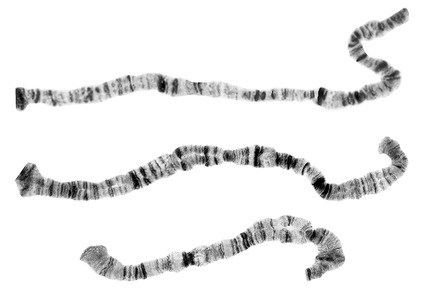
Analysis of the giant polytene chromosomes from larvae collected at four locations near the distributional periphery of Simulium ruficorne Macquart revealed a new cytoform, “E”, from Mauritius and a new country record, Greece (Crete), for Europe. Samples from Crete and Israel represent the widespread cytoform A, specifically cytoform A1. With the discovery of cytoform E, about 215 km from the type locality of S. ruficorne on Réunion, the new chromosomal insights draw us closer to the possibility of recognizing distinct species within S. ruficorne. Of the six cytoforms of S. ruficorne, E is chromosomally most similar to cytoform A1/A2. The discovery of S. ruficorne breeding in Crete mirrors previous recent discoveries of breeding populations on other islands, such as Madeira and Majorca. We suggest that females of S. ruficorne are highly adapted to finding suitable habitat for the preimaginal stages, often small, intermittent, flows, and have persisted undetected on these islands for long periods of time, perhaps aided by resistant eggs.
References
- Adler, P.H. (2025) World blackflies (Diptera: Simuliidae): a comprehensive revision of the taxonomic and geographical inventory [2025]. Department of Plant and Environmental Sciences, Clemson University, Clemson, South Carolina, 148 pp. Available from: http://biomia.sites.clemson.edu/pdfs/blackflyinventory.pdf (accessed 28 January 2026)
- Adler, P.H., Inci, A., Yildirim, A., Duzlu, O., McCreadie, J.W., Kúdela, M., Khazeni, A., Brúderová, T., Seitz, G., Takaoka, H., Otsuka, Y. & Bass, J. (2015) Are black flies of the subgenus Wilhelmia (Diptera: Simuliidae) multiple species or a single geographical generalist? Insights from the macrogenome. Biological Journal of the Linnean Society, 114, 163–183. https://doi.org/10.1111/bij.12403
- Adler, P.H., Kúdelová, T., Kúdela, M., Seitz, G. & Ignjatović-Ćupina, A. (2016) Cryptic biodiversity and the origins of pest status revealed in the macrogenome of Simulium colombaschense (Diptera: Simuliidae), history’s most destructive black fly. PLoS ONE, 11 (1), e0147673. https://doi.org/10.1371/journal.pone.0147673
- Bedo, D.G. (1989) A cytological study of Simulium ruficorne (Diptera: Simuliidae) and its relationship to the S. ornatipes species complex. Genome, 32, 570–579. https://doi.org/10.1139/g89-484
- Cherairia, M. & Adler, P.H. (2018) Genetic variation in a colonization specialist, Simulium ruficorne (Diptera: Simuliidae), the world’s most widely distributed black fly. PLoS ONE, 13 (10), e0205137. https://doi.org/10.1371/journal.pone.0205137
- Crosskey, R.W. (1987) The blackfly fauna of Madeira (Diptera: Simuliidae). Entomologist’s Gazette, 38, 143–158.
- Crosskey, R.W. (1988) Taxonomy and geography of the blackflies of the Canary Islands (Diptera: Simuliidae). Journal of Natural History, 22, 321–355. https://doi.org/10.1080/00222938800770251
- Crosskey, R.W. (1991) The blackfly fauna of Majorca and other Balearic islands (Diptera: Simuliidae). Journal of Natural History, 25, 671–690. https://doi.org/10.1080/00222939100770441
- Crosskey, R.W. (2002) A taxonomic account of the blackfly fauna of Iraq and Iran, including keys for species identification (Diptera: Simuliidae). Journal of Natural History, 36, 1841–1886. https://doi.org/10.1080/00222930110066846
- Crosskey, R.W. & Büttiker, W. (1982) Insects of Saudi Arabia: Diptera: Fam. Simuliidae. Fauna of Saudi Arabia, 4, 398–446.
- Crosskey, R.W. & Büttiker, W. (1988) First records of blackflies from Oman and Dubai (Diptera: Simuliidae). Journal of Oman Studies Special Report, 3, 373–375.
- Crosskey, R.W. & Malicky, H. (2001) A first account of the blackflies (Diptera, Simuliidae) of the Greek Islands. Studia Dipterologica, 8, 111–141.
- Crosskey, R.W., Nasher, A.K., Krauer-Büttiker, S. & Büttiker, W. (2002) First records of Simuliidae (Insecta: Diptera) from Socotra Island, Yemen. Fauna of Arabia, 19, 419–425.
- Gomard, Y., Cornuault, J., Licciardi, S., Lagadec, E., Belqat, B., Dsouli, N., Mavingui, P. & Tortosa, P. (2018) Evidence of multiple colonizations as a driver of black fly diversification in an oceanic island. PLoS ONE, 13 (8), e0202015. https://doi.org/10.1371/journal.pone.0202015
- Jedlička, L., Kúdela, M. & Kúdelová, T. (2024) Global chorotypes of European black flies (Diptera: Simuliidae). Biogeographia – Journal of Integrative Biogeography, 39 (2), a037. https://doi.org/10.21426/B639263259
- Macquart, P.J.M. (1838) Diptères exotiques nouveaux ou peu connus. Tome premier. 2e partie. N.E. Roret, Paris, 207 pp., 14 pls. https://doi.org/10.5962/bhl.title.15792
- Olson, D.M., Dinerstein, E., Wikramanayake, E.D., Burgess, N.D., Powell, G.V.N., Underwood, E.C., D’amico, J.A., Itoua, I., Strand, H.E., Morrison, J.C., Loucks, C.J., Allnutt, T.F., Ricketts, T.H., Kura, Y., Lamoreux, J.F., Wettengel, W.W., Hedao, P. & Kassem, K.R. (2001) Terrestrial ecoregions of the world: a new map of life on Earth. Bioscience, 51, 933–938. https://doi.org/10.1641/0006-3568(2001)051[0933:TEOTWA]2.0.CO;2
- Rivosecchi, L. (1978) Simuliidae: Diptera Nematocera. Fauna d’Italia, 13, 1–533. [in Italian]
- Roubaud, E. (1906) Insectes diptères. Simulies nouvelles ou peu connues. Bulletin du Muséum d’Histoire Naturelle, 11, 517–522. https://doi.org/10.5962/p.328680
- Seitz, G. (2025) Current state of the blackfly (Simuliidae) fauna of the Canary Islands, with new records. Graellsia, 81 (1), e751. https://doi.org/10.3989/graellsia.2025.v81.751
- Seitz, G., Zwick, H. & Adler, P.H. (2012) Description of a new species, Simulium (Rubzovia) joanae (Diptera: Simuliidae), and its chromosomes, with new information on the blackfly fauna of Madeira. Lauterbornia, 74, 1–28.